
 E-Paper



Sam Bankman-Fried says he has paid his debts
The crypto tycoon speaks with The Economist from prison in California


 Prefer HTon Google


Had Sam Bankman-Fried, the founder of FTX, not gone to prison for fraud over the collapse of his defunct crypto exchange, he might have been considered among the greatest ever venture capitalists. He was an early investor in Anthropic (an AI giant valued at up to $2trn), Cursor (a coding software-maker acquired by SpaceX this year for $60bn) and Robinhood (a trading platform with a market capitalisation of $92bn). His 8% stake in Anthropic alone might be worth $160bn today, had it not been sold by the FTX estate. Even the owner of his old bitcoin-mining assets raised nearly $900bn this month.
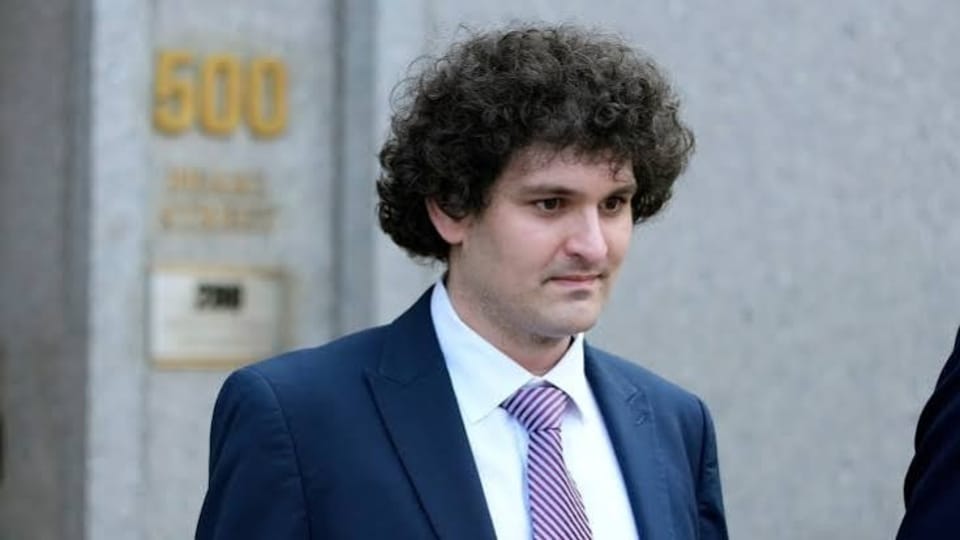
Mr Bankman-Fried was nothing if not brilliant. But at the moment of FTX’s collapse in 2022, brilliance was of little value. In an interview from Lompoc Federal Prison on October 20th for The Economist’s “Money Talks” podcast, Mr Bankman-Fried maintains his innocence. FTX was “a legitimate and successful business”, he says. It had “a run on the bank, which is a thing that happens with margin businesses”. The issue, in his view, was how he responded. “Parties adverse to the company and stakeholders took control,” he says. “When I needed to fight that, I was weak instead.”
His original trial was steeped in the gory details of the disaster, and Mr Bankman-Fried struggled to evoke much sympathy from the jury. Now the legal battle has shifted. In September he filed an appeal to America’s Supreme Court that rests in part on whether his punishment was fair. The judge in his case imposed an $11bn forfeiture, one of the largest ever such sums demanded by an American court. (By comparison, Binance, another crypto firm, had to pay $4.3bn in a sanctions-evasion case.) The estate’s actions—selling off the assets before they rose in value—mean paying up will be much more difficult than it might have been. His lawyers argue the burden is excessive, and therefore unconstitutional.
As Mr Bankman-Fried’s legal team entreats the Supreme Court, it is still working to reach the Department of Justice and the president, who has the power to pardon him. Despite Mr Bankman-Fried’s fondness for betting, he would not put a figure on his chances of a reprieve. It is “an uphill battle”, he says. “All I can do is put forward, you know, the truth as I see it, and hope that parties are more reflective, and that there’s less visceral reaction than there was before.”
Yet the “visceral reaction” remains. In July the Senate unanimously passed a resolution arguing he should not be pardoned. And investors who have been made whole argue repayment is not enough. Some seethe over having lost crypto investments that have since risen in value (creditors were made whole only at November 2022 prices plus interest). Oddly, they and Mr Bankman-Fried are in the same boat.
But the wunderkind is not particularly focused on the value of his old portfolio. That is in part because many of his investments were motivated as much by ideology as money. Take Anthropic, many of whose founders share Mr Bankman-Fried’s commitment to effective altruism. Of the small number of AI firms in 2022, it was “promising”, he says, but far from a sure bet. The difference was that it “took seriously the duty to have a positive impact with their business, which I also thought could be critical for such a potentially pivotal piece of technology”.
That remains true, he argues. Asked how he feels about having helped enable Anthropic’s rise, he says if the firm contributes meaningfully to making AI safer, “it would at least break up the solid wall of negativity a bit.” Still, it would not “change the fact that I have a lot of regrets”.
For more expert analysis of the biggest stories in economics, finance and markets, sign up to Money Talks, our weekly subscriber-only newsletter.


