
 E-Paper



See How a Tesla-SpaceX Merger Gives Musk a Shortcut to His $1 Trillion Payday
A critical clause in the CEO’s Tesla stock award would wipe away lofty performance targets if a merger happened.


 Prefer HTon Google


Deep in a $1 trillion pay package approved by Tesla’s shareholders is an escape clause that could pay off for Elon Musk in several ways if he folds the automaker into his SpaceX empire.
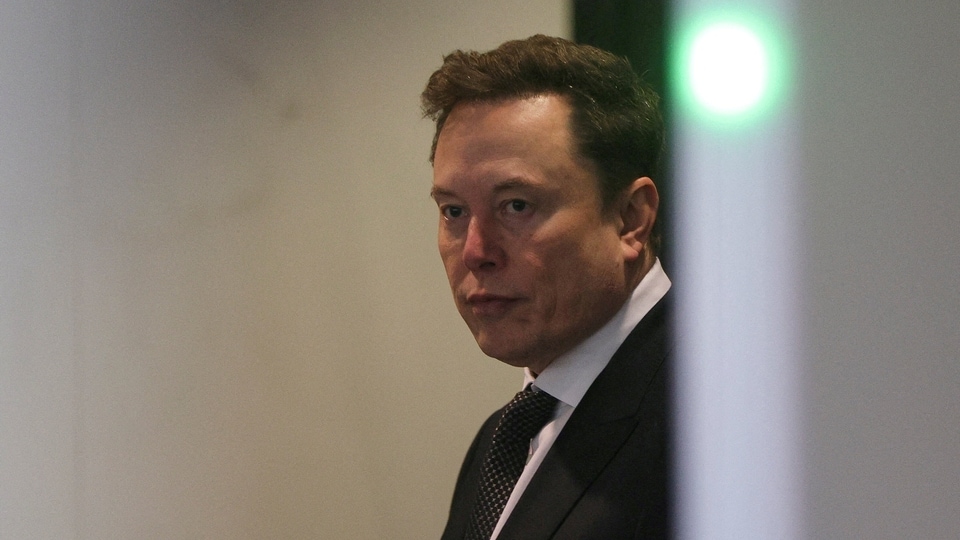
That kind of cars-and-rockets tie-up—the subject of widespread speculation among investors, and hinted at by Musk himself—would likely give him the tighter control he has long sought at Tesla. A hefty-enough price would also, in an instant, wipe away key performance targets standing between Musk and billions of dollars in shares.
“This $1 trillion—that was supposed to be a stretch,” said Mary Ellen Carter, a Boston College accounting professor who studies executive pay. “It turns out it isn’t really that hard. All you have to do is be bought.”
Musk has considerable say over any offer SpaceX makes for Tesla, thanks to his sweeping control over the rocket company. The upshot: Even a stratospheric bid would keep Musk in firm control of the combined company.
Here’s what it could look like if SpaceX were to acquire Tesla
Tesla shareholders voted to adopt the pay package last fall. Under ordinary circumstances, it would deliver to Musk as many as 423.7 million shares if Tesla hits a series of 12 market-value targets and the company also meets just as many cash-flow and operating goals. Among them: delivering Tesla’s 20-millionth vehicle, selling one million robots and putting one million robotaxis on the street.
How the performance targets go away
First a technical note: Musk’s much-ballyhooed potential payout of $1 trillion in stock would now top out around $824 billion. That is because the number of Tesla shares outstanding has risen since shareholders approved the deal. In other words, the same $8.5 trillion market value would be spread across more shares, reducing the value of Musk’s new slug of shares.
The record-setting equity award was “designed to align extraordinary long-term shareholder value with incentives that will drive peak performance from our visionary leader,” Tesla Chair Robyn Denholm told shareholders at the time.
Yet tucked into the bottom of the fifth page of the 16-page 2025 CEO Performance Award Agreement, a single sentence declares half the targets are as good as accomplished if Tesla is acquired or otherwise taken over.
That would leave only market-value targets to determine how many shares Musk gets. The same clause says those targets would be met or missed based on the final deal price—or on Tesla’s market capitalization immediately before any acquisition closed, if that is higher. Musk, SpaceX and Tesla didn’t respond to requests for comment.
“Tesla shareholders could think it’s terrible and the Tesla price drops” ahead of any deal, Carter said. “But it’s whatever SpaceX is willing to offer.”
Every $500 billion added to the deal price would deliver as many shares again, up to $7.5 trillion. An $8.5 trillion acquisition—more than six times Tesla’s recent market value—would deliver the pay package’s full 424 million shares. That is the number of shares that would have clinched the maximum $1 trillion stock award for Musk.
The wild cards
There are few clear constraints on what SpaceX could offer to acquire Tesla. Musk’s holdings of SpaceX Class A shares, with one vote apiece, and Class B, with 10, give him about 86% of any SpaceX vote needed to approve a deal. By controlling most B shares, he also can appoint a majority of the company’s board, which oversees deals.
The company’s legal home of Texas largely protects SpaceX from shareholder lawsuits over any Tesla acquisition, unless plaintiffs own at least 3% of the company. That is a tall order, said Ann Lipton, a University of Colorado law professor specializing in corporate law. “Legally, he has the power to do whatever.”
Shareholders would have to bless any deal at Tesla, where Musk now holds just under 20% of the vote. Although Tesla is also in Texas, disgruntled shareholders there would have a clearer path to suing, raising the importance of getting investors on board, she said. “He needs to persuade the Tesla shareholders.”
There are other possible scenarios. SpaceX has a third, nonvoting class of shares but hasn’t issued any yet. Using those to acquire Tesla could avoid or reduce diluting the votes of existing SpaceX shareholders, albeit at the risk of resistance from Tesla investors.
Potential complications lurk, too. Musk might want to keep acquisition costs down to avoid cutting too deeply into the ownership and voting power, however limited, of existing SpaceX shareholders. Many are longtime supporters who signed on with the company’s initial public offering just weeks ago.
Write to Theo Francis at theo.francis@wsj.com and Andrew Mollica at andrew.mollica@wsj.com


