
 E-Paper



Why can’t Trump get the low interest rates he wants? Inflation, AI explain
Trump wants lower interest rates, but inflation from tariffs, the Iran war and the AI boom is making it harder for the Fed to cut rates.

 Prefer HTon Google


Donald Trump wants much lower interest rates, but inflation is making that difficult. President Trump has repeatedly criticized the Federal Reserve for not cutting interest rates fast enough. He has said the US should have the “lowest interest rates anywhere in the world.” Trump believes lower rates could help the US economy grow much faster.
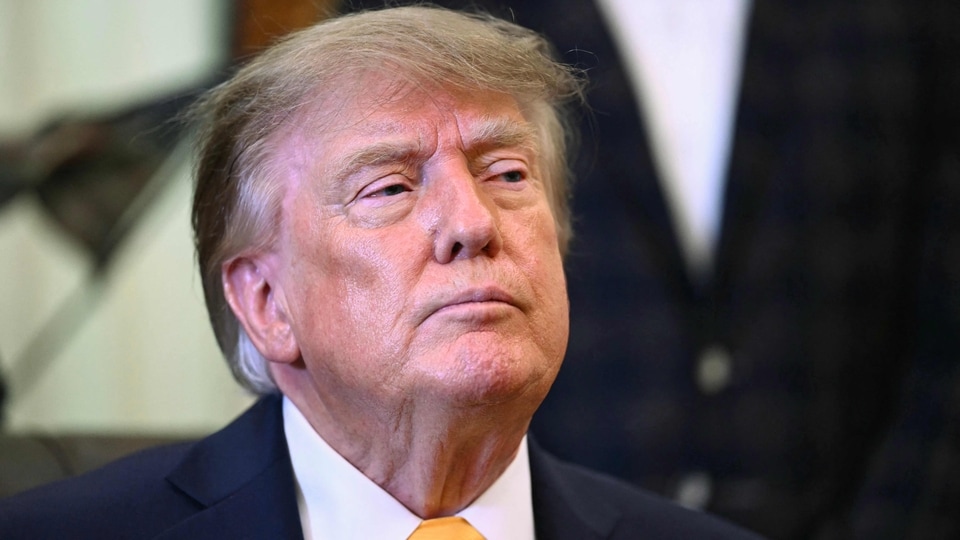
Trump has even argued that US growth could reach 20%. Trump has previously said interest rates should be 1% or lower. He argued that if the Fed cuts rates sharply, the US could potentially see GDP growth of 14%, 15%, 16% or even 20%. Trump also said strong economic growth itself does not necessarily cause inflation. Trump made these comments in remarks to reporters in the Oval Office.
Fed rate cuts are slower than Trump wants
The Federal Reserve has not moved as quickly as Trump wants. Trump and former Fed Chair Jerome Powell repeatedly disagreed over interest rates after Trump returned to the White House in January 2025. The Motley Fool reported that the Powell-led Fed cut the federal funds target rate six times between September 2024 and December 2025, bringing it to 3.50%-3.75%.
Lower rates could boost US growth
Trump, however, has argued that rates should be much lower. Trump's main argument is simple: lower rates could boost economic growth. When borrowing becomes cheaper, businesses can take loans at lower costs. This could encourage companies to hire more workers, invest more money and expand their businesses. Lower rates could also support the massive investment needed to build AI data centers.
Also read: Who is funding Trump Accounts? American Airlines, Dell and 50+ companies on list
Lower rates could also make America's huge debt easier to manage. The US has more than $40 trillion in total debt. Lower interest rates would reduce the cost of borrowing and make it easier for the government and businesses to service their debt. The Motley Fool highlighted debt servicing as another reason lower rates would be attractive to Trump.
But the biggest problem is inflation. The Federal Reserve cannot simply slash interest rates if inflation remains too high. Lower rates generally encourage more borrowing and spending, which can add more pressure to prices. The “Trumpflation” and the AI boom are making the Fed's job harder.
Trump's tariffs are pushing prices higher
Trump's own tariffs are one source of inflation pressure. Trump's administration has continued to use tariffs on imports. His April 2, 2025 “Liberation Day” tariffs were later invalidated by the US Supreme Court in February 2026, but the administration introduced new tariffs using other justifications. The Motley Fool reported that the administration announced tariffs of 10% to 12.5% on selected imports from more than 80 countries in July 2026.
Tariffs can make goods more expensive for American businesses and consumers. When tariffs are placed on materials such as steel, the cost of producing goods in the US can rise. Companies may then pass those higher costs on to customers. This can keep inflation higher for longer.
Iran war adds to US inflation
The Iran war has created an even bigger inflation problem. After Trump approved military operations against Iran, Iran closed the Strait of Hormuz to most commercial maritime traffic. The Motley Fool reported that this disrupted the daily movement of about one-fifth of the world's petroleum liquids.
The Iran conflict is therefore not only an energy problem. Higher energy costs can affect many other parts of the economy. Companies have had to spend more to change supply chains, reroute shipments and buy petroleum-based products such as plastics. Those higher business costs can eventually reach consumers through higher prices.
AI boom is raising inflation pressure
Core inflation shows that some of these price pressures are spreading across the economy. Core Personal Consumption Expenditures, or core PCE, removes food and energy prices because they can move sharply. The points to the stickiness of core PCE as evidence that inflation linked to the Iran conflict is no longer limited to energy prices.
But tariffs and the Iran war are not the only inflation problem. AI is adding another layer. The huge build-out of AI infrastructure has created a major supply-and-demand imbalance. Companies want enormous amounts of AI chips, servers, data-center equipment and other infrastructure, but supply has not kept up with demand.
AI demand could keep prices high
AI companies therefore have more pricing power. Because demand for AI hardware is so strong, infrastructure providers can charge higher prices. The Federal Open Market Committee has noted that these higher costs can eventually move through the economy and reach consumers.
This is why Trump's argument that strong growth does not cause inflation has a major problem. Strong growth does not automatically create high inflation if businesses can produce enough goods and services to meet demand. But when demand grows much faster than supply, prices can rise. The AI infrastructure boom is an example of this supply-demand mismatch, according to The Motley Fool.
Also read: Why is the US bond market under pressure? Japan, Fed rates, AI borrowing and $40T debt explained
Fed faces a tough choice on rates
The three inflation pressures are now becoming part of the wider economy. Trump's tariffs, the Iran war and the AI infrastructure boom are all adding different kinds of price pressure. This makes it harder for the Federal Reserve to cut rates aggressively.
That leaves the Fed with a difficult choice. If inflation stays high, the Fed may have to keep rates higher or even raise them. Higher rates can reduce borrowing and spending, which helps cool inflation. But this would go directly against Trump's demand for cheaper borrowing.
Higher rates could hurt AI and stocks
A rate hike could also hurt the AI boom. Much of the AI data-center expansion requires large amounts of capital, including debt financing. Higher interest rates would make those projects more expensive. That could slow the construction of new AI infrastructure.
Wall Street could also suffer if higher rates slow economic growth. The US stock market is already trading at historically high levels. The Motley Fool described it as the second-priciest stock market in history. If higher interest rates cause economic growth to slow, investors could become less willing to pay extremely high prices for stocks.
That creates a difficult situation for the Fed. Cutting rates too quickly could add to inflation. Raising rates could slow economic growth, hurt AI investment and put pressure on an already expensive stock market. The Motley Fool said a rate-hiking cycle could be viewed as a necessary step to prevent an even bigger economic problem.
Strong stock gains do not mean low inflation
Trump's stock market record does not solve the inflation problem. The Motley Fool report notes that the Dow Jones Industrial Average, S&P 500 and Nasdaq Composite have recorded strong annualized returns under Trump compared with many presidents since the late 1890s. But strong stock-market performance and low inflation are two different things.
Inflation limits Trump's low-rate plan
The key reason Trump cannot simply get the low rates he wants is inflation. The Fed's job is not just to support economic growth or the stock market. It also has to keep inflation under control. With tariffs, the Iran conflict and AI infrastructure demand all putting pressure on prices, cutting rates sharply could risk making inflation worse.
So Trump's preferred solution has a major trade-off. Very low rates could help businesses borrow, support AI investment, make debt cheaper and potentially boost growth. But if those low rates fuel even more demand while supply remains tight, prices could rise further.
For now, the Fed's problem is balancing growth against inflation. Trump wants faster growth and much cheaper borrowing. Wall Street also benefits from easier financial conditions. But the inflation pressures described by The Motley Fool mean the Fed may not have enough room to give Trump the aggressive rate cuts he wants.


