
 E-Paper



1857 Meerut mutiny museum awaits freedom from neglect
As India gears up for August 15, a museum in Meerut dedicated to the first war of Independence in 1857 stands as a symbol of neglect and apathy


Ever heard of the Government Freedom Struggle Museum? Chances are you haven’t. Located in the NCR city of Meerut, just about 60 km from Delhi, the museum is dedicated to highlighting the role Meerut played in the Revolt of 1857, India’s first war of Independence. Ironically, as the country gears up to celebrate yet another Independence Day, the museum stands as a symbol of government neglect and apathy.
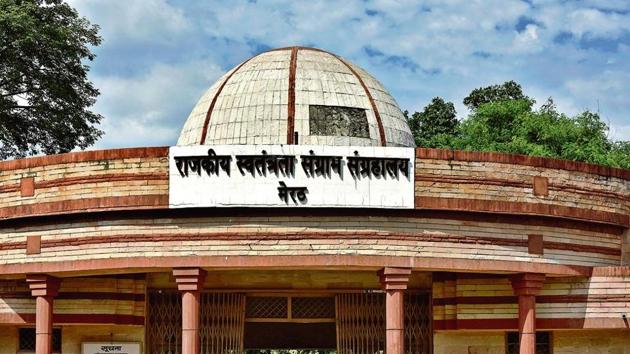
On Thursday, at 12.15 pm, when HT visited the museum, it was locked. The curator, Pataru Maurya, arrived after a wait of more than an hour and opened it. “I had to go out for some administrative work. I have no choice; there are only two people running the museum,” Maurya said, when asked why the museum was closed on a day and time when it is supposed to be open for visitors.
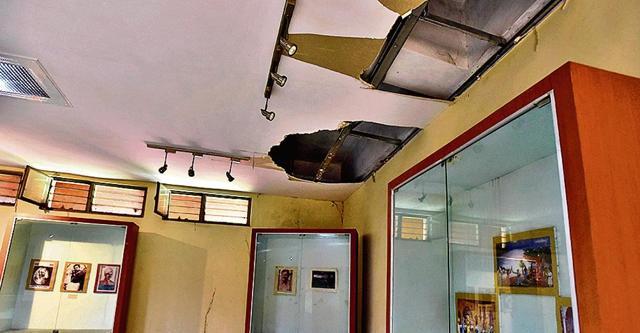
While a similar sorry state of affairs prevails in many museums across the country, ironically, the Freedom Struggle Museum in Meerut is in a particularly pathetic condition — a large number of track lights to illuminate the exhibits are not working; in one of the galleries the false ceiling has come off, leaving a gaping hole; the air conditioners have not been working for many years; and the museum gets very few visitors. On Thursday, it had only three visitors; on Wednesday it had 13. On an average, the museum gets only about 180 to 200 visitors in a month.
“The museum is in dire need of staff and modernisation in terms of display and lighting techniques; it also requires better a collection and security. But I can undertake all of this only if I have funds,” says Maurya. Apart from him, the museum has only one gallery attendant, whose job is general upkeep of the galleries. The museum has a sanctioned strength of five, but three posts—gallery assistant, gallery attendant, and accountant — are lying vacant. Salaries are also delayed for days.
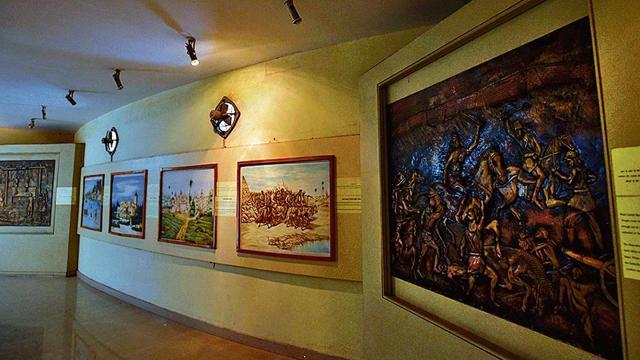
The museum was set up in 1997 by the Uttar Pradesh government to highlight Meerut’s role in the 1857 revolt. While the stated objective of the museum is to collect, preserve, document, and exhibit objects related to the Sepoy Mutiny, all it has on display are a few dozen paintings related to the Revolt, photocopies of a few photographs, a couple of dioramas and a few relief works .
Run by the Uttar Pradesh Museum Directorate, the museum has faced neglect and a resource crunch from the very beginning. The building was constructed in 1997 with two galleries while it got its first curator in 2005. The same year the museum got a grant of about R2.5 lakh from the Central government for putting up exhibits.
It was formally inaugurated on May 10, 2007, to commemorate the 150th year of the first War of Independence. Even the time of inauguration--5pm—was high on symbolism as the Mutiny is said to have started around 5 pm on May 10, 1857.
“We did not have any visual documents of the Revolt. A committee comprising local historians selected important and lesser-known episodes from the mutiny in Meerut and commissioned paintings based on these episodes,” says Manoj Gautam, the first curator of the museum who held the post for over 11 years till 2017.
In 2009, the museum got about 1.36 crore from the government for expansion and three new galleries were built. These have on-display objects, some photographs and documents donated by locals—coins, postal stamps, some memorabilia of freedom fighters, and a few archaeological artifacts, including ancient jars and bowls and others such items that have nothing to do with freedom struggle. The museum did not get any funds for modernisation for a decade and fell into neglect.
“During my long stint at the museum , I tried my best to ensure the museum serves its purpose of highlighting the city’s role in the 1857 revolt. I never had adequate resources to upgrade it and undertake modernisation,” says Gautam. “I think both the government and the private sector should work together to modernise this museum, which has an important purpose of educating people about Meerut’s important role in freedom struggle.”
Ask AK Singh, director, UP Museum Directorate, which is responsible for all museums across the state, about the state of affairs at the Meerut museum, and this is what he has to say: “I am not aware of these problems. I have asked the curator to send us a proposal about the museum’s requirements. All the issues at the museum will be resolved soon,” Singh says. “We are also trying to come up with a new gallery that will display documents related to the 1857 revolt. I have already spoken to UP Archives and they have selected some 53 documents for display at the Meerut museum. ”
Many local scholars and community leaders have been working for years to spread awareness about the city’s role in the Mutiny and demanding that the museum should be modernised. “The local administration has always been quite cooperative and over the past decade, they have sent many plans to Lucknow but nothing has worked so far. We have often also requested the government that all objects related to the first War of Independence, which started in 1857 in Meerut, should be brought to the city from other museums in the state,” says Amit Pathak, a city-based scholar who has written books on the history and culture of western Uttar Pradesh and Meerut’s role in the rebellion.
Amit Nagar, a city resident whose non-profit organisation, Mishika Society, works for the promotion of Meerut’s heritage and the museum through community engagement, has been organising a travelling exhibition in schools of photographs related to the 1857 revolt. After seven-day exhibition, school children are taken on a tour of these sites. The exhibition has already travelled to 70 schools.
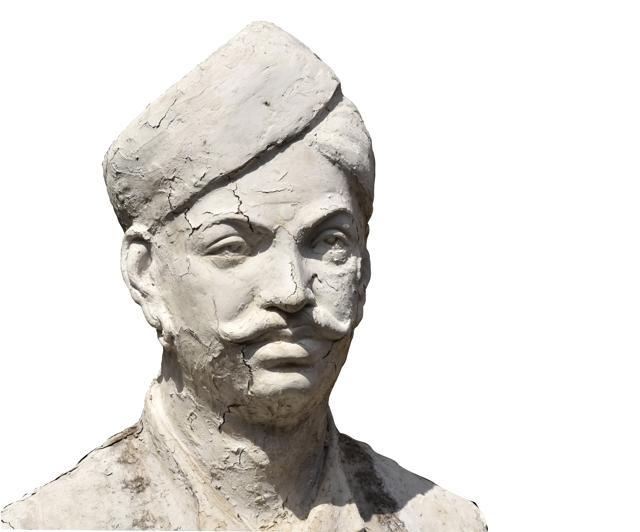
“A majority of the people in the city, including children, are unaware of their city’s role in the first war of Independence. Unfortunately, most people here do not even know about the museum too,” says Nagar. Mangal Pandey, whose rebellion in the Barrackpore cantonment in West Bengal sparked off the country’s first War of Independence in Meerut, is a local hero. “Most locals who visit the museum feel that Mangal Pandey was from Meerut, which is not true,” says Maurya.
Many people rue the fact that while Meerut is so close to the capital of the country, and is often visited by state and central ministers, who never tire of talking about Meerut’s role in the Revolt, no one bothered to take steps to modernise the museum. “It is not just the neglect of a museum, but a disregard for the history of the Independence movement. It is high time the central government took over this museum,” says Pathak.


Stay updated with all top Cities including, Bengaluru, Delhi, Mumbai and more across India. Stay informed on the latest happenings in World News along with Delhi Election 2025 and Delhi Election Result 2025 Live, New Delhi Election Result Live, Kalkaji Election Result Live at Hindustan Times.


