E-Paper



President initiates PESA implementation in MP; CM says ‘power with tribals’
Madhya Pradesh chief minister Shivraj Singh Chouhan said now tribals will get rights on land, water and forest in the scheduled area

 Prefer HTon Google


President Droupadi Murmu initiated the implementation of Panchayat (Extensions to Scheduled Area) Act in Madhya Pradesh from Shahdol district on Tuesday on the occasion of tribal freedom fighter Birsa Munda’s birth anniversary, celebrated as Janjatiya Gaurav Diwas.
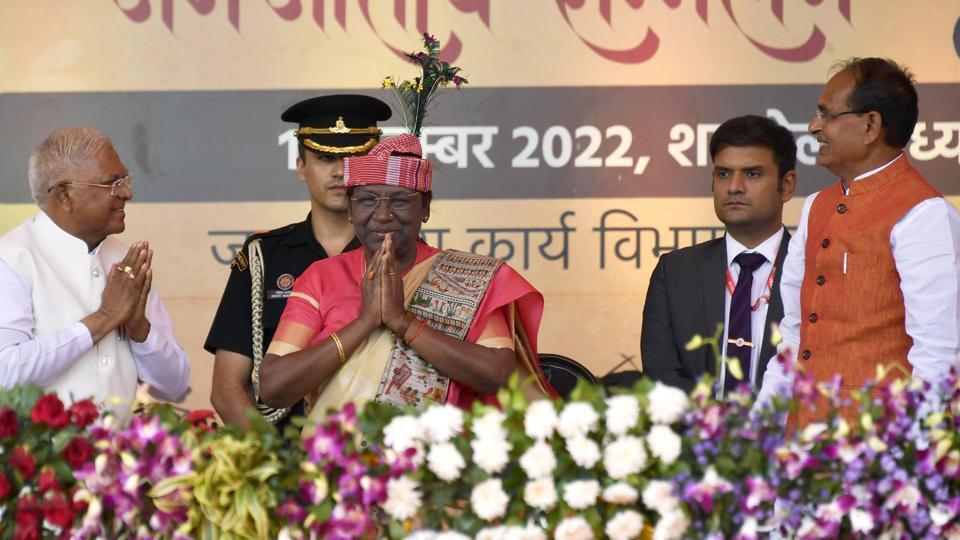
With this, Gram sabhas will be formed in the villages of 89 tribal development blocks and rallies will be carried out from November 20 to create awareness about the PESA Act.
Madhya Pradesh chief minister Shivraj Singh Chouhan said, “Now, tribals will get rights on land, water and forest in the scheduled area.”
“Now, I will not allow bad practise of religious conversion in Madhya Pradesh. Many people get married with tribal girls for land and now Gram Sabhas will have the power to get the land back from such conspirators,” he added.
The chief minister said that if a non-tribal person or any other person tries to wrongfully occupy or buy the land of tribals by means of fraud, coercion, marriage, etc, then Gram Sabha will havethe power to intervene. “If the Gram Sabha finds any difficulty in doing so, it can refer the matter to the sub-divisional officer to get back the possession of the land,” he said.
Chouhan also said that without informing the gram sabha a person will not able to leave the village for work or an outsider can come to a village for work. This, he said, will prevent unnecessary migration of people and save tribals from the “curse of human trade, exploitation or bonded labour.”
The chief minister also said that the implementation of PESA will help in protection of local institutions, traditions and culture.
“Now no new liquor/cannabis shop will open in the notified areas without the permission of the Gram Sabha. If any liquor or cannabis shop is near the village hospital, school, religious place etc., then the Gram Sabha can send a recommendation to the government to shift it elsewhere,” he said.
Under the Act, Gram Sabhas have been empowered to recommend to the district collector to close the liquor shop for the whole day or for some time on any day apart from four declared dry days. To discourage drug addiction, the gram sabha may not only prohibit the use of liquor in any public place, but also limit the amount of consumption, the chief minister said.
The new rules also provide for a peace and dispute resolution committee in every village. This committee will resolve the minor disputes of the village by the traditional method and will help in maintaining peace and order in the village. Police have to inform the committee after registration of any first information report (FIR), the rules state.
National Commission for Scheduled Tribe (NCST) working group member and TEER Foundation director, Milind Thatte, said, “ The draft rules of PESA put in public domain by the state government of Madhya Pradesh are quite progressive. The draft rules have two major lacunae: First, it provides for a Gram Sabha Kosh but does not provide any sizable fund source to this Kosh making it meaningless. Second, the rule 26(4) requires the Gram Sabha to ask the forest department if it wants to independently handle Tendu collection and sale. This is like asking the owner to kneel before the tenant. Where PESA and FRA (Forest Rights Act) are both categorical that all MFP (Minor Forest Produce) including Tendu and Bamboo shall be owned and disposed by the Gramsabha. This rule contravenes both.”
Vikram Acchaliya, a tribal expert, said, “We have raised so many objections. The peace redressal committee of Gram Sabhas should be given power of resolving civil matters. The police should interfere only in the matter of heinous crime.”
Madhya Pradesh Congress president Kamal Nath said, “Under this Act, the right of final decision has been given to district administration officers so how can they claim that it will empower Gram Sabhas or tribal. This rule of this Act is against the tribal and it will not provide any benefit to tribal.”