
 E-Paper



Roundabout: Barahmaha and rhythm of the changing seasons
The endearing folk tradition of celebrating the seasons in song and art lives on in painting, music and cinema


Barahmaha or Baramasa is an age-old oral folk tradition of celebrating the changing seasons in verses. It began as an oral tradition, but was later composed and written by many Indian poets across different languages ranging from the tribal to those more developed including Hindi, Bengali, Punjabi, Rajasthani, Gujarati and others.
At the heart of this vivid description of nature defining the rhythm of the seasons in the Nayika, a woman who translates the mood of the passing months in the context of her own emotional state — more often than not pining for the absent partner with whom she cannot share the magical moments.
From poetry, the genre moved to folk art and later skilled miniature painting and then spilling over to contemporary art. In this season of unprecedented rainfall and man-made floods, one returns to the glory of this art, which is in tune with nature and its journey even in times when the humans have lost touch with ecology in overbilt cities, burdened mountains, blocked waterways, plastic obstructing sewerage and much more.
Verses of cheer and craving
The greater Punjab of yore has a very vibrant tradition celebrating the seasons in Sufi and Sikh folds as well as the amazing world of the miniature paintings.
The most inspiring verses on the transition and glory of the seasons is to be found in Guru Nanak’s Bara Maha or “twelve months” in the Guru Granth Sahib composed in Raga Tukhari and remains the most appreciated for its celebratory and philosophical content. It casts magic in its content of three pages and has been the muse of artists who have been inspired to paint the words. The song of the seasons by Guru Arjun Dev is one of Birha (longing) of the bride, a metaphor of the human soul pining for the divine. The third text of Krishan Leela, meanwhile, is attributed to Guru Gobind Singh in the Dasam Granth.
Sufi poets like Bulleh Shah, Ali Haider, Hasham and Shah Murad also wrote tributes to the cycle of seasons.
Sidharth and the seasons
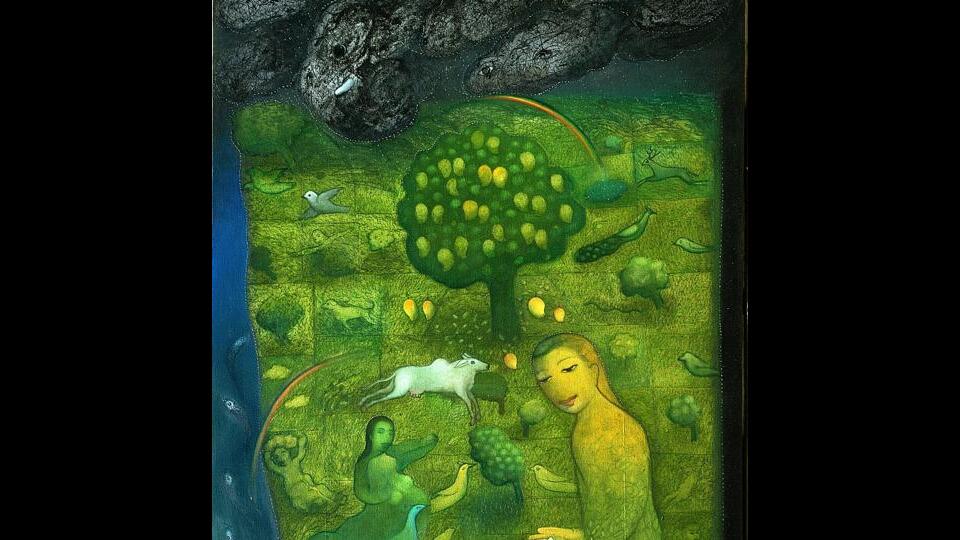
Sidharth, the well-known Punjabi painter based in Delhi, also has to his credit remarkable paintings on the rhythms of the changing seasons and says his inspiration came from the Baramaha by Guru Nanak and Bulle Shah: “For centuries, poets all over the world have been writing about the rhythmic changes and evolving patterns of the seasons. Besides our own literary masters, we find poets across the Orient from Iran, Afghanistan, Pakistan, Sri Lanka, Thailand, China and the Zen Masters, attempting to describe in words, the constantly evolving seasons and the cosmological changes. For me however, ‘Barahmaha’ found its true meaning only around the 16th century, when it began to be seen as a key to self awareness, to Nirvana in the preaching of saints and gurus as they recreated the magic of the seasons in words.”
Art historian BN Goswamy says of Siharth’s oeuvre: “Sidharth, it seems, is aware of all this: the long and rich tradition of Baramasa poetry, yet he prefers to plough a different furrow. There are no narratives, not even seeming narratives: in these paintings his intent is to take flight on the wings of all the sights seen and sounds heard in his growing years. In full awareness of all that is there is in the tradition, he moves into a dream-like state in his work: birds gather densely amidst tree branches as if to replace leaves; gentle forms glide in space to the accompaniment of soft-winged peacocks; clouds rumble as if making up their minds before bursting into rain.”
Kavita and the feminine brush
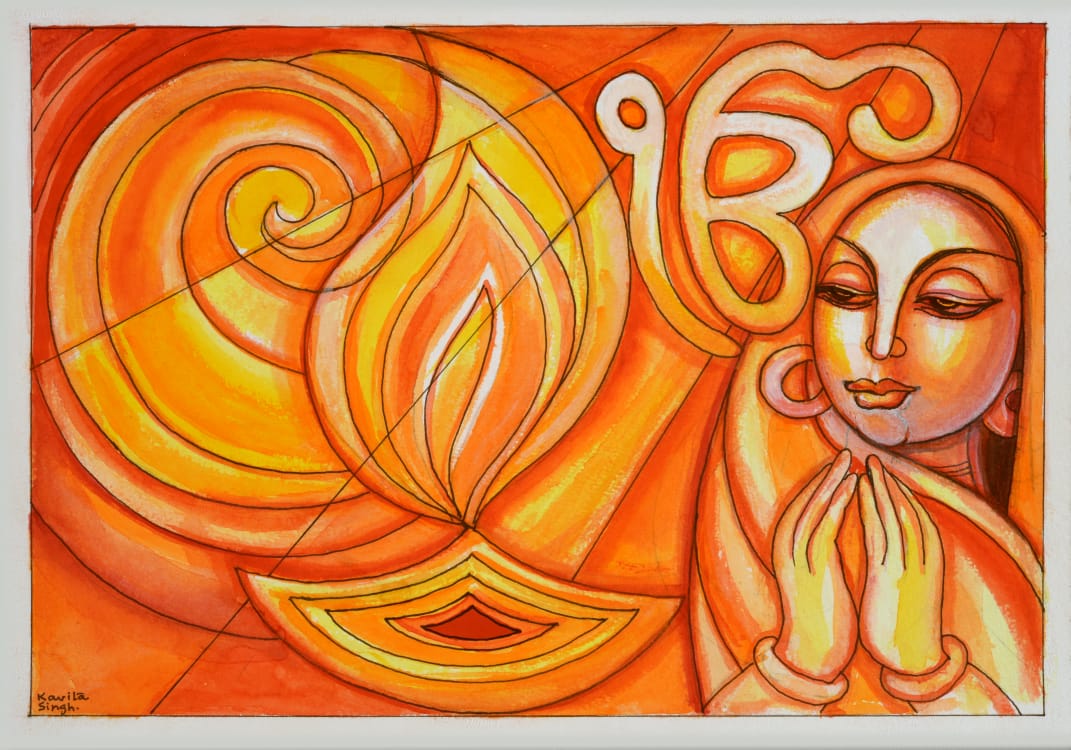
Among the Punjabi artists who painted the Baramaha was late Delhi-based painter Jaswant Singh, who had migrated from West Punjab, and his works are a part of the Chandigarh Museum collection. More recently, tricity-based artist Kavita Singh has turned to depict the Baramaha with a fine feminine brush.
A professor and head of the department of fine arts, Punjabi University, Patiala, Kavita has brought out a book of her paintings titled “Baramaha: Divine Manifestation in Seasons”. Inspired once more by the the composition of Guru Nanak, she says: “Guru Nanak has vividly described the divine elements in all seasons and the essence is that human salvation is possible only when one is attuned to the unfathomed reservoir of pure bliss and and permanent delight, in the refuge of the Almighty”.
Her imagery is influenced by that of her father, master painter Satwant Singh, yet she adds to it a gentle femininity and a conscious naviette that is charming.
Walking in the rain
The great Indian cinema has thrived on the seasons and what they bring, be it sunshine, hail, storms, show and what have you. In a 1959 film “Ujala”, Shammi Kapoor shouted himself out to Mala Sinha singing: “June Ka mausam mast mahina, chand si gori ek hasina, yah Allah Allah dil le gayi (In the merry month of June, a girl fairer than the moon, My lord, she has stolen my heart).”
In 1961, he was sliding down the snowy mountains with the debuting Saira Bano exclaiming “Yahoo”. But the “King of all seasons” in film-dom is “sawan” with plenty of rain for it paves the way for many excesses of love. Who can forget the ultimate romance of a shared umbrella?
One harks back to Raj Kapoor and Nargis walking on the Marine Drive with just one umbrella to keep away the pitter patter and the winds in the 1955 “Shri 420”. The still continues to sell as a popular poster still, some 68 years later. And recently the single umbrella scene was repeated by director Vikramaditya Motwane, on a young pair Wamiqa Gabbi and Sidhant Gupta, with great success in the “Jubilee” webseries.
Let’s not curse the seasons, mind the Ps (Pints) and Qs (Quarts) of development and keep walking in the rain.


