
 E-Paper



Budget targets, though higher, will be met, says Harpal Cheema
Into his eighth month as the finance and taxation minister of the Aam Aadmi Party (AAP) government, Harpal Singh Cheema has the most challenging task among all the cabinet ministers


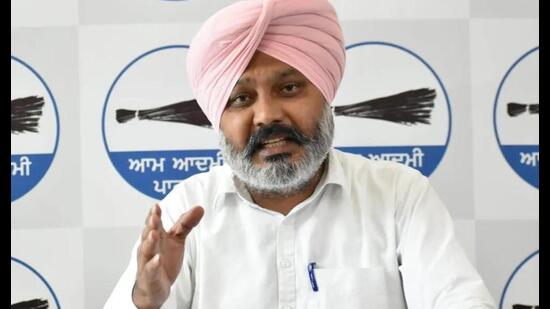
Into his eighth month as the finance and taxation minister of the Aam Aadmi Party (AAP) government, Harpal Singh Cheema has the most challenging task among all the cabinet ministers. With Punjab among the most stressed states fiscally in the country, the state treasury that he inherited was not anything to look forward to. On top of it, he had to straightaway get on with the task of finding resources for the AAP’s cash-guzzling poll guarantees. In an interview to HT at his official residence in Chandigarh, Cheema spoke about his challenges, the current state of finances and the road ahead. Edited excerpts:
The white paper presented by the state government in the Punjab assembly four months ago painted a very grim picture of the state finances. Where do things stand today?
The goods and services tax (GST) regime was introduced in the country five years ago on July 1, 2017. Punjab and many other states kept pulling along on the GST compensation (from the Centre for shortfall in revenue) that was available till June 30 this year. In those five years, additional efforts that were required from the state apparatus and political leadership to augment revenues did not happen. They kept banking on compensation. Another problem with the state finances is that no government in the last 25-30 years paid any attention. They were busy lining their pockets. But we are changing all of that by eliminating corruption and mafias, plugging revenue leakages and cutting unnecessary expenditure. The goal is to put the state economy and finances back on the track. I can say with full confidence that things are positive, and we are on course to set things right. In our first budget, we set targets to increase the GST and excise collections by 27% and 56%, respectively, besides other sources. We have been able to achieve 23% increase in GST and 38% in excise collection. Against the excise collection of ₹2,963 in the first six months of financial year 2021-22, we have garnered ₹4,082 crore so far.
A 17% growth in revenue receipts was projected in the budget this year over the revised estimates for 2021-22 while keeping the increase in expenditure at a modest 5%, but the figures for the first two quarters show a higher spending. What has led to this?
We are front-loading expenditure, which is a well-known practice in macroeconomics. Unlike previous governments, we are not waiting till the end of year for expenditure. Development works are going on at full pace, and the expenditure is happening right from the start of the financial year. We are telling our departments to spend wisely and complete their works on time. I have held meetings with the officials of 10 departments to give a push to capital expenditure and will be meeting other departments soon. The effects of these development works will show up in the revenue receipts and collections soon.
At ₹8,703 crore, revenue deficit in the first six months is also on the higher side as compared to the budget figure of ₹12,533 crore for the whole year. How do you propose to deal with this?
This data is for the first six months only. We are reforming and repairing the system and these things take time. Also, a major part of revenue receipts is the share of central taxes. The way it is paid, a significant portion of our share comes in the later part of the financial year. On the expenditure side, the dues left unpaid by our predecessors are also being cleared. We gave ₹525 crore to the Punjab State Agriculture Cooperative Bank as a bailout package with another ₹188 crore towards payment of pension to its retired staff, cleared old dues of sugarcane growers and ₹50 crore per month to bailout Punsup. Unnecessary expenditure is being cut. We have also deposited ₹2,000 crore in the Consolidated Sinking Fund.
Bulk of the state’s borrowings has gone into debt servicing — repaying loans and interest payments. What do you propose to do about it?
Debt is a problem that we have inherited. We have raised debt of ₹24,500 crore between April and October this year. Of this, ₹9,290 crore has gone in paying interest on outstanding debt ( ₹2.84 crore as on March 31, 2022) and another ₹10,842 crore in repaying a part of the existing loans. We are trying to invest the remaining funds in the creation of capital assets.
In this scenario, how do you plan to fund free power, regularisation of services of employees, fresh recruitment and all other poll guarantees?
There is no dearth of money. We are plugging leakages and shoring up revenues. Punjab State Power Corporation Limited (PSPCL) is, for instance, being released power subsidy for the current year. Out of the budgeted power subsidy of ₹16,000 crore, 56% has been released.
The Punjab government had made a request to the Centre for extension of the GST compensation regime. What is their response?
We had requested (Union finance minister Nirmala) Sitharaman Ji in June to extend the compensation regime for five more years. Our request is pending with the central government. They have not taken any decision on it so far.
The state’s excise policy has been mired in a controversy over allegations that it promoted monopoly, and then the Enforcement Directorate also raided some excise officers. What do you have to say?
The government is achieving fixed revenue targets. When these (present) opposition parties were in the government, this kind of jump in the excise was never achieved. This 38% growth has been seen for the first time. This should be sufficient to answer them. All these allegations are politically-motivated.
The first year is always a challenge for a new finance minister. What is going to be your focus in the remaining five months of the current fiscal?
Not just the first year, I think the challenge is going to be there for all five years as our goal is to put the state’s economy back on track. Our focus will be on enforcement and capital expenditure. I am hopeful we will meet all our budget targets this year. We will set more ambitious targets in our next budget.


