
 E-Paper



Can’t penalise NHAI for felling trees on land acquired by it: Punjab to NGT
The DFO was subsequently asked to furnish the original plantation records, details of the species planted and particulars of the felling, after the forest department sought additional time to file a supplementary affidavit

 Prefer HTon Google


The Punjab forest department has told the National Green Tribunal (NGT) that it has no jurisdiction to regulate or penalise the National Highways Authority of India (NHAI) for cutting trees on land acquired by it, and has contended that there is no statutory requirement for compensatory afforestation on such land.
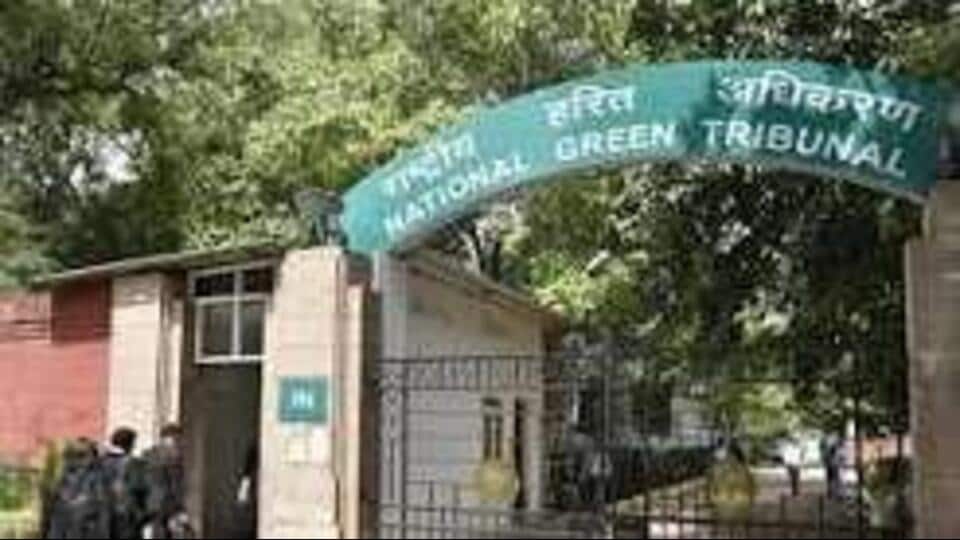
The stand comes in a case concerning the felling of plants during construction of a vehicular underpass on the Pathankot-Amritsar stretch of NH-54, where questions have already been raised before the tribunal over the adequacy of the forest department’s earlier data on the trees that were cut.
The matter was brought before the NGT by Dinesh Gupta in 2024 and relates to the felling of plants along the NH-54 stretch during construction of the vehicular underpass. The tribunal had sought details from the divisional forest officer (DFO), Gurdaspur, including the number of plants felled and their status. In its April 15, 2025 order, the NGT noted that while 2,023 plants had been planted along the road stretch during 2020-21 and 1,651 were subsequently felled by NHAI, the report did not clarify how many of those had matured into trees before being cut.
The DFO was subsequently asked to furnish the original plantation records, details of the species planted and particulars of the felling, after the forest department sought additional time to file a supplementary affidavit.
In an affidavit filed on Thursday, the Gurdaspur DFO has taken a clear jurisdictional position. The department has argued that the land in question was acquired directly by NHAI from farmers in 2024 and that no provision of the Forest Acts was applicable to the land at that time. It has, therefore, said that it cannot impose regulations or penalties on NHAI for cutting plants on the land, except to the extent of conditions contained in the memorandum of understanding (MOU) executed at the time of plantation.
The department’s stand has potentially significant implications for accountability. While the NGT case concerns the loss of green cover along a national highway, the latest affidavit effectively draws a line between the forest department’s responsibility for diverted forest land and land subsequently acquired by NHAI.
The forest department has acknowledged that 137.6075 hectares of forest land was diverted for the four/six-laning of NH-15, now NH-54, between Pathankot and Amritsar. The Centre had approved the diversion in 2010 for widening the highway, construction of bus and truck lay-bys, service roads and utility corridors for shifting electricity, telecommunication and water-supply lines.
In lieu of that diversion, the department says compensatory afforestation has already been carried out on several forest strips in Gurdaspur and Amritsar districts, including areas along the Ravi Dhussi, MBU Canal, Sidhpur Bandh, Seki Nea and other locations.
However, the department has drawn a distinction between this forest land and the parcel acquired by NHAI. It has contended that compensatory afforestation is not mandated for land belonging to NHAI under the Forest Conservation Act or any other Forest Act or rules. It has also relied on Para 14 of the MoU, which, according to the affidavit, permits NHAI to resume management of the land, or any part of it, at any time without payment of compensation to the forest department.
The issue becomes more significant in view of the tribunal’s earlier concern over the distinction between plantations and mature trees. The NGT’s observation that the earlier report did not establish how many of the 2,023 plants had matured before the 1,651 were felled means that the ecological impact had not been fully quantified.
The forest department has now maintained that, as far as it is concerned, there is no ground for compensatory afforestation and has sought dismissal of the original application.


