
 E-Paper



‘Gal sunoh Punjabi dosto’: Gurdas Maan bares his heart
The legendry singer, in his latest song, justifies his controversial ‘one language- one nation’ stand, while expressing his ‘shikwa’ against fellow Punjabis

 Prefer HTon Google


Oh gal suno Punjabi dosto
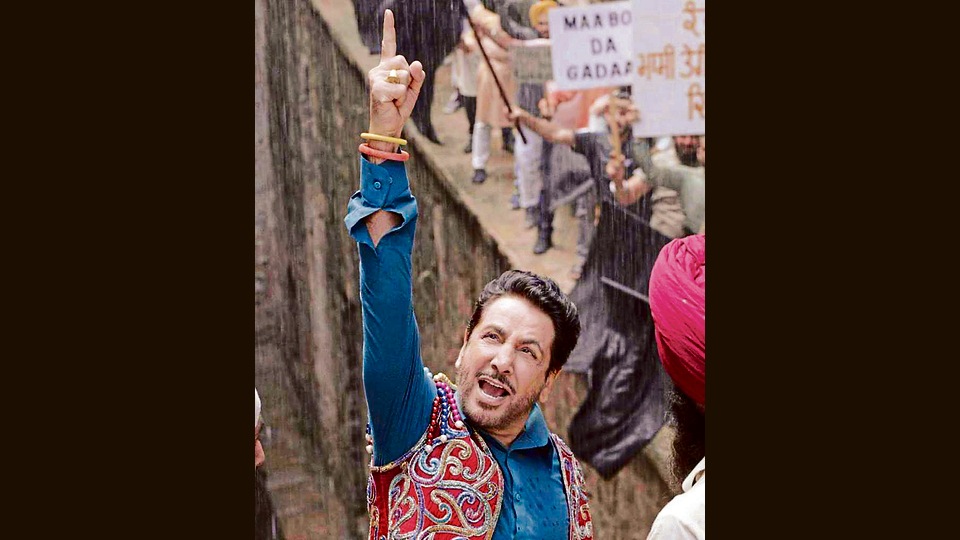
Kuchh lainde soch bichar
Bin soche samjhe kadd laayi
Oh lafzaan di tez kataar
– Gal Sunoh Punjabi Dosto, Gurdas Maan
Years after he was publicly humiliated and driven away from the Singhu stage, legendary singer Gurdas Maan has responded to his Punjabi brethren through the song, Gal Sunoh Punjabi Dosto --- a deeply political, visually stunning and emotional song, laced with hurt, pathos, and redemption.
On one hand, the song justifies his controversial ‘one language- one nation’ stand, and on the other expresses his ‘shikwa’ (unresolved complaint) against fellow Punjabis for letting him down by staging ‘abusive and crass’ protests against him. He also reminds his audience about his yeoman service to the Punjabi language through some of his seminal songs.
The tone of the song is that of pain and recrimination, of one deeply hurt by violent condemnation by his fellow Punjabis, and of one unable to fathom how he fell off the pedestal erected by the same people, who are hounding him today.
Maan has ruled the Punjabi music industry for nearly 30 years ever since he burst onto the Punjabi stage with the song Dil Da Mamla Hai in the early ’80s. Punjabi music before him was largely seen as the preserve of uneducated villagers. It was he who first made Punjabi music popular among youngsters, and the educated in urban areas, taking it from its mofussil origins to a global audience. Maan was to Punjabi music what Amitabh Bachchan is to the Hindi film industry. However, as it is said, ‘all good things must come to an end.’ Over the years, society and politics have changed as have the public’s tastes and icons.
A star fades
Spending a lot of time in Mumbai, the entertainment capital of India, cuts artistes from their roots and the establishment co-opts them over time. However, pop icons, accustomed as they are to public adulation and fawning fans, continue to live in a bubble, convinced of their immortality. The same happened with Maan.
The last decade has been hard on Maan, who is long past his prime as a superstar and virtuoso. He has long been supplanted by the likes of Babbu Maan, Diljit Dosanjh and Sidhu Moose Wala. His music evokes nostalgia but does not capture the zeitgeist.
Even as his popularity was fading, the right-wing was raging against him for patronising ‘deviant’ deras, and his proximity to the so-called establishment. This hate and anger against him was amplified on social media. Maan is on the hit list of the same mob crying for the blood of Bhagat Singh.
Three years ago, this anger exploded like a volcano after he supported the idea of ‘one language-one nation.’ This was a red flag in a state deeply conscious and proud of its distinct Punjabi identity and culture. His attempts to clarify himself by trying to draw a distinction between ‘maan’ (Punjabi) and ‘maasi’ (Hindi) further enraged a large section of Punjabis, who view Hindi as a tyrannical mother-in-law (saas) rather than an affectionate aunt (maasi). Further, Maan responded to the protests against him in Surrey (Canada) with his crass ‘batti’ remark, which cost him a lot of fans. The iconic singer, in his latest song, has tried to defend his remark as his ‘Punjabi temper.’
Search for catharsis
Maan’s public humiliation was complete, a year later at Singhu, during the greatest outpouring of the “Punjabi collective emotion” during the Kisan Morcha, where one of the greatest proponents of the Punjabi language was hooted, hounded, humiliated and not allowed to address the audience.
That Maan has come out with this song now shows that he is still hurt and deeply affected by these episodes. He is clearly looking for catharsis and redemption so that the fallen hero may rise like a Phoenix. While the song will surely win back Gurdas Mann some of his fan base, but an equally consolidated and emboldened “ideological” foe awaits to crucify him for his political views and religious choices.
harjeshwar4@gmail.com
(The writer is an assistant professor of history at Sri Guru Gobind Singh College, Chandigarh. Views expressed are personal)


