
 E-Paper



Me, my toddler and our date with The Elephant Whisperers
The still spills love and compassion for the viewers, making the entire experience a celebrated one. The message of blurring the line between the human and the beast is what makes this documentary an outstanding one

 Prefer HTon Google


India woke up to two phenomenal victories at the recent Oscars. With every fan going Naatu Naatu, the zeal and exuberance it created won’t just fade away. To cherish the other win, I watched The Elephant Whisperers with my two-year old daughter. Shaking a leg at turbo beat of MM Keeravani’s prize-winning song was difficult for us. Hence, my child and I decided to take snug seats and be glued to Kartiki Gonsalves and Guneet Monga’s triumphant Netflix nature documentary.
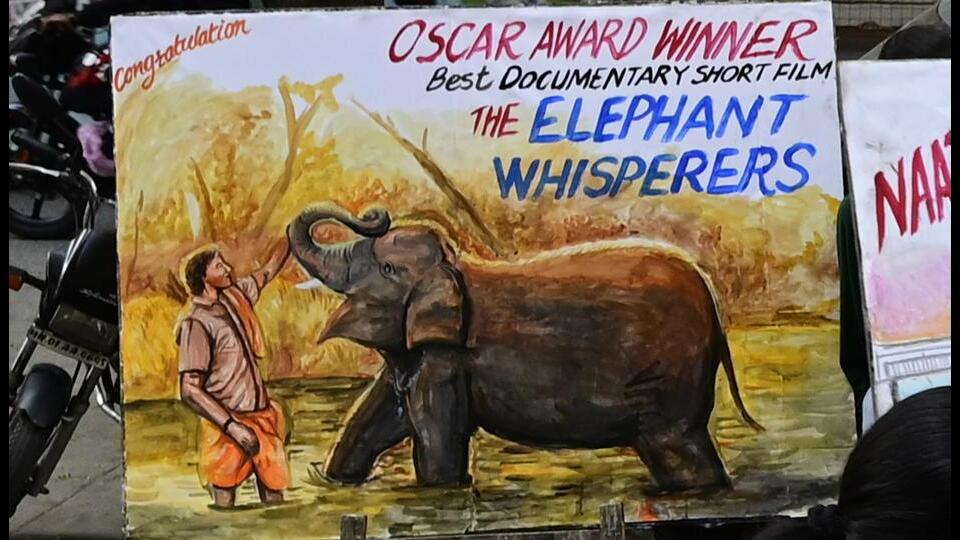
The film is about Bellie and Bomman, two people being parents to babies, baby elephants to be precise. Their affection, their love and sheer selflessness of the deeds they engage themselves in leave the viewers sighing with hope, happy tears and a satisfying vision. Besides, it is immensely beautiful, every still of the movie will leave you enchanted, undoubtedly. In a parallel universe, my kid, getting the hang of how human minds work linguistically, could narrate a different tale altogether. “Elephant eating ladoos, mumma”. “Dadi ma applying oil on elephant, mumma”. “So many langoors, mumma”. These were some of the many responses I garnered while “the elephant whisperers” were going about their uber cool and unconventional everyday routine.
In the words of its producer, Guneet Monga, “This is India’s first ever film to win. And it’s two women from a country of 1.4 billion.” The statement she made is iconic, revolutionary and testament to the bright future India has in terms of its art, talent, calibre and recognition. With many millennial parents gyrating to Cocomelon, Zappy Toons and Pinkfong rhymes, I decided to take the road scarcely taken and experience this film with my child, a calm, non-stimulating and enriching work of art.
Moreover, how could one not mention their sartorial choices during their presence at such a coveted platform! Monga was draped in a Banarasi saree with elephant motifs all over and it was secured with an aesthetic elephant-shaped brooch. Gonsalves, the film director, donned a gown brimming with sparkling illustrations of the sea, sky, creatures, big and small, land. In other words, it was a spectrum of flora and fauna. How thoughtful and intricate this representation is at a level beyond the fancies one could fancy.
The film sends the message of sustainable living with such a heart touching picturisation. Bellie and Bomman prove how such living is soothing and satiating for the soul as well as the planet.
The film ends with children engaged in bathing the baby elephant, a sight which they watch with hope in their hearts and mirth in their eyes. What caught our attention was Bellie applying oil to the baby elephant’s hair, just like every parent does to his or her child. The still spills love and compassion for the viewers, making the entire experience a celebrated one. The message of blurring the line between the human and the beast is what makes this documentary an outstanding one.
Recognition is another feather in its cap. Of course, we ended with my child exclaiming and murmuring and babbling, “Mumma, elephant taking bath. (Pause). With babies.” Watch it with your kids if you haven’t already and watch them learning a thing or two from the real world, fascinating yet so illuminating for all beings, young and old.
The writer is assistant professor of English at Government College in Jatauli (Gurugram) and can be reached at alpana193@gmail.com


