
 E-Paper



Ambala’s 1857 War Memorial likely to be opened by year end
The war memorial displays the historical facts and the role of uprising heroes from Ambala and other places against the British authorities

 Prefer HTon Google


The under-construction Shaheedi Smarak (war memorial) dedicated to the first war of independence in 1857, being set up on NH-44 in Ambala Cantonment, is near completion and is likely to be inaugurated by the end of the year.
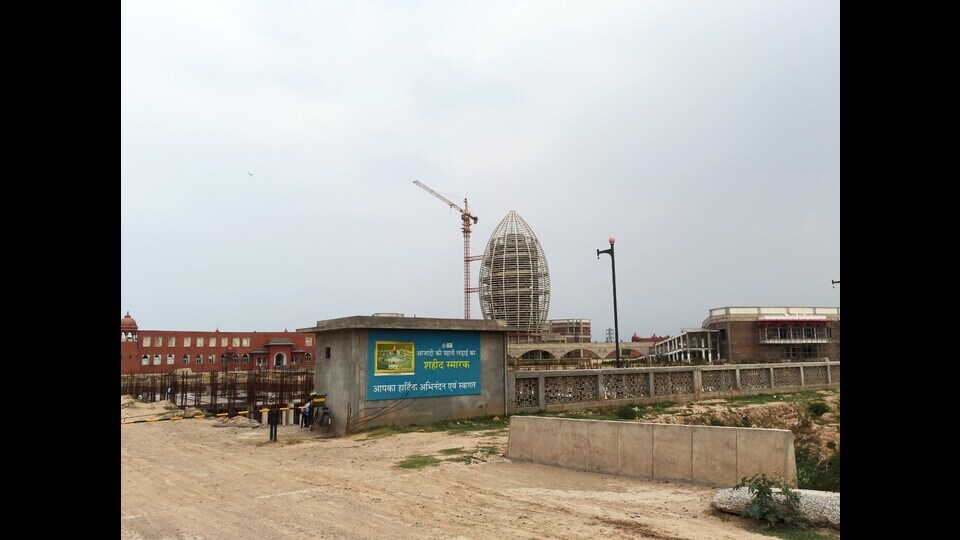
The war memorial, which is being set up at a cost of ₹300 crore on 22 acres, is the largest such covered structure in the country. It displays the historical facts and the role of uprising heroes from Ambala and other places against the British authorities.
Additional principal secretary to the Haryana chief minister and director general of information, public relations, languages and culture department, Dr Amit Agrawal is hopeful that the project will be completed by October this year. “Work is underway on war footing and the art work is set to begin. The memorial is dedicated to several Indians who sacrificed their lives for the country,” Agrawal told HT.
Officials at the public works department (PWD) said the project was 88% complete and the tender for the art work will be floated this week, as the bid document had been approved by the government.
Home minister and local MLA Anil Vij, who has been pushing for the memorial for over a decade until it was finally approved by chief minister Manohar Lal Khattar during his first tenure, said, “It will be a true tribute to the freedom fighters and their entire history will be projected for future generations.”
The uprising
At a meeting chaired by Agrawal in New Delhi on April 24, there was a detailed discussion on the display of a series of events of the Ambala revolt, achievements of Haryana post 1857, role of communal harmony and details of few incidents, among others.
The state government, citing Prof KC Yadav’s work on various newly discovered British Raj documents, has affirmed that the 1857 uprising first started in Ambala Cantonment by the 5th and 60th regiments, hours before it took place in Meerut on May 10, 1857.
In both the situations, the bruisers managed to avert the situation before it got out of hand with the arrest of conspirators a week before the mutiny and the revolt was suppressed by executing several mutineers.
Quoting a few instances of communal harmony that will also be featured at the memorial, Yadav’s student Dr UV Singh, who is also part of the five-member committee of historians attached with the project, said, “It is noteworthy that the Ambala rebellion was led by subedars Sheikh Faiz Ul-Khan, Ananti Mishra, Bikhan Khan, Parmeshwar Pandey and Beni Prasad, among other havildars and sepoys from both religions. When two companies of 60th infantry, who managed to escape after May 10 and were moving to Red Fort via Yamunanagar, Saharanpur, they were helped by locals near Bilaspur and Sadhaura. These villages were burnt as a punishment by the British and several died.”
Another member of the committee, historian and retired Punjab civil services (PCS) officer Tajinder Singh Walia said, “The first recorded execution by the British authorities was of Baba Mohar Singh Ahluwalia in Ambala on June 5, 1857.”
In his book “Dastan-E-Haryana-1857” that was released by Vij last year, Walia also highlighted how authorities had sought a report on every district of then Punjab after the Ambala mutiny and house-to-house searches were also carried out.


