
 E-Paper



Panchkula MC to upgrade waste segregating vehicles
The next contract will be based on revised request-for-proposal conditions, offering an opportunity to incorporate the new segregation requirements

 Prefer HTon Google


The municipal corporation (MC), Panchkula, is shifting its focus to source segregation of waste, with four-compartment garbage collection vehicles likely to be introduced in residential areas to collect wet, dry, sanitary and domestic hazardous waste separately, said MC commissioner Vinay Kumar.
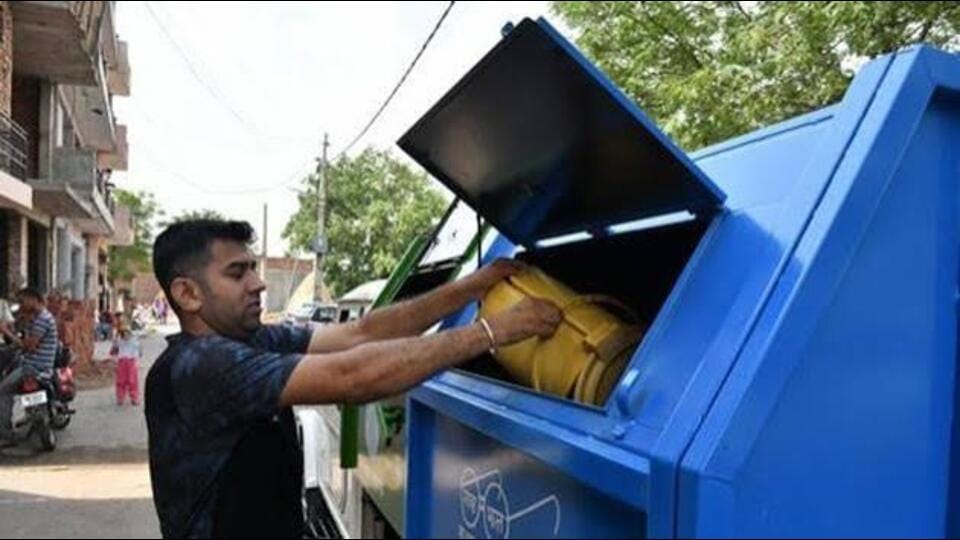
The MC’s existing door-to-door waste collection contract ends in December. The next contract will be based on revised request-for-proposal conditions, offering an opportunity to incorporate the new segregation requirements. Effective implementation, however, will depend on household participation and separate collection being maintained throughout the waste-processing chain.
The move follows the Solid Waste Management Rules, 2026, which came into effect on April 1, replacing the 2016 framework and mandating four-stream segregation at source for households, offices, institutions and other establishments.
Kumar said waste was currently segregated manually at the secondary collection centre in Alipur village, but the civic body was now focusing on segregation at source. Residents would need to adopt a four-bin system, supported by public awareness, he said.
Clarifying the waste flow, Kumar said Panchkula generates around 200 tonnes of waste daily, but most of it is transported directly to Patvi in Ambala district for processing. Around 40-50 tonnes collected from households is brought to Alipur in smaller vehicles before being transported further. Source segregation is expected to reduce mixed-waste accumulation at the centre and improve processing efficiency.
Under the proposed system, wet waste, accounting for around 55% of the total, will be collected in green bins and processed through composting or bio-methanation. Kumar said the MC will encourage home composting and use compost produced through its own initiatives in nurseries and other suitable locations. Dry waste, estimated at 30%, will be collected in blue bins and sent to material recovery facilities (MRFs) for recycling. Sanitary waste, around 10%, will be collected separately, while the remaining 5% of domestic hazardous waste will require specialised handling and disposal.
The civic body will have to expand the existing two-bin arrangement, upgrade collection vehicles with two compartments, and strengthen composting and material recovery facilities. Separate storage and appropriate treatment arrangements for sanitary and hazardous waste, along with training and protective equipment for sanitation workers, will also be required.
According to details, integrated waste-to-energy plants were planned for Haryana’s Hisar, Ambala, Faridabad and Gurugram clusters. The Ambala cluster, covering urban local bodies in Ambala, Yamunanagar and Panchkula districts, will have an integrated waste-to-energy plant with a processing capacity of 900 tonnes of waste per day. The plant is expected to generate at least 9 megawatt (MW) of electricity once operational.


