E-Paper



Rohtak: 246 ready-mix concrete plants operating sans government nod, NGT told
Out of a total of 445 RMC plants identified across the state up to August 20, only 199 had valid CTOs, while 246 were operating without the mandatory consent, reveals a fresh status report

 Prefer HTon Google


As many as 246 ready-mix concrete (RMC) plants in Haryana were found operating without a valid consent to operate (CTO), the Haryana State Pollution Control Board (HSPCB) said while it struggles to recover nearly ₹40 crore in environmental compensation imposed on defaulting units.
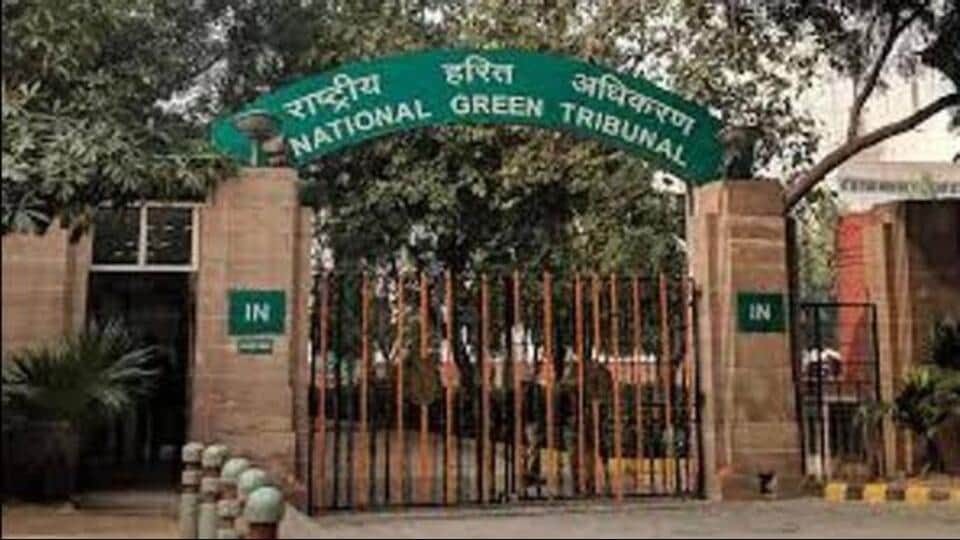
Out of a total of 445 RMC plants identified across the state up to August 20, only 199 had valid CTOs, while 246 were operating without the mandatory consent, reveals a fresh status report filed by the HSPCB with the National Green Tribunal. The board claimed that closure notices were issued to 227 such RMC plants, and 98 of them were dismantled, while the closure of 14 such plants was under process.
Moreover, the board told the tribunal that it imposed about ₹43.9 crore in environmental compensation (EC) on 91 defaulting plants, but has recovered only ₹3.4 crore, leaving around ₹40.4 crore from those units unpaid.
Of the 91 units facing EC proceedings, 36 have been dismantled. Yet, against ₹18.4 crore imposed on these units, only ₹85.6 lakh has been recovered, leaving approximately ₹17.6 crore outstanding.
The board told the tribunal that it cannot recover this compensation as arrears of land revenue until the Haryana Land Revenue Act is amended. That request is still pending with the revenue department. The Gurugram district accounts for the largest share of the problem as Gurugram south with 110 plants and Gurugram north with 84 together have 194 units about 44% of the state total. The heaviest clusters of plants without consent are 56 in Gurugram south, 52 in Gurugram north and 41 in Bahadurgarh.
In Gurugram south, closure orders have already been issued against all 56 plants found operating without consent and 48 in gurugram north.
According to the report, there is currently no specific enabling provision under the applicable environmental laws or the Punjab Land Revenue Act, 1887, as applicable to Haryana, to recover environmental compensation as arrears of land revenue. The board had approached the revenue department in this regard. In a communication dated March 3, 2025, the department informed HSPCB that such recovery could not be made as arrears of land revenue in the absence of an enabling statutory provision. Claiming that the matter is being actively pursued with the state government, HSPCB mentioned the copy of a letter written to the revenue department on January 15, 2026, seeking examination of the possibility of inserting a suitable provision in Section 98 or another relevant provision of the Punjab Land Revenue Act to facilitate recovery of environmental compensation as government dues.
About the ₹17.63 crore still outstanding against dismantled RMC plants, the pollution board has itself admitted a statutory gap in recovery and informed the tribunal that it is seeking a legal mechanism to collect these dues. The revenue department told HSPCB on March 3, 2025, that such recovery was not possible without an enabling statute. Along with its reply, the board annexed a letter dated January 15, 2026, to the revenue department acknowledging that environmental laws do not provide a specific method for recovering environmental compensation and asked for an enabling provision in the Haryana Land Revenue Act so that such amounts of EC can be recovered as arrears of land revenue.