
 E-Paper



Houses in Tehri develop cracks, residents seek speedy rehabilitation
Fresh land subsidence has triggered fears among residents that the houses that have developed cracks could cave in

 Prefer HTon Google


MUSSOORIE: Houses have developed cracks and could cave in due to land subsidence around the Tehri hydropower project in Uttarakhand’s Uttarkashi, residents said.
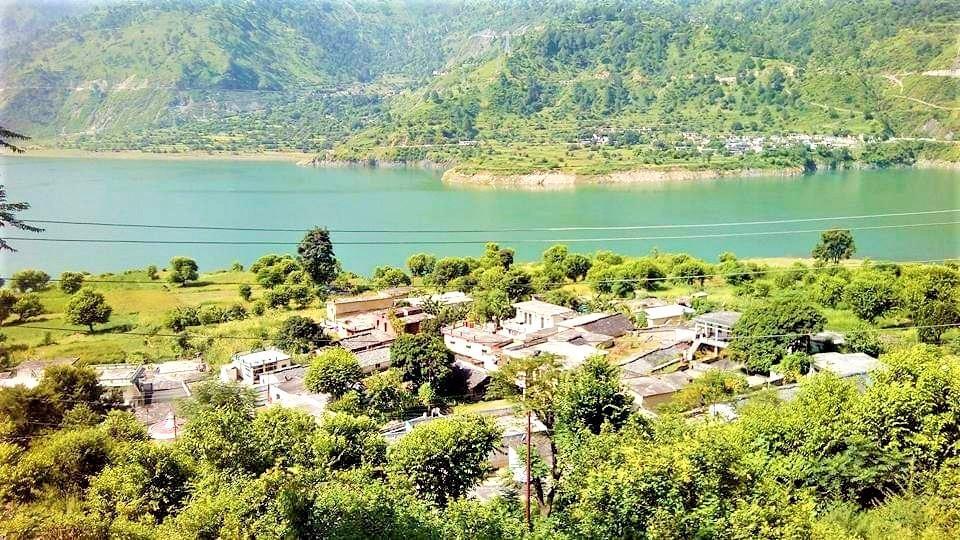
Rajendra Prasad, a resident of Luneta Bhattkhanda village, said a portion of his house was damaged on Friday night due to the subsidence. “Fortunately, the whole family sleeping in the other room when the incident occurred. Otherwise, we could have been buried in the rubble,” said Prasad.
The fresh subsidence has triggered fears among other residents of the village whose houses have developed cracks. The residents demanded speedy rehabilitation along with financial compensation.
Madhu Lata Bhatt, the village head, said the residents were living under fear as the subsidence could affect them too. “...with the cracks already developing, we are living hoping that the problem will be addressed soon.”
The state’s rehabilitation department said Prasad’s family was allotted land in Haridwar under a rehabilitation package in 2017.
DS Negi, a rehabilitation department official in New Tehri, said Prasad’s family has been given 70% of house compensation as well as per the rules. “...the remaining amount will be released only when the affected villager submits the demolition certificate.”
He said in view of the subsidence, a collateral damage policy for 30 villages has been prepared. “...two to three proposals are being processed currently while for other such cases in the area, action will be initiated after the report of a joint expert committee which could not work due to the election modal code of conduct. We are hopeful that the process will pick speed after the formation in the government,” said Negi.
Residents cited a geological survey of April 2011 and said it recommended rehabilitation of villagers in the area amid an increase of water level in the project’s dam and the cracks in the houses.
Harish Thapliyal, a journalist from Uttarkashi, said several villages are facing land subsidence. He added houses and shops were developing cracks and people have been demanding rehabilitation.
Vikram Gupta, an expert on landslides at the Wadia Institute of Himalayan Geology, said with the rise in the temperatures, the soil loosens. He added the geological movement is expected. “This results in land subsidence. After the increase of water level, its impact on the geology of the area needs to be studied further.”
Hemant Dhyani, a member of a Supreme Court-appointed expert body to study the impacts of hydro projects after the June 2013 flash floods in the state, said the reservoir’s drawdown effect has triggered the land subsidence in the villages above the full reservoir level. “[This] leads to the houses and other infrastructures caving, thus leading to loss of property.” He said it causes land instability and in some cases injuries.
Dhyani said the authorities have failed to assess the land subsidence damages and have provided compensation to only the villagers, whose properties were submerged in the reservoir. He added those facing land subsidence have been left out of its purview.
Residents said the Tehri Hydro Development Corporation (THDC) has started filling the reservoir-to-reservoir level of 830 meters. Kuldeep Chand, a resident of Badhangaon village, said with the increase in the water level, water has started entering the villages and damaging their homes. Chand added the authorities have refused any compensation citing the guidelines for displacement entitlement.
Kanchan Rangad, a high court lawyer whose family was displaced in 2003 due to the submergence of the main Tehri town, said the government started the project in the 1970s. He added it was not until 1990 that the government transferred the project to the THDC for rehabilitation work.
The dam affected 125 villages directly or indirectly due to the construction of a 42 square km reservoir.
The government divided people into “fully affected” and “partially affected” categories and allotted land accordingly. Over 5,000 families in Tehri declared fully affected were relocated to New Tehri town constructed specially for the displaced persons. Over 3,000 families were partially affected by the dam. They have been demanding fully affected status as their fields have been submerged leaving them without any agricultural land, said Rangad.
The villagers unhappy with the rehabilitation sought better compensation and prompted the government to set up the Hanumanth Rao Committee in 1996. The committee recommended extra benefits including payments for house construction, allotment of shops, etc.
Environmentalist Sunderlal Bahuguna led protests against the dam, which he considered anti-human as it displaced a large population without a proper plan.
The project generates 1,000-megawatt power and the authorities plan to double it. It is supplied to Uttarakhand, Punjab, Haryana, Uttar Pradesh, and Delhi. The dam also supplies over 250 million gallons of drinking water to Delhi, Uttarakhand, and Uttar Pradesh.


