
 E-Paper



Cabinet approves ₹1,789 crore AI-based traffic management system for Delhi
The system will cover 42 major traffic corridors in three phases over 24 months, with adaptive signals and automated enforcement.

 Prefer HTon Google


The Union cabinet on Wednesday approved implementation of AI-based traffic signals under a comprehensive Intelligent Traffic Management System (ITMS) for Delhi, with an approved cost of ₹1,789.52 crore. Through this, the traffic police will enable adaptive signal controls, automated enforcement, and real-time commuter updates across 42 key traffic corridors in three phases over 24 months.
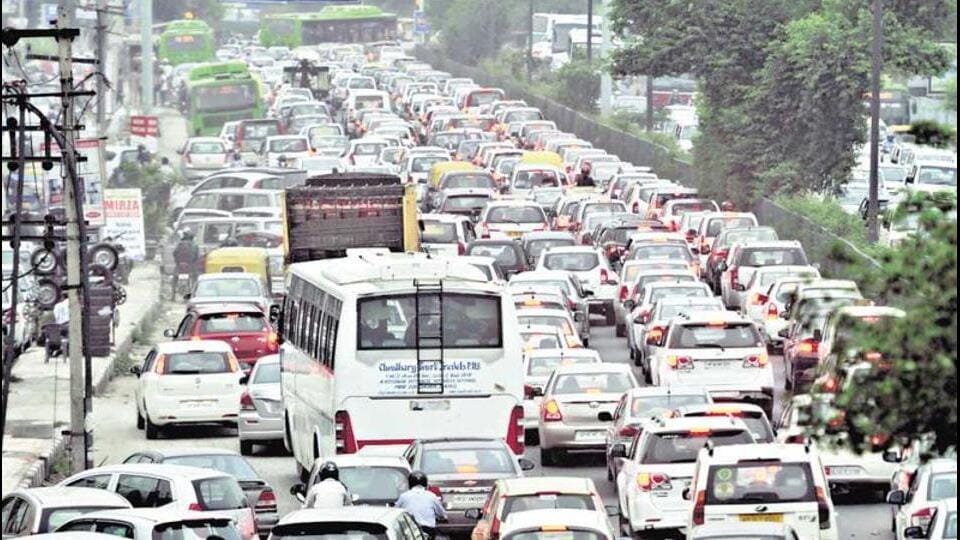
While Delhi Police will select a Master System Integrator through competitive bidding, the Centre for Development of Advanced Computing (C-DAC) will provide technical monitoring, scrutiny, and acceptance as the Project Management Consultant. HT in June reported that this AI-based system, initially planned only for the Central Vista area, was under consideration for city-wide deployment by the Union Home Ministry.
Also read: Traffic chokes on Barapullah Ph-III on first day
C-DAC to oversee technical implementation
Briefing reporters after the cabinet meeting, Union information and broadcasting minister Ashwini Vaishnaw emphasised the pressing need to upgrade traffic management infrastructure to keep pace with Delhi’s rapid urban expansion. “With rapid urbanisation, Delhi has become a mega city—moving beyond the traditional classification of a metro. Several initiatives were taken earlier, but the objective now is to integrate all these so the entire system functions as one harmonised Intelligent Traffic Management System.”
Detailing the technological overhaul, “Through this project, in a sense, a brain will be added to the traffic management system, signals, CCTV cameras, and AI capabilities. If we dynamically vary light durations based on traffic density, flow can increase substantially. C-DAC will be our technology partner, working with the Union ministry of home affairs and Delhi Police in a whole-of-government approach”.
Also read: One breakdown, long jams: Vehicle breakdowns choke Delhi roads; buses biggest hurdle
Adaptive signals planned at 1,092 locations
Under the plan, 1,092 locations will feature Adaptive Traffic Control Systems (ATCS) and 1,029 sites will have automated technology-driven enforcement systems. Unlike traditional fixed-timer signals that hold up traffic regardless of road density, adaptive signals will continuously analyse live traffic volume to dynamically adjust signal timings and clear congestion at busy junctions and rotaries.
With Delhi housing nearly 7.1 million active registered vehicles, vehicular growth has severely outpaced physical road expansion. The ITMS addresses this bottleneck by optimising existing road capacity. Crucially, the system will facilitate priority ‘green corridors’ for ambulances and emergency response vehicles. Commuters will also receive live updates on traffic bottlenecks, diversions, and parking availability via Variable Message Sign boards and digital platforms, a statement said.
AI cameras to detect traffic violations
On the enforcement front, AI-driven cameras will automatically capture violations such as red-light jumping, speeding, wrong-way driving, illegal parking, and non-use of seatbelts or helmets. AI analytics will also help law enforcement identify stolen vehicles, repeat offenders, and vehicles linked to hit-and-run incidents.
AI-based traffic signals are not novel in the Indian context and have been functional in Bengaluru for many years now. Later. Under the Smart Cities Mission, multiple cities, including tier-2 and tier-3 cities, also introduced such signals.
According to officials in Delhi aware of the matter, the idea was conceived and proposed in 2008. “Over the years, all these measures were taken in phases and we now already have automatic number plate recognition camera (ANPR) cameras, multiple cameras, speed detection and stopline violation detection softwares installed in the cameras,” a Delhi Police officer said.
Also read: Bengaluru rain chaos: City battles waterlogging, traffic snarls. Frustrated commuters share videos
Delhi Police had proposed system in February
In February, the Delhi Police submitted a proposal to the MHA for an AI-enabled ITMS. The proposal stated that under phase 1, the system will be commissioned across five traffic corridors within the first 12 months. This phase will include installation of 250 adaptive signal junctions and 271 enforcement points. Phase 2, scheduled for completion within 18 months, will see the addition of seven more corridors, 222 signalised junctions and 236 enforcement points.
S. Velmurugan, Senior Adviser, National Council of Applied Economic Research, said, “The fact that it is planned for the three-phased implementation encompassing the 1800km of arterial and sub-arterial road network of Delhi through the strategy of selected 42 major corridors make this quite interesting. The phases allow the Delhi Police to iron out any software bugs, hardware calibration defects, or AI signal errors,” he said, adding that the selection of adjacent set of road corridors in each phase will help to achieve the signal coordination for the major roads and the intersecting roads which in turn would help to eliminate the delays caused at the intersections.
“The implemented road sections is expected to have green corridors and priority movement for emergency vehicles, enabling faster passage through congested stretches including faster response to congestion and incidence of road crashes,” he said.
(With inputs from Hemani Bhandari)

Stay updated with all top Cities including, Bengaluru, Delhi, Mumbai and more across India. Stay informed on the latest happenings in World News along with Delhi Election 2025 and Delhi Election Result 2025 Live, New Delhi Election Result Live, Kalkaji Election Result Live at Hindustan Times.


