
 E-Paper



14 private, 6 state govt hospitals dedicated for 100% Covid-19 treatment
After Delhi chief minister Arind Kejriwal’s directive, the health department has bolstered capacity. Covid-19 beds across the national capital have been ramped up to nearly 15,000.

 Prefer HTon Google


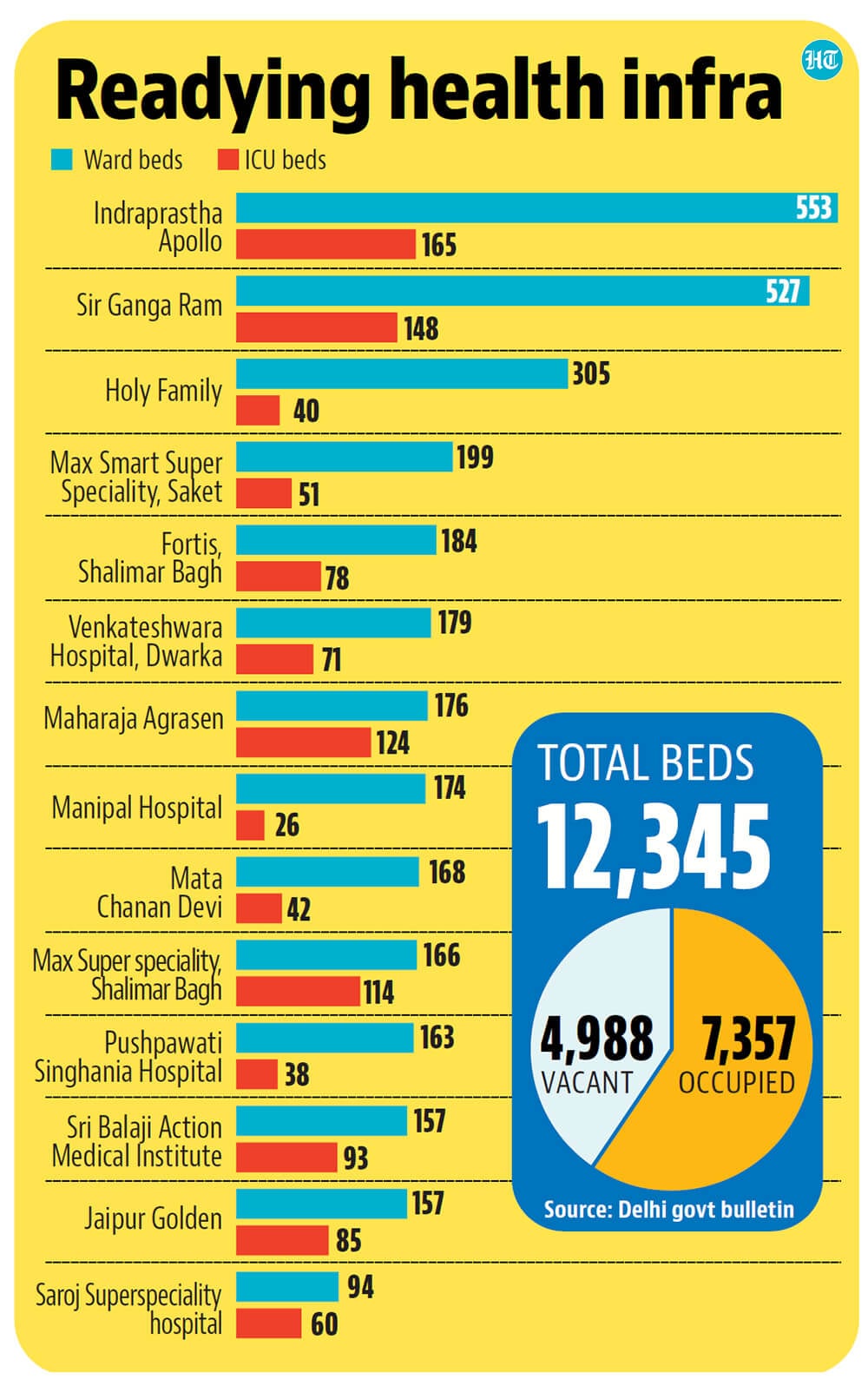
With the fourth wave of the pandemic breaking previous records in the Capital, and fatalities hitting levels not seen since December, the Delhi government on Monday converted 14 major private hospitals and six government hospitals into dedicated Covid-19 treatment facilities. The action came hours after chief minister Arvind Kejriwal directed the state health department to increase the number of beds earmarked for patients with the viral infection. After Monday’s orders, 2,653 beds have been added for Covid-19 treatment in the city, taking the total to at least 14,900 beds.
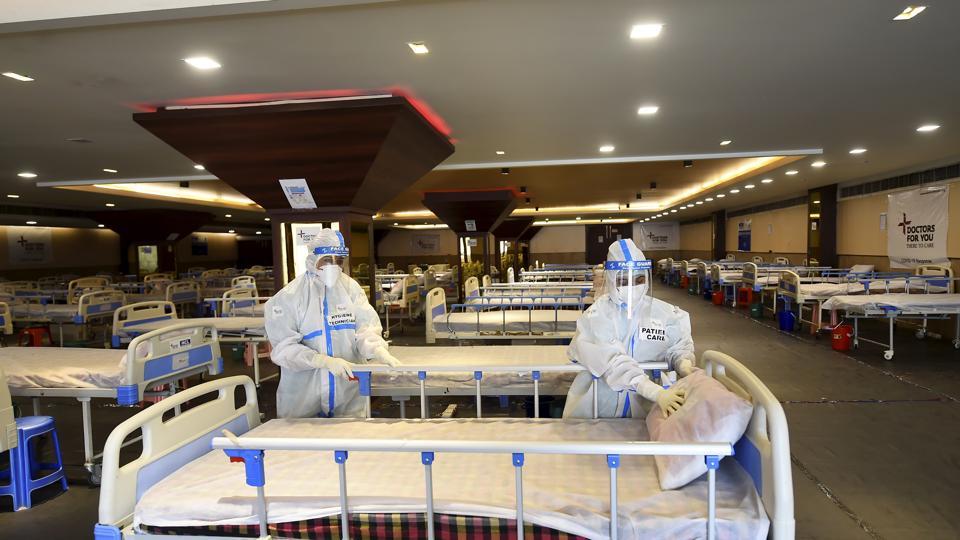
This is the first time the government has converted private hospitals into dedicated Covid-treatment facilities. These hospitals, including their outpatient departments and emergency units, will no longer be open for any non-Covid services — a move that some residents and experts fear will impact emergency hospital care in several areas.
Read more: Arvind Kejriwal holds Covid-19 review meeting, tweets 3 requests
The 14 private hospitals are Indraprastha Apollo hospital at Sarita Vihar, Max Super Specialty hospitals at Saket and Shalimar Bagh, Holy Family hospital in Okhla, Sir Ganga Ram Hospital in New Rajinder Nagar, Fortis hospital in Shalimar Bagh, Maharaja Agrasen hospital in Punjabi Bagh, Venkateshwar Hospital in Dwarka, Sri Balaji Action Medical Institute in Paschim Vihar, Jaipur Golden Hospital, Rohini, Mata Chanan Devi Hospital in Janakpuri, Pushpawati Singhania Hospital in Saket, Manipal Hospital in Dwarka and Saroj Super Specialty Hospital.
The six government hospitals are Rajiv Gandhi Super Speciality hospital, Burari Hospital, Deen Dayal Upadhyay Hospital, Deep Chand Bandhu Hospital, Dr Baba Saheb Ambedkar Hospital and Ambedkar Nagar Hospital. So far, only two government facilities — Lok Nayak and Guru Teg Bahadur hospitals — have been converted to Covid-19 facilities.
Read more: Delhi hits new record high of over 11,000 Covid-19 cases
Infections touched another one-day high in the city on Monday, with 11,491 fresh cases. Daily deaths are now at their highest in nearly five months, with 72 more fatalities of the infection recorded on Monday.
The chief minister issued the directions after a review meeting with state government and district officials, after which he also urged people to follow Covid-19 appropriate behaviour, not rush to hospitals if they displayed mild symptoms, and get vaccinated if eligible.
Kejriwal also urged the Centre to double the number of beds for Covid-19 patients in all its hospitals in the city.
“We must ensure our bed availability in government and private hospitals is at par with what it was in November last year. We will request the Centre to increase Covid beds in its hospitals. Delhi’s Covid situation is very serious. The fourth peak of the virus is turning out to be more dangerous. There should be no dearth of hospital beds,” Kejriwal said in a statement.
“What can we do? I have nothing to say,” a senior doctor from one of the 14 hospitals said, asking not to be named. A senior doctor from another hospital said, “Where will all the non Covid patients go, even those that need emergency care? They have left us with no room to treat them.”
Read more: Why is India seeing Covid-19 second wave? AIIMS chief Randeep Guleria explains
Another official from one of the 14 hospitals said, “These are the big hospitals that provide specialised cancer, transplant and many other treatments. Everything will have to be stopped.”
A statement from Fortis hospital said, “We are awaiting details and more clarity on this order from the government.”
“Government hospitals have so many beds earmarked for Covid-19 patients, why is nobody going there? A pandemic is the responsibility of public health system. In one year, they should have added more oxygen beds, created more oxygen plants, brought facilities up to the mark. Instead, every time the cases go up, they reserve beds in private hospitals. The hospitals have nothing against pitching in the fight, despite the price caps put in by the government,” said Girdhar Gyani, director general of Association of Healthcare Providers (India) (APHI).
He said, “This time, what the government has done has not only hurt the hospitals financially. It is inhuman. These are the biggest hospitals in their respective areas; if a stroke or a heart attack patient comes in, should the hospitals let them die? What about cancer patients, should they be asked to come back when it has progressed?... The doctor on duty should have the discretion to allow people with life-threatening conditions to receive treatment.”
Read more: Experts clear Russia’s Sputnik Covid-19 vaccine for use in India
He said the APHI will go to the court on behalf of the hospitals. The organisation had earlier gone to court when 80% of the ICU beds had been reserved in the big private hospitals.
A senior official from the health department, who attended the meeting, said over 85% ICU beds were occupied in 57 of the 115 private hospitals in Delhi. The official also said that nearly all ICU beds were occupied in all of the city’s major private facilities.
“The situation of Covid ward beds is similar in the big private hospitals. Over 85% of the Covid ward beds are full in 32 of the 115 private hospitals,” said the official who requested not to be named.
The government on Monday also directed 19 private hospitals to reserve 80% of their total ICU beds for Covid-19 patients, while 82 other private hospitals have been told to reserve 60% of their ICU beds. Additionally, 101 hospitals have been asked to reserve 60%of their ward beds for Covid-19 patients.
Delhi health minister Satyendar Jain said the Centre should increase the number Covid-19 beds at their facilities as well, noting that the number of available beds is falling. “Currently, 1,090 Covid beds are available at central government-run hospitals, as compared to over 4,000 beds that were free in November 2020 during the third wave of the infection in the city,” he said.
Read more: Maharashtra, Punjab, C'garh: Govt points out gaps in Covid containment strategy
Jain, however, allayed fears about the shortage of ventilators.
“There are only two types of beds — ICU beds and normal ward beds. A year ago, the number of ventilators was a major issue. But now we have HFNO (high-flow nasal oxygen) and Bi-Pap, which are as good as ventilators. Only 2-3% patients need ventilators. If a ventilator bed is occupied, it is counted as a patient being on a ventilator, but when it comes to the actual use of ventilators, that number is very low,” he said.
When asked whether large Covid Care Centres (CCCs) such as the one in 10,000-bed facility that opened in Chhattarpur last year will be reopened, Jain said such measures will be taken only if the situation demands.
In the meeting, the chief minister’s office said Kejriwal expressed concerns that people with very mild or no symptoms were occupying hospital beds, which health department officials said was leading to an increase in hospital bed occupancy. “He (Kejriwal) said beds should be kept free for patients with serious symptoms and that all other patients must be treated under home isolation,” the statement read.


