
 E-Paper



DAG’s ‘City as a Museum’ festival to showcase Delhi’s printmaking legacy
New Delhi: Between 1950 and 1980, as Delhi transformed from being the capital city of a newly independent nation to the country’s power centre with a cosmopolitan outlook, printmaking came into its own

 Prefer HTon Google


New Delhi: Between 1950 and 1980, as Delhi transformed from being the capital city of a newly independent nation to the country’s power centre with a cosmopolitan outlook, printmaking came into its own. Somnath Hore and Jagmohan Chopra wanted to establish the artform: the latter creating a studio in his Delhi house in the 1960s, which functioned alongside the studio in the prestigious College of Art, allowing artists to work after hours. This led to the formation of Group 8, a collective of artists devoted to printmaking, who went on to hold exhibitions across the country.
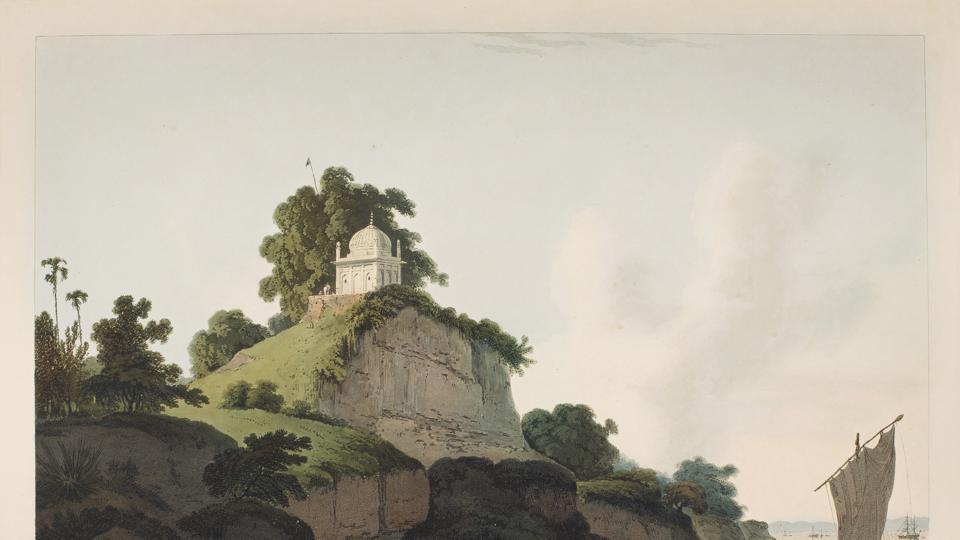
“It was a time when many artists all over the country were coming to Delhi, being commissioned by people, and so on. Printmaking was also a new artform, and the studios were a palace where you could do modernist experiments in a professionally run space. Many people who join an art college don’t know at first that there is something called printmaking, and on a larger scale, many may not know its history in Delhi,” says art historian Shukla Sawant.
Prints by artists from this collective will be on display at the College of Art, Delhi, between September 13 and 15 to mark the opening of the second edition of DAG’s The City as a Museum art and heritage festival.
The festival will be held from September 12 to 25, and includes an array of events, from exhibitions and walks to printmaking workshops, and a walkthrough of the collection at Nizammuddin’s Ghalib Academy. It is versatile in its venues as well, with events being held at DAG’s gallery at Janpath and Bikaner House, as well as in the Gurdwara Bangla Sahib and the lanes of Jamia Nagar.
“It is not just the written word that tells you stories about how a space became urbanized, it is also in the very manifest way of traversing through the city and understanding its history and narratives. I always think of buildings, roads, and any other kind of infrastructure or historical monuments as important to engage with to understand the historical and contemporary text of the city,” says author and urban studies scholar at Jawaharlal Nehru University, Ghazala Jamil, who will participate in a panel discussion on September 19 at the Institute of Objective Studies in Jamia Nagar, about the relationship between the university and the surrounding locality.
On September 14 and 15, printmaker and Group 8 member Santosh Jain will lead a collagraph printmaking workshop at the college’s printmaking department. “When I was studying at the college of art in the 70s, collagraph printing was very common and cheap, and I learnt it from Jagmohan Chopra. Additionally, it would allow you to make a lot of editions from the same plate, I remember going up to 200 editions with a coated paper plate. I want people to learn it as I think that it fits today’s culture, where everyone is breaking boundaries, as it provides you with many opportunities to be imaginative,” says Jain.
The week-long festival also promises to remind people of the city’s forgotten history. For instance, the Baba Baghel Singh museum at the Gurudwara Bangla Sahib complex will host a walkthrough led by artist Arpana Caur and historian Kanika Singh on September 17, followed by a visit to Caur’s academy of Fine Arts and Literature, which houses eight non-ticketed museums.
“For many people, when we think about the Sikh community, we only think of Gurudwaras, and when we think of museums, we think of places such as the national museum or NGMA. However, many people do not know that there are many Sikh museums, which are essential to the community’s remembrance of its history, and the legacy of their gurus. These museums are a place for people to learn about Sikh history, and be exposed to a different type of visual culture,” says Singh.
On September 15 afternoon, a walkthrough of the modern art collection at Nizammuddin’s Ghalib academy with writer Kamayani Sharma and Academy secretary Aqil Ahmad will treat the audience to paintings by M.F. Hussain, Satish Gujral, and other artists, made in response to Ghalib’s poems.
“Commissioned by the academy’s first president Hakeem Abdul Hameed, the paintings respond to verses written by Ghalib, and depict the artist’s personal understanding of the verse. They are each different as whatever each individual artist understood of the verse, they painted,” says Ahmad.
“A city is a living legacy of its history and culture in which art plays an important part alongside other streams and components, some of which are more visibly acknowledged than others. With The City as a Museum, we open doors and windows to parallels and conversations that are immersive, educational and investigative but also engaging and fun,” said Ashish Anand, CEO and MD of DAG.
The event is free to attend. People can register through DAG’s site, on a first come, first served basis.

Stay updated with all top Cities including, Bengaluru, Delhi, Mumbai and more across India. Stay informed on the latest happenings in World News along with Delhi Election 2025 and Delhi Election Result 2025 Live, New Delhi Election Result Live, Kalkaji Election Result Live at Hindustan Times.


