E-Paper



Delhi bike taxi ban: Drivers in a fix, leave cab firms, start deliveries
There are some who are still waiting for the Delhi government to notify its policy on cab aggregators — especially after the Supreme Court on Monday halted the operation of bike taxis in the city

 Prefer HTon Google


Till a few months ago, 27-year-old Hemant Singh was a bike taxi rider in Delhi. However, after the state government’s warning for action against the service in February, he switched to a food and grocery delivery company.
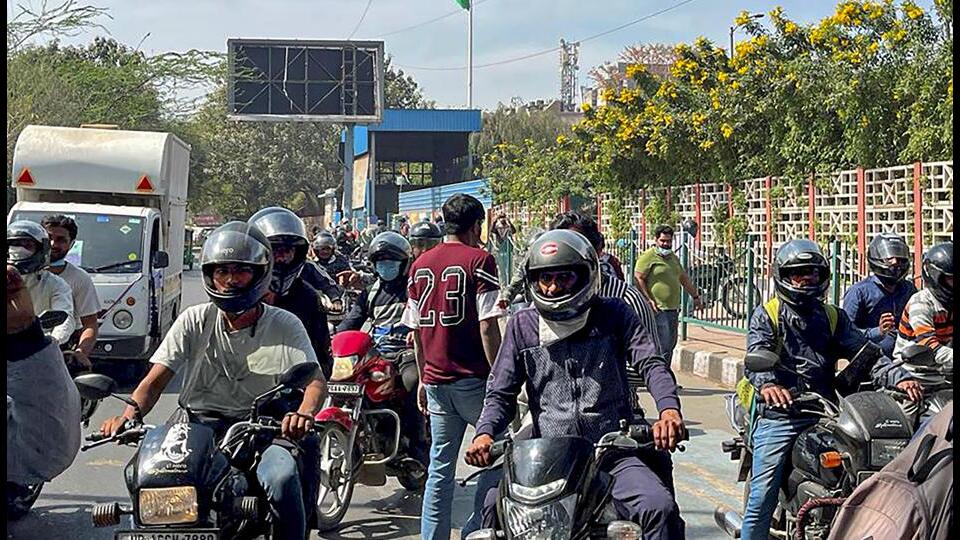
The alternative job is still paying the bills as easily, says Singh. Besides, with the switch, many riders like him say that there is now no fear of being caught and penalised, nor do they have to work in adjoining cities to earn livelihood.
However, there are some who are still waiting for the Delhi government to notify its policy on cab aggregators — especially after the Supreme Court on Monday halted the operation of bike taxis in the city.
While the Delhi government has informed the top court that it will be announcing a policy by July, the existing draft notification says that only electric bike taxis will be allowed in the city, which has also led to apprehensions about continuing with the work.
“I live in Delhi, and it is feasible for me to work here and travel shorter distances around home. I would rather take up other jobs than buy a new vehicle. I bought this motorcycle only last year... the delivery work is also good, and I don’t need to deal with fussy customers. I am also making nearly the same amount,” said Singh. He added that the commission charged by the food delivery companies was much lower than what he paid for the bike taxi.
Rajkumar Sahu, another bike taxi rider, recently bought an e-rickshaw, as he couldn’t wait for the final rules and was operating under fear.
“It is difficult to keep asking favours from customers to lie if police catch us. The penalty is very high, and we try to take rides for Noida or Gurugram. On the other hand, e-rickshaw is legal, there is no hassle in operating it and the vehicle is not very costly as a long-term investment. These court judgments have now reassured me that I made the right decision,” said Sahu, who earns at least ₹30,000 every month, which he says is much more than when he rode a bike taxi.
Many like 28-year-old Pawan Kumar, who lives near Anand Vihar and at present only preferring rides to Noida and Ghaziabad, are still willing to wait for the final order and even considering switching to an electric vehicle.
“There is no shortage of rides in the other cities, and I make nearly the same amount that I did earlier. However, there are unsaid restrictions in Noida and Ghaziabad too. Occasionally, officials try to stop and harass us, and say that it is illegal to operate even in UP. If electric bikes will make it legal to work in Delhi, it may be a good option. Many friends who are using electric vehicles for delivery say that it is very cheap and easy to charge now,” said Kumar.