
 E-Paper



Delhi Budget: Mohalla buses to help last-mile connectivity
Chief minister Arvind Kejriwal, during a press conference after the Budget presentation on Wednesday, said smaller buses are better suited to serve as part of the mohalla bus scheme since most of these areas typically do not witness heavy traffic and thus 12m-long buses would be under-utilised here.


Delhi will get “mohalla (neighbourhood) buses” to boost last-mile connectivity next year, especially in areas that lack public bus service, state finance minister Kailash Gahlot said during his Budget address on Wednesday. The Delhi government is planning to use 9m-long buses for the mohalla bus scheme because 12m-long buses cannot fit the narrow lanes of several areas.
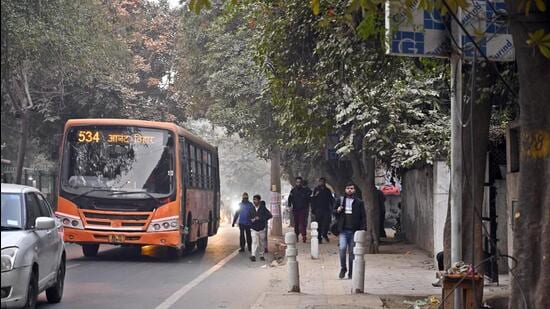
Chief minister Arvind Kejriwal, during a press conference after the Budget presentation on Wednesday, said smaller buses are better suited to serve as part of the mohalla bus scheme since most of these areas typically do not witness heavy traffic and thus 12m-long buses would be under-utilised here.
Gahlot, in his budget speech, said the government allocated ₹3,500 crore towards bus services this fiscal.
He said that last-mile connectivity was the biggest problem of Delhi’s public transport system, which includes both Metro and buses. “Many people choose to buy vehicles because they do not find a convenient or affordable first- or last-mile connection between their home and workplace. For the first time in the history of Delhi, a dedicated last-mile connectivity scheme called mohalla bus scheme will be launched in Delhi next year,” said Gahlot.
The mohalla bus service will start with 100 electric mohalla buses in the next financial year, and in the three years after that, the number will be pushed up to 2,180.
“The fare collection mechanism in these buses will be integrated with the rest of the public transport system through the common mobility card or One Delhi card,” Gahlot said.

To be sure, the transport department carried out a scientific route rationalisation study last year and worked out an extensive set of last-mile routes to connect all major nodes of Delhi’s Metro and bus network with residential colonies, commercial complexes and habitations. Currently Delhi has 7,379 public buses, including 300 electric buses that ply on at least 600 bus routes.
Gahlot, who is also the transport minister of Delhi, said the Delhi government has strengthened and modernised the entire public transport system. “By the end of 2023, the number of electric buses will be 1,900(1,800 12m-long buses and 100 9m-long buses---the largest fleet of electric buses among all the states--- that will reduce carbon dioxide emissions by approx 107,000 tonne. By the end of 2025, Delhi will have a fleet of 10,480 buses,” Gahlot said.
The Delhi government said by 2025, 80% of the bus fleet in the Capital (8,280 buses) will be electric--making bus transport completely pollution-free. Gahlot said the anticipated expenditure for this massive induction plan of electric buses over the next 12 years is ₹28,556 crore. “As a result, around 460,000 tonne of carbon dioxide emissions will be reduced every year. This will help in significantly reducing pollution levels in the Capital,” said Gahlot.

Stay updated with all top Cities including, Bengaluru, Delhi, Mumbai and more across India. Stay informed on the latest happenings in World News along with Delhi Election 2025 and Delhi Election Result 2025 Live, New Delhi Election Result Live, Kalkaji Election Result Live at Hindustan Times.


