
 E-Paper



Delhi: Civic bodies aim to mechanise waste collection points before polls
The mechanization project was started in October 2016 with the inauguration of five fixed compactor transfer stations (FCTS) by L G Najeeb Jung

 Prefer HTon Google


The project of mechanising garbage collection points (dhalao) in the city has now entered its final leg with civic officials setting March 2022 as the deadline for phasing out all the remaining operational dhalaos and trying to complete the project before the municipal elections scheduled to be held next year.
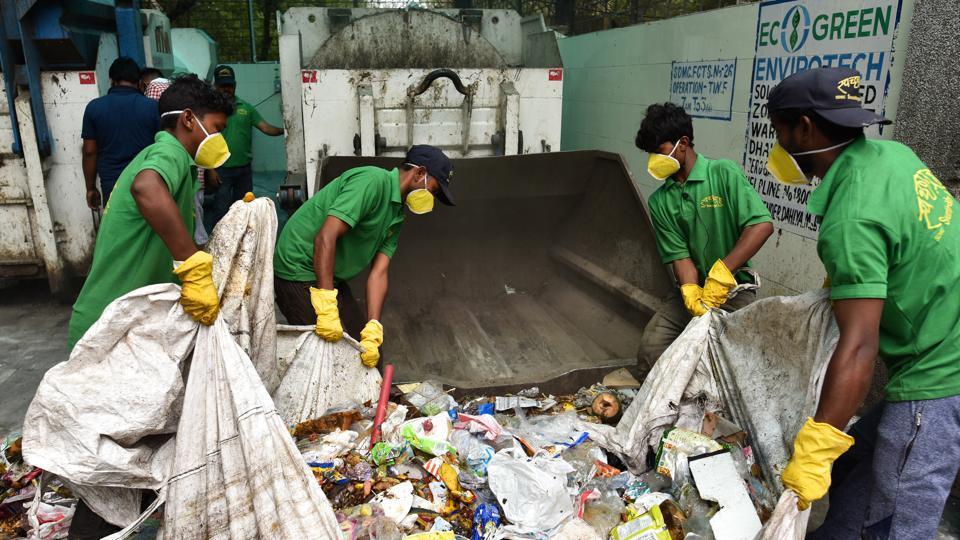
The mechanization project was started in October 2016 with the inauguration of five fixed compactor transfer stations (FCTS) by L G Najeeb Jung. Delhi has over 1,209 primary garbage receptacle points with 550 such points under the jurisdiction of North MCD (municipal corporation of Delhi), 350 points with the South municipal body and 309 receptacles in the East Delhi Municipal Corporation
Traditionally a three walled open structure, an open dhalao is used as a primary municipal waste collection for a colony or a locality. A fixed garbage compactor station works on a hydraulically operated garbage compression system, which reduces the volume of garbage and turns it into highly compressed cakes of mixed waste. It usually comprises a garbage input bin, tipcart, loading shovel bucket, compressor and a hook loader.
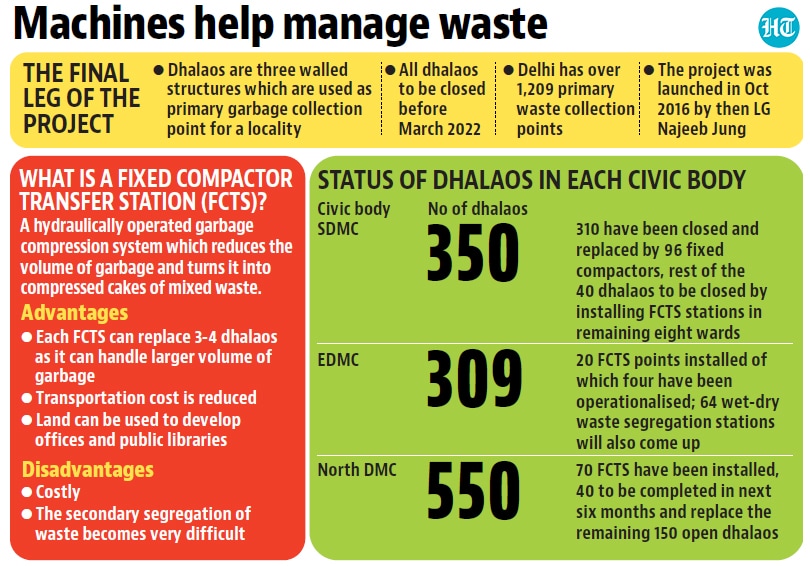
Mukesh Suryan, mayor of SDMC, said each of the 104 municipal wards under the civic body has three to four dhalaos. “The municipal garbage of these three four points can be handled by one garbage compactor system, which reduces the need for space as well as minimises transportation cost. Now, we have developed such compactor stations in 96 wards and the remaining wards will be covered in the next six months. We are facing land availability issue in the remaining sites, especially in unauthorized colonies, and clearance from other government departments is also required,” sai Suryan. The SDMC started the mechanization project in 2016 by setting up FCTS in the central zone.
The closure of dhalaos and diversion of garbage to other sites has also led to disputes between various localities. Several municipal councillors from areas, such as Chirag Dilli and Sangam Vihar, have raised the issue of garbage being diverted from neighbouring wards to their area.
Suryan said councillors have sometimes flagged these issues, when there is a delay in lifting municipal waste from the site but once an FCTS is set up, the corporation can stop the movement of garbage from one area to another. On an average, the areas falling under the jurisdiction of the SDMC produces 3,600 metric tonne of waste everyday.
A senior municipal corporation official from the sanitation department said while the initial input costs on FCTS is high, it enables the municipal body to reduce expenditure on transportation of municipal waste to landfill and waste to energy plant.
Shyam Sunder Agarwal, the mayor of east municipality, said each FCTS is helping them reduce the number of trips garbage collection trucks have to make to transport waste. “The compressed garbage cakes are easier to transport. One large truck can carry the same amount of waste, which was earlier being carried by 5-7 trucks earlier,” he added.
“20 compactor stations have been installed and four units have already started operations while the remaining will start working in the next two months. We will use 38 FCTS and another 10 units can be added based on requirement,” said Agarwal. Experts have repeatedly red-flagged that using compactors may disrupt the secondary waste segregation by the informal sector and waste handlers.
The high input costs have led the east municipality to take a different path among the three civic bodies. The east corporation plans to turn 64 traditional dhalaos into wet-dry waste segregation centres where secondary municipal waste segregation will be carried out. “Overall, we will have 100 municipal waste processing centres by March 2022,” said the mayor.
The north corporation, which is spread over 604.5 sq km area and caters to 62 lakh people, has the largest number of garbage receptacles (550). The civic body has installed 70 compactor machines in its jurisdiction and about 300 dhalaos have been closed. North MCD mayor Raja Iqbal Singh said the corporation will install 40 more compactor machines in next six months and declare the area dhalao-free.
Meanwhile, the SDMC has already sanctioned a budget of ₹12.5 crore, setting aside ₹10 lakh for each site, to re-develop the sites of closed dhalaos as mini-libraries, reading rooms and senior citizen recreation centres. Mayor Suryan said that the smaller sites can be used a ward office for sanitation staff.


