
 E-Paper



Delhi CM inaugurates ₹16-crore biogas plant in Najafgarh
Chief minister Rekha Gupta on Monday launched a biogas plant with a processing capacity of 200 tonnes per day at Goyla in southwest Delhi’s Najafgarh

 Prefer HTon Google


Chief minister Rekha Gupta on Monday launched a biogas plant with a processing capacity of 200 tonnes per day at Goyla in southwest Delhi’s Najafgarh.
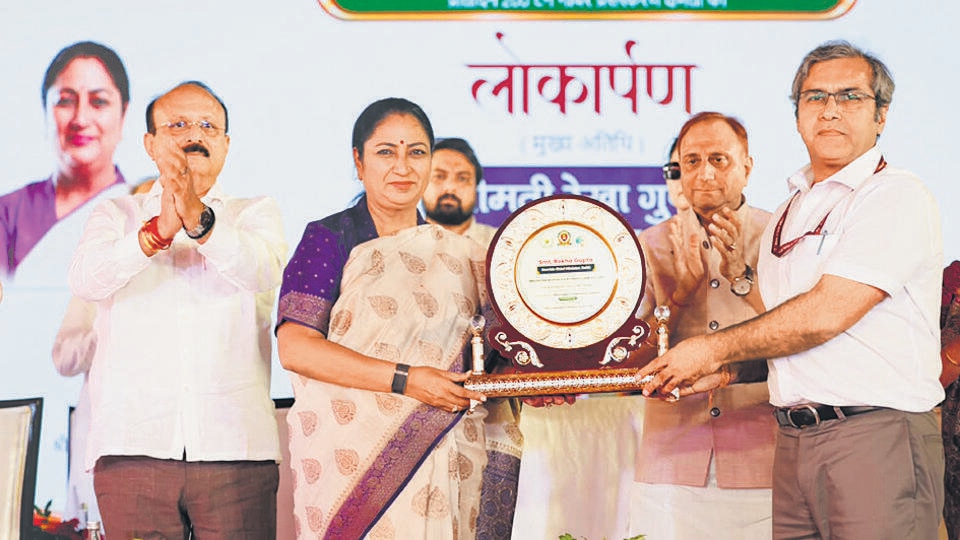
The plant has been built by Municipal Corporation of Delhi (MCD), at a cost of ₹16 crore, and is supposed to ensure scientific processing of cattle dung, preventing it from flowing into Yamuna through drains, officials said.
At the launch event, CM Gupta said previous governments did not pay enough attention to basic facilities such as drainage system, water supply, garbage collection and cow dung collection in Delhi’s dairy colonies. “No biogas plant was set up in Delhi for years, leaving the problem of cow dung management unresolved. The present government has started work at three biogas plants in the past 18 months, while work is underway to establish six more. Nangli Sakrawati plant had used 55,000 tonnes of cow dung in a year, for which farmers had been paid ₹3.5 crore,” she added.
Gupta said ₹50 crore in the Budget had been allocated to improve drainage systems in Delhi’s dairy colonies. “Instead of allowing cow dung to flow into drains, converting it into clean fuel and organic fertiliser demonstrates the effective use of resources. Cleaning the river alone is not enough, effective action must also be taken against factors that cause pollutants to reach there,” the CM said.
According to officials, the Goyla plant is expected to generate around 14,000 cubic metres of raw biogas and approximately 5.6 tonnes of purified compressed biogas every day. The gas will be supplied to Indraprastha Gas Limited through a pipeline. The biogas slurry left after processing will be used as an organic fertiliser, helping improve soil fertility.
The initiative will thus convert cow dung into a useful resource, supporting clean energy production, agricultural benefits and efforts to prevent pollution of the Yamuna, officials said.
According to MCD estimates, authorised dairies in Delhi house 123,164 cattle while there are more than 500 unauthorised gaushalas, cumulatively generating around 1,500 tonnes of dung every day. Of this, only about 200 tonnes is being processed, as per a livestock enumeration submitted as part of Yamuna clean-up, being overseen by the Union home ministry.
Delhi’s first large-scale biogas plant with a processing capacity of 200 TPD, is located at Nangli Dairy in Najafgarh and was inaugurated on September 20, 2025. Another 100 TPD plant in Ghogha dairy was inaugurated last month on September 25 and Goyla Dairy is the third such plant. Delhi still faces a processing gap of 1,000 TPD.
According to the MCD data, the largest share of the cattle population -- 60,210 animals -- come from unauthorised dairy colonies. Government animal shelters (gausadans)-- where captured stray cattle are kept-- account for 19,638 cattle, while 20,776 are housed in private gaushalas. The enumeration also records 22,540 cattle in other legal dairies.
Several other projects are in the pipeline, including plants with processing capacities of 200 TPD at Ghogha, a 300 TPD facility at Ghazipur dairy and a 125 TPD plant at Bhalswa dairy. According to the MCD report, a 75 TPD plant will come up at Masoodpur dairy, 200 TPD plant at Indira Camp Sector 3 Rohini, 50 TPD plant at Sri Ram Colony in Khajoori, 100 TPD plant at Sarita Vihar, and 200 TPD plant in Indira Park in Sagarpur.
“These facilities are expected to be completed by June 2027. Once all the plants are operational, the total cattle dung processing capacity will rise to 1,625 TPD,” an official explained.

Stay updated with all top Cities including, Bengaluru, Delhi, Mumbai and more across India. Stay informed on the latest happenings in World News along with Delhi Election 2025 and Delhi Election Result 2025 Live, New Delhi Election Result Live, Kalkaji Election Result Live at Hindustan Times.


