E-Paper



Water everywhere in Delhi, but supply crisis looms as 3 plants closed
Delhi Jal Board (DJB) has completely shut down operations at the Wazirabad, Chandrawal and Okhla water treatment plants.

 Prefer HTon Google


With the water level of the Yamuna rising and submerging pumphouses and water treatment equipment on Thursday morning, three major water treatment plants in Delhi were shut — a move that could impact a quarter of the Capital’s water supply.
Also read: AAP, BJP's blame game as Delhiites grapple with flooded homes, waterlogged roads
Delhi Jal Board (DJB) has completely shut down operations at the Wazirabad, Chandrawal and Okhla water treatment plants (WTP), all of which are located in the Yamuna floodplains. Meanwhile, production from Sonia Vihar plant has also been reduced by around 25%, the water utility has said.
Delhi residents are expected to face water shortage for the next couple of days amid rationing of available water till the water level in the Yamuna abates and normal operations are restored. The water supply to Lutyens’ Delhi is also likely to be hit.
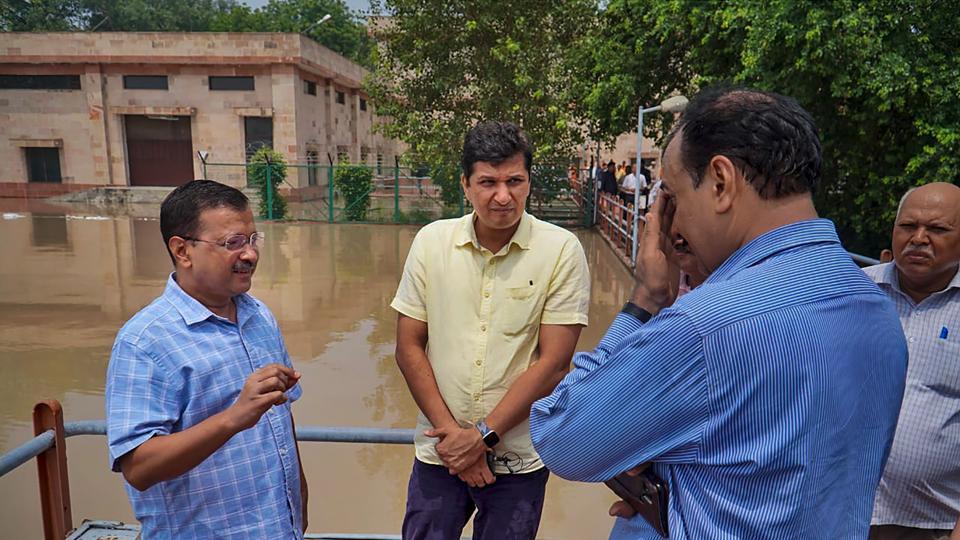
Chief minister Arvind Kejriwal, who visited the Wazirabad plant on Thursday morning, said that people should be assured that as the water level recedes, all three plants will be promptly restarted. “The necessary preparations have been made to ensure a swift recovery once conditions allow. The government is actively monitoring the situation and taking all steps necessary to mitigate the impact on water supply,” he said.
DJB operates nine WTPs — Chandrawal, Wazirabad, Haiderpur, Nangloi, Okhla, Dwarka, Bawana, Bhagirathi and Sonia Vihar. They cumulatively supply around 998MGD (million gallon per day) water to Delhi’s 20 million people. DJB officials have said that with a large chunk of the water treatment capacity impacted, rationing of water will be carried out between various areas so that the impact of water shortage can be minimised. The Chandrawal, Wazirabad and Okhla WTPs have a capacity of 90MGD, 135MGD and 20MGD, respectively. These plants supply drinking water to parts of northeast, central, west and south Delhi, and to both the Delhi Cantonment and New Delhi Municipal Council (NDMC) areas . Water supply in these areas is expected to be impacted over the next two days.
The areas which are likely to be affected include Civil Lines, Kamala Nagar, Shakti Nagar, Model Town and Gulabi Bagh in north Delhi; Rajinder Nagar, Patel Nagar, Baljeet Nagar, Punjabi Bagh and Prem Nagar in west Delhi; and , Kalkaji, Govindpuri and Tughlaqabad in south Delhi.
Areas of south Delhi, which get water supply from the Sonia Vihar plant, may also be impacted. These include Moolchand, South Extension, Greater Kailash and adjoining areas. The areas in east Delhi which may be affected include Tahirpur, Sonia Vihar, Yamuna Vihar, Bhajanpura, Shastri Park and Seema Puri.
Also read: Yamuna back to reclaim its floodplain in Delhi
NDMC, which oversees the water supply of Lutyens’ Delhi, issued an advisory to the residents to use water judiciously. The areas in New Delhi likely to get affected include Gole Market, Ashoka Road, Parliament House, Jai Singh Road, Connaught Place, Shankar Market, Barakhamba Road, Tilak Marg, Tilak Lane, Firozeshah Road, Supreme Court, Delhi high court, Janpath, South Avenue, North Avenue, Sarojini Nagar, and Prime Minister’s residence among other places.
DJB said residents can contact the central control room by calling the helpline, 1916 for water tankers.