
 E-Paper



Delhi minister calls meeting over ‘very poor’ air quality in national capital
The capital's 24-hour average air quality index (AQI) dropped to 313 (very poor) on Sunday from 248 on Saturday.


Delhi Environment Minister Gopal Rai will on Monday chair a meeting with departments concerned on the implementation of mitigating measures under the central government's pollution control plan, officials said.
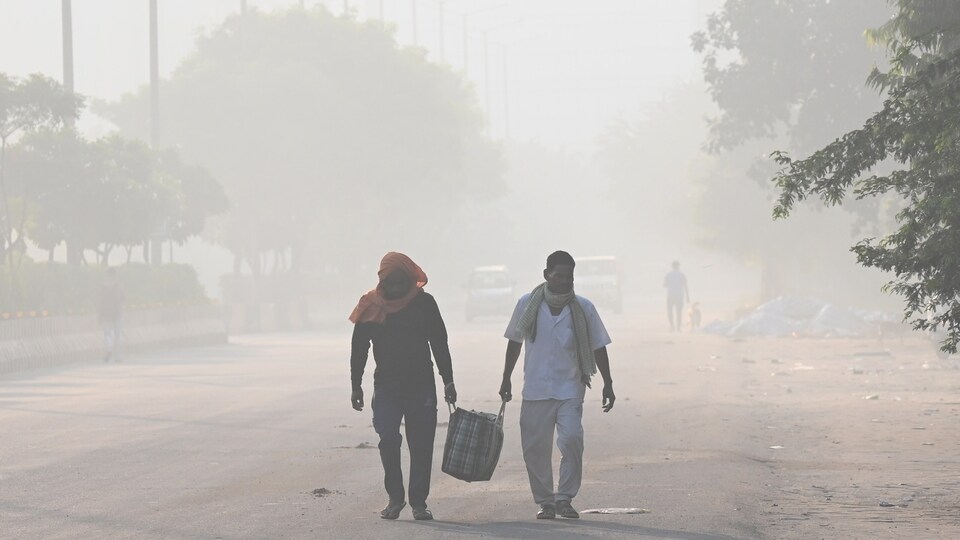
Delhi's air quality dipped to "very poor" levels on Sunday, the first time this season, due to unfavourable meteorological conditions.
The capital's 24-hour average air quality index (AQI) dropped to 313 (very poor) on Sunday from 248 on Saturday.
The Commission for Air Quality Management (CAQM), a statutory body responsible for proactively implementing the pollution control plan known as the Graded Response Action Plan (GRAP), had on Saturday directed authorities in the NCR to increase parking fees to discourage private transport and enhance the services of CNG or electric buses and metro trains amid a likely increase in pollution levels.
GRAP categorises actions into four stages: Stage I 'Poor' (AQI 201-300); Stage II 'Very Poor' (AQI 301-400); Stage III 'Severe' (AQI 401-450); and Stage IV 'Severe Plus' (AQI >450).
Stage I mandates the suspension of work at private construction and demolition projects with a plot size equal to or exceeding 500 square metres that are not registered on the state government's portal for remote monitoring of dust mitigation measures.
Authorities are also tasked with enforcing a complete ban on the use of coal and firewood in 'tandoors' at hotels, restaurants and open eateries, along with taking punitive action against polluting industrial units and thermal power plants within 300 km of Delhi.
Ensuring the proper implementation of guidelines for dust mitigation at construction and demolition project sites and sound environmental management of resulting waste is also part of Stage I.
Stage II measures involve increasing parking fees to discourage private transport and enhancing CNG or electric bus and metro services by introducing additional fleets and increasing service frequency.
Under Stage III, BS-III petrol and BS-IV diesel four-wheelers are prohibited from operating in Delhi, Gurugram, Faridabad, Ghaziabad, and Gautam Buddh Nagar.
Stage III involves a complete halt on construction and demolition work, except for essential government projects, besides mining and stone crushing. It also includes a ban on the entry of light commercial vehicles registered outside Delhi and diesel-guzzling trucks, and medium and heavy goods vehicles (except those involved in essential services).
Stage IV includes banning all types of construction and demolition work. State governments are authorised to decide on online classes for school students and work-from-home arrangements for government and private offices during such situations.

Stay updated with all top Cities including, Bengaluru, Delhi, Mumbai and more across India. Stay informed on the latest happenings in World News along with Delhi Election 2025 and Delhi Election Result 2025 Live, New Delhi Election Result Live, Kalkaji Election Result Live at Hindustan Times.


