
 E-Paper



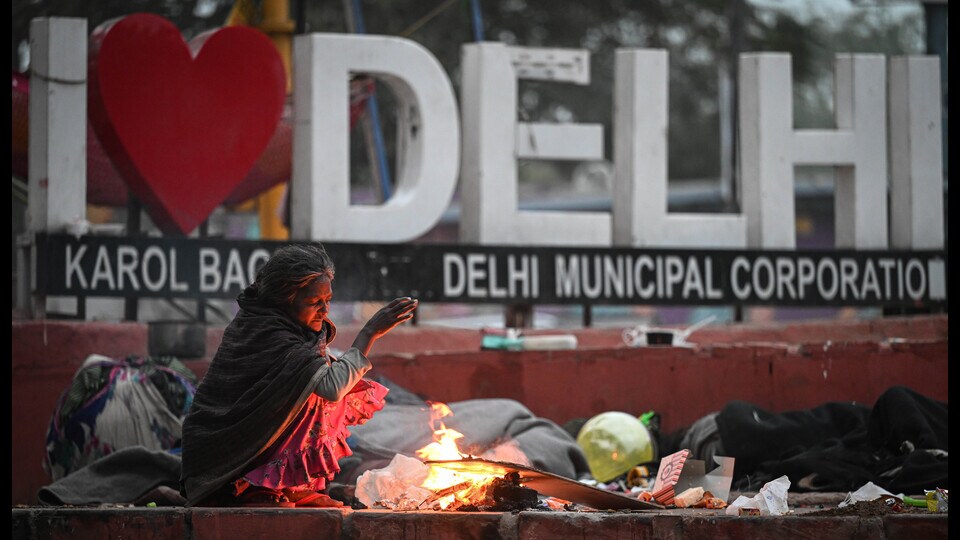
Delhi shivers, parts of city record ‘cold day’
IMD defines a “cold day” as when the maximum temperature is 4.5 degrees or more below normal, with the minimum is below 10°C.


Fog hovering above Delhi at high altitudes and icy winds from the north led to the Capital recording a maximum temperature below 20 degrees Celsius (°C) for a third day in a row, India Meteorological Department (IMD) officials said on Tuesday.
The Safdarjung observatory, representative of Delhi’s weather, recorded a maximum of 17.2°C – two below normal. The minimum was 8.3°C.
According to IMD, one weather station — Lodhi Road — recorded “cold day” conditions, with a high of 16.2°C — 4.8 notches below normal — and a minimum temperature of 7.4°C.
IMD defines a “cold day” as when the maximum temperature is 4.5 degrees or more below normal, with the minimum is below 10°C.
Though the maximum was even lower at Mungeshpur (13.2°C) and Jafarpur (13.7°C), IMD said both stations were new automatic weather stations (AWS) and did not have a defined “normal”, so they were not considered locations to have recorded a cold day. On Monday, the day temperature was 17°C, slightly better than the season-low of 15.9°C on Sunday.
“Weather conditions have been similar over the last three days. Upper-level fog still persists with surface-level fog not so dense. This means that even though visibility is better at the surface, dense fog at a height prevents sunlight from coming through,” said Kuldeep Srivastava, an IMD scientist, adding that the lowest visibility in Delhi was around 500 metres.
The minimum, however, has dropped due to cold winds. Tuesday was not the first time the night temperature dropped below 10°C this season. On December 15, the night temperature was recorded at 4.9°C. The minimum had risen above 10°C in the last week of December.
IMD has forecast a gradual increase in day temperatures over the next three days as fog intensity reduces. “The maximum will gradually touch 18-19°C at Safdarjung as this dense fog layer weakens due to reducing moisture,” Srivastava added.
While no flights were impacted at Delhi’s Indira Gandhi International (IGI) airport, the Northern Railway said that at least 26 trains – to and from Delhi — were delayed by more than an hour on Tuesday morning.
Meanwhile, Delhi’s air quality remained in the “very poor” category on Tuesday, a day after the Commission for Air Quality Management (CAQM) in the National Capital Region (NCR) lifted Stage-3 or “severe” category measures under the Graded Response Action Plan (Grap).
Delhi’s average AQI (air quality index) was recorded at 340 (very poor), according to the Central Pollution Control Board’s national bulletin at 4pm, a slight improvement over the 346 (very poor) recorded on Monday. Citing a gradual improvement in AQI over the last three days, CAQM lifted the ban on plying of petrol BS-3 and diesel BS-4 four-wheelers, and a ban on private construction in NCR.
Forecasts by the Early Warning System (EWS) for Delhi – a forecasting model under the ministry of earth sciences – said Delhi’s AQI should remain “very poor” till January 5.
“Delhi’s AQI is likely to remain in the ‘very poor’ category from January 3 till January 5. The outlook for the next six days shows AQI is likely to remain between ‘very poor’ and ‘poor’,” said EWS in its daily bulletin on Tuesday.

Stay updated with all top Cities including, Bengaluru, Delhi, Mumbai and more across India. Stay informed on the latest happenings in World News along with Delhi Election 2025 and Delhi Election Result 2025 Live, New Delhi Election Result Live, Kalkaji Election Result Live at Hindustan Times.


