
 E-Paper



Delhi: Technology steps in as cops on duty follow Covid norms
Senior traffic officials said last year, the total number of challans issued for traffic violations increased compared to 2019, but this increase was primarily due to a rise in camera-based prosecutions in offences such as speeding, signal jumping and stop-line violations.

 Prefer HTon Google


The Covid-19 pandemic changed many things in the capital. Policing was one of them. Over the last year, the traffic police have relied more on technology to enforce the rules due to social distancing norms, but fewer physical interventions have led to a fall in prosecutions for offences such as drink driving or cellphone use while driving.
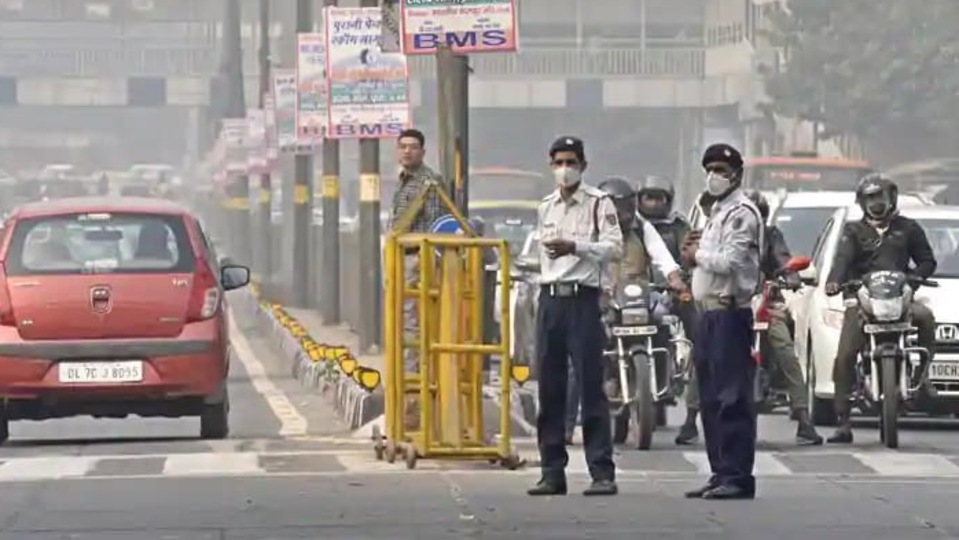
Senior traffic officials said last year, the total number of challans issued for traffic violations increased compared to 2019, but this increase was primarily due to a rise in camera-based prosecutions in offences such as speeding, signal jumping and stop-line violations.
“Last year, the department worked under several restrictions because of Covid-19. We had to ensure that all safety precautions were taken and enforcement also did not suffer. Under these restrictions, we worked to increase technology-based policing, which ensures that there is a balance between manual policing and technology interventions,” said a senior traffic official on condition of anonymity.
Prosecutions up, but drink driving cases down
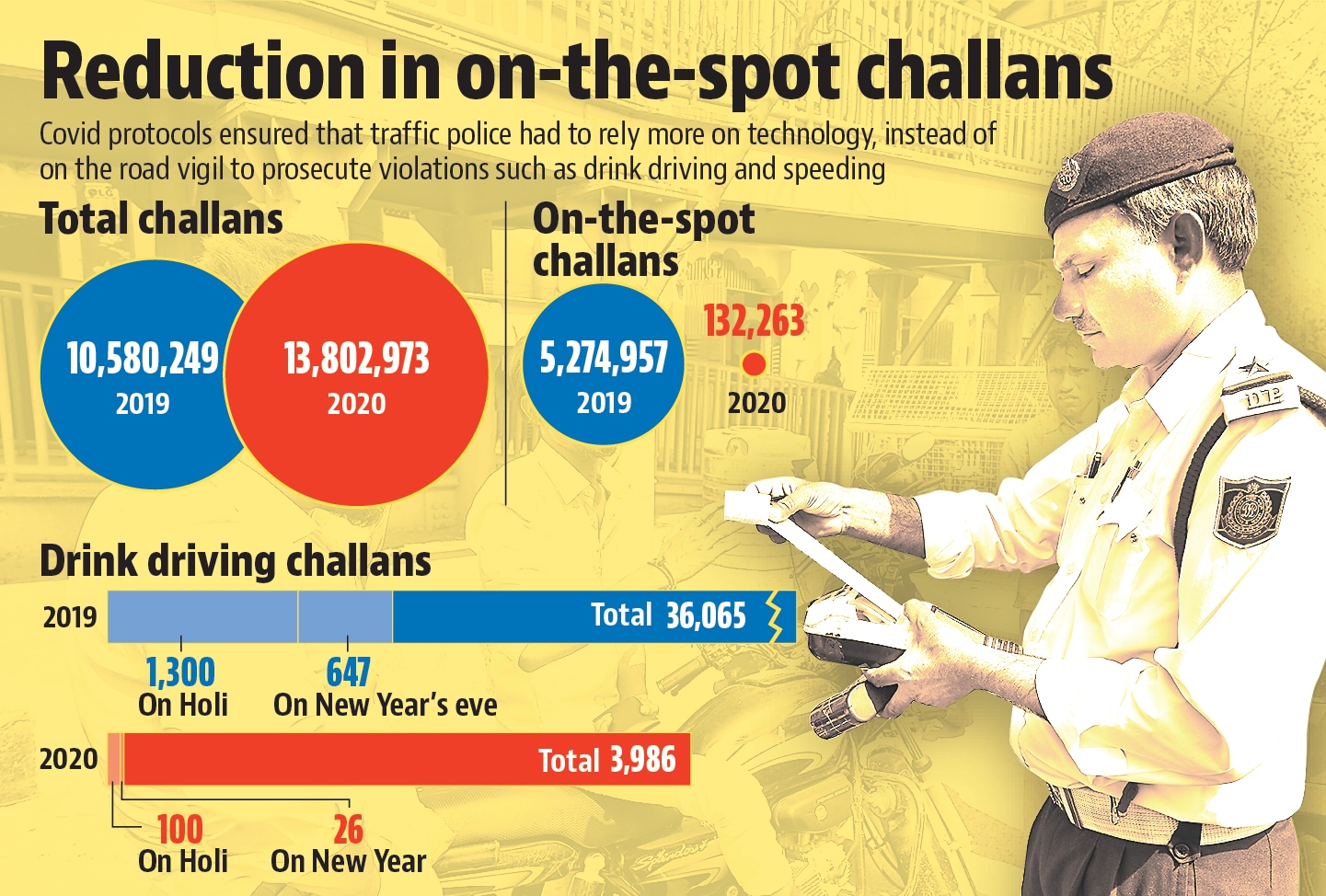
Traffic police data shows that last year, the department issued 13,802,973 challans as opposed to 10,580,249 in 2019. However, while the total number of fines issued increased, the number of compounding challans, or on-the-spot challans that are usually slapped for offences such as drink driving and driving while using mobile phones or lane violations saw a decline.
From 5,274,957 compounding challans issued in 2019, the number fell to 1,322,623 in 2020.
Data also shows that prosecution for drink driving saw the sharpest decline due to the pandemic. On March 19, 2020, days before a nationwide lockdown was imposed, the traffic police issued a notification that “temporarily” stopped breathalyser tests for drink driving because of safety concerns.
“No drunken (drink) driving checking will be done unless someone is visibly drunk and is driving so recklessly as to endanger his/her or others’ life, and that too with all possible precautions,” the notification read.
Officers said this was done because a driver had to blow into an alcometer or breathalyser, increasing the risk of transmission of the virus to the police personnel. Given the high rate of infection in the city, this was a risky option for the enforcement agencies.
Data shows that last year, the traffic department issued 3,986 challans for drink driving — a drastic drop from 36,065 issued in 2019.
Return to the old ways
Delhi traffic police from September 5, resumed breathalyser tests after a break of over a year. On day one, over 90 commuters were prosecuted. Special commissioner of police (traffic), Muktesh Chander said that now that the city is slowly getting back on track, and bars, pubs and restaurants had opened, it was time that drink driving checking resumed.
“The breathalysers are sanitised after each use and the pipes are changed every time. All out teams have also been directed to follow Covid-19 appropriate behaviour at all time, such as using masks, sanitising their hands and maintaining social distancing while conducting these checks,” Chander said.
Driving under the influence of alcohol is punishable by a court challan. In case of first offence, a person is liable to pay a fine of ₹10,000 or face imprisonment up to six months or both. For second and subsequent offences, a fine of ₹15,000 or imprisonment up to two years or both are applicable.
Before drink driving prosecutions resumed, drivers who were visibly drunk were being sent to nearby government hospitals for blood alcohol tests.
“To ensure that prosecutions for drink driving are not completely ignored, we decided that drunk drivers will be prosecuted based on medical tests. They were sent to nearby government hospitals, where the levels of their blood alcohol are tested and based on those results we challaned them,” another senior traffic police officer said.
On New Years’ Eve and on Holi this year, when maximum drink driving prosecutions are made every year, the enforcement teams issued only 100 and 26 challans, respectively. Comparatively in 2019, during New Year’s over 1300 people were challaned and during Holi 647 people were fined for drink driving. All of these were based on medical tests.
Law’s long arm falls short
Officials manning checkpoints across the city said the pandemic has also made it easier for violators to escape checks, with several instances of police officials being run over while trying to stop drivers at pickets.
“We still set up checkpoints near pubs and bars, but the difference is that now a lot of people blatantly refuse getting checked citing safety concerns because of Covid. Even though we know that they are just trying to escape action, we cannot do much about it. In many cases, we ask the violators to pull over, but they speed away without caring about who comes in the way,” said a traffic constable in central Delhi.
Last August, a 51-year-old traffic officer was run over by a car driver in west Delhi’s Raghubir Nagar. Then in September last year, a traffic sub-inspector was run over by a truck in north Delhi’s Burari.
Way forward
Traffic experts said that new policing tactics will have to be adopted in the post-pandemic world to keep people from harm’s way while ensuring that no offender escapes.
“We are still figuring out ways to work our way through the pandemic and that is what the traffic department will also have to figure out. If the governments have opened up bars, pubs and restaurants, there will be some revellers and party-goers who will disregard the law and endanger their own lives and that of others on the road. It is all about adapting to the situation,” said Sheetal Sinha from Citizens for Safer Roads, a road safety group active in Delhi and NCR.
Cities across the country are also experimenting with measures to strike a balance between traffic policing and keeping their staff and commuters safe from infection.
For instance, the Chennai traffic police, which was among the worst hit by Covid-19 and had over nine officials killed by the infection, has started conducting medical checkups for traffic cops on the spot of their duties. The department, for the purpose, tied up with voluntary organisations.
During the first wave, April and May, the Mumbai police also started issuing colour-coded stickers for emergency vehicles, to prioritise them on the roads.


