E-Paper



Latest study to find out how much waste is generated by Delhi
The city will put up a common portal with information on daily waste generation, recycling, processing, and disposal at landfill sites, in an attempt to increase public awareness

 Prefer HTon Google


Delhi chief secretary Naresh Kumar on Thursday directed the three urban local bodies of the Capital – the Municipal Corporation of Delhi, the Delhi Cantonment, and the New Delhi Municipal Council – to undertake a fresh assessment and characterisation of how much solid waste the city generates every day, officials aware of the development said. Kumar asked the bodies to complete the study on waste generation in their respective areas by July 31, officials added.
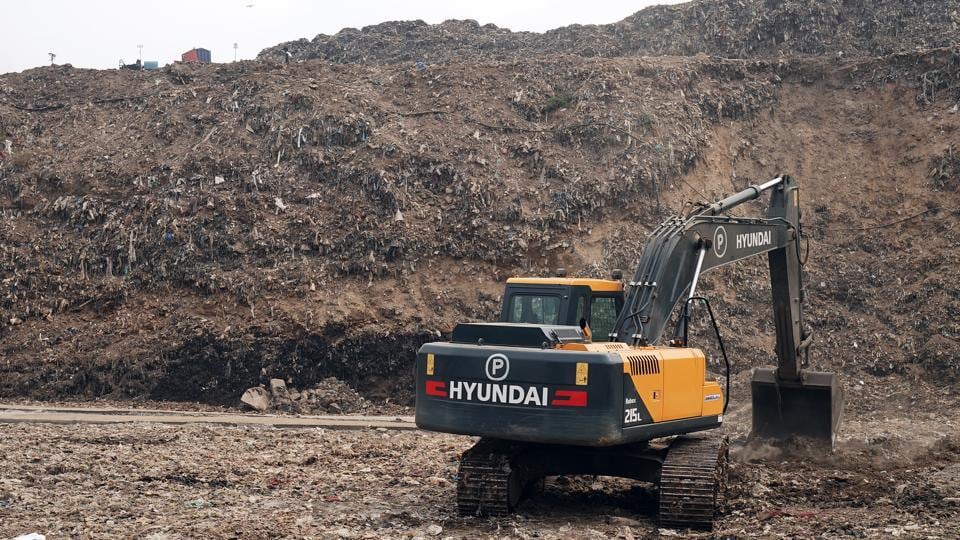
Officials added that towards the end of the exercise, the city will put up a common portal with information on daily waste generation, recycling, processing, and disposal at landfill sites, in an attempt to increase public awareness about the waste generated in the city.
Delhi plans to flatten its three landfill sites at Ghazipur, Bhalswa, and Okhla by December 2024.
Delhi is currently estimated to generate 11,328 tonne per day (TPD) of solid waste, for a projected population of 21,432,240 people. Out of 11,328 tonne, around 11,000 tonne come from MDC-run areas, according to MCD population and waste projections.
“The chief secretary has issued orders stating that the waste generation estimates from the MCD have remained constant at around 11,000 tonne since 2020 and it has not been reassessed regularly according to the guidelines of the Swachh Bharat Mission. We have also been asked to carry out third-party audits of solid waste management and segregation through an independent agency,” said an MCD official, requesting anonymity.
The audit exercise will be undertaken by September.
The order issued by the chief secretary on April 6 said that the assessment is necessary to optimise the processing infrastructure and reduce the material being disposed of at the landfill sites.
A second MCD official said that waste generation is expected to rise to 14,124 TPD by 2030, 19,129 TPD by 2040 and 19,433 TPD by 2041. Meanwhile, the draft Master Plan of Delhi (2041) estimates that the daily waste generation will rise to 18,915 TPD by 2041.
Siddharth Singh, programme manager of environmental governance and solid waste management at the Centre for Science and Environment (CSE), said that there have been varying figures on waste generation and Delhi needs to undertake a scientific study to find out its exact waste generation to plan its waste management better.
“Most cities have this problem where they take into account the per capita waste generation estimate and simply multiply it by population. The quantity of waste generation varies vastly in high, middle, and low-income households, commercial units, and bulk generators. Unless we get an accurate idea about waste generation, we cannot optimise the resources, fuel, people, and machines needed to process, transport and recycle this waste. Rules mandate that waste should not be lifted from bulk waste generators,” said Singh.
He added that the corporation should make plans for each catchment area. “There are mathematical sampling ways across sections of households for accurate waste generation estimates. Goa and Mangalore recently completed this assessment and Haridwar undertaking this process,” he said.
A household-level study undertaken by erstwhile east MCD in 2018-19 found that the average per capita garbage generated in east Delhi had increased by around 20% in the 14 years prior to the study and upscale neighbourhoods were discarding nearly double the trash than their counterparts in working-class colonies.
EDMC had selected Rajvir Nagar, a working-class neighbourhood, and the relatively affluent Pocket IV, Mayur Vihar 1 for the study. Aroud 200 homes and shops were selected for the survey.
An MCD spokesperson said that the directions issued by the chief secretary will be followed. “We are already carrying out third-party audits of various waste management facilities. The status of public toilets, open defecation, and other paraments is also independently assessed during the annual Swachh Sarveshan,” he said.