
 E-Paper



Less than 1/5th in hospitals needed oxygen during 5th Covid wave in Delhi: Study
The analysis, carried out by Max Healthcare, is consistent with death audits carried out by the government earlier in the month: most of the people with Covid-19 in critical condition or those who died were suffering from more serious illnesses at the time of their admission.

 Prefer HTon Google


The need to give medical oxygen support to people admitted with Covid-19 during the current wave of the outbreak is less than a third of what was recorded in the last two waves, and almost all of the people who were in intensive care were first brought in with other critical illnesses, according to a new analysis by a private hospital network.
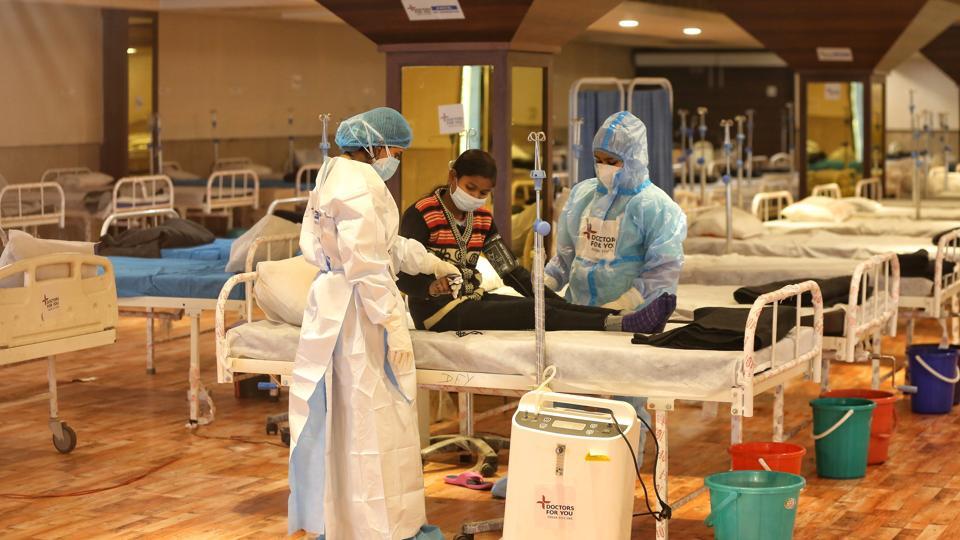
The analysis, carried out by Max Healthcare, is consistent with death audits carried out by the government earlier in the month: most of the people with Covid-19 in critical condition or those who died were suffering from more serious illnesses at the time of their admission. The government audit also said that a majority of the dead were unvaccinated.
“At least 80% of the patients that died were people either above the age of 70 or they had multiple comorbidities, cases such as cancer, kidney along with lifestyle disease like hypertension and diabetes,” said Dr Sandeep Budhiraja, group medical director of Max Healthcare.
The findings are based on 1,378 hospital patients in Max Hospitals’ network since the last week of Decembertill January 20– roughly a period of four weeks. In itself, this number alone was a third of the 12,444 hospitalisations recorded in the three months of the peak of the second wave, beginning in late March, 2021 and ending in early June.
While the share of people in intensive care units (ICU) was higher overall – 45.9% -- compared to previous waves (34% during the second wave), Budhiraja explained this was due to two factors: “First, the 45% is of a far smaller number, some 1,300 odd, and second, many of the patients that were admitted to Covid ICU were already admitted with prior health conditions.”
Budhiraja added that of the 82, people whose cause of death was primarily Covid-related complication were roughly five or six in number.
In terms of the proportion of admitted patients requiring oxygen support, the share has been around 23% this time compared to close to 74% during the Delta variant-triggered wave.
Budhiraja added that at the peak of the second wave, when the city was recorded new cases in the range of 27,000-28,000 infections a day, the peak occupancy rate in all of Max facilities combined was nearly 2,000. “This time, however, the peak was only around 435,” he added.
“This could be because Omicron as a variant is milder but also because the vaccination status of people has improved now. During the second wave, the vaccination drive had just started and many people in Delhi were yet to be vaccinated,” he said.
A Delhi health department representative said these trends further reinforce what has been seen in other hospitals.
“We have stressed that the Covid deaths that we are reporting during this wave largely comprise either unvaccinated people or vulnerable people including senior citizens or those with severe comorbidities. Most of the patients are recovering at home with relatively milder symptoms,” said a senior health official.
These trends are relevant to the debate around Delhi’s current level of curbs. The city’s elected government and the business community have asked the Delhi Disaster Management Authority (DDMA), an agency led by lieutenant governor Anil Baijal, which decides on public health measures in the Capital, to roll back the weekend curfew and allow all shops to open instead of only alternate establishments on any given weekday.
The demands stems from three clear signs: the number of new cases are now far lower than the peak recorded more than a week ago, more than 82% of the city’s overall hospital bed capacity has remained vacant in all this while, and the Omicron variant of the Sars-CoV-2, which is causing the current outbreak, itself is less likely to lead to severe disease – especially since a large part of the population is already vaccinated.
Budhiraja added that those at greater risk could be clearly identified: these were people with any serious comorbid illness like kidney disease or cancer, and people above the age of 70.
An expert said this has implications on who should be shielded more and the targeting of booster doses.
“This variant is highly transmissible and tends to infect a person within hours of contact with an infected person. While the infection period is shorter this time, the vulnerable sections are still are risk and the governments should strictly promote the use of masks and Covid appropriate behaviour in public places to protect this vulnerable section,” said Dr Jugal Kishore, head of the department of community medicine at Safdarjung Hospital.
The Union government has allowed people above the age of with comorbid health conditions to take a third dose of a coronavirus vaccine, the so-called precaution dose. Studies have shown that third doses greatly reduce the risk of hospitalisation in all populations, and lead to even lower odds of death.


