
 E-Paper



Land exemption given for tree felling for railway station work
The move allows the Rail Land Development Authority (RLDA) to seek formal permission to fell or transplant 887 trees spread across a 115.88-hectare site.

 Prefer HTon Google


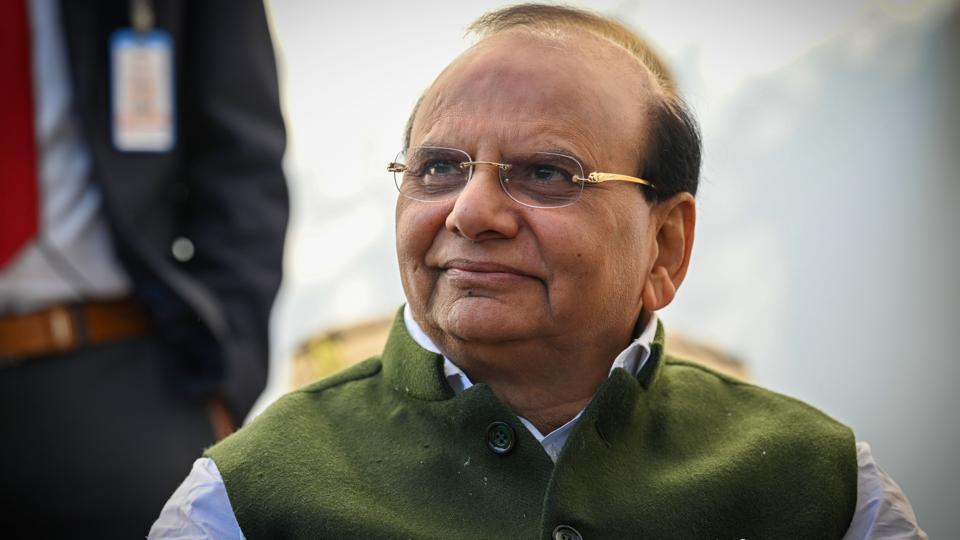
Lieutenant Governor VK Saxena has granted a special exemption under the Delhi Preservation of Trees Act (DPTA), 1994, to facilitate redevelopment of the New Delhi Railway Station. The move allows the Rail Land Development Authority (RLDA) to seek formal permission to fell or transplant 887 trees spread across a 115.88-hectare site.
The exemption, issued via a gazette notification on June 5 but made public Tuesday, invokes Section 29 of the DPTA to bypass the area restriction in “public interest.” “… in public interest, (the LG) exempts an area of 115.88 hectare… from the limitation of maximum one hectare area under sub-section (3) of Section 9 of the said Act for re-development of New Delhi Railway Station, Delhi under Delhi Preservation of Trees Act (DPTA), 1994,” the notification read.
This provision has now been invoked thrice in recent weeks — previously for the Common Central Secretariat buildings and a flyover in northeast Delhi.
To be sure, while the exemption clears a key procedural hurdle, it does not constitute approval for cutting or transplanting any trees. It merely enables the designated Tree Officer to examine the RLDA’s application, which had previously been ineligible for consideration because of the site’s size. “This notification... shall not be considered as permission for transplantation/felling of trees,” the Act states.
For the next step, the Tree Officer, in this case the deputy conservator of forest (central division), will independently scrutinise the application. This will involve due diligence under the DPTA, the Delhi Preservation of Trees Rules, 1996, and compliance with any court directions.
The Tree Officer must apply due diligence and aim to minimise the number of trees affected by the project.
Redevelopment of the New Delhi Railway Station has been in the pipeline since 2021. Initially pegged at ₹15,000 crore, the project has since been scaled down to ₹2,469 crore to enhance feasibility. Plans include construction of two linear station buildings on the Paharganj and Ajmeri Gate sides, an air-concourse, waiting areas, lifts, escalators, retail and office spaces. The station will function as an integrated Multi Modal Transit Hub.
Connectivity is a key component: a network of elevated and at-grade roads is proposed to ease congestion. While the original plan had seven flyovers, revisions are underway, though a web of elevated roads will still link the site with other parts of the city, said an RLDA official.
The June 5 exemption is part of a series of recent moves by the LG to fast-track large infrastructure projects that fall afoul of the DPTA’s area limit. On June 6, Saxena issued a similar exemption for a 5.037-hectare site at the Common Central Secretariat project, involving 476 trees. A day earlier, he cleared a 2.16-hectare stretch for a flyover at the Nand Nagri–Gagan Cinema junction, where 27 trees are affected.
A retired Indian Forest Service officer familiar with such cases said the exemption is a procedural mechanism, often used to allow legal processing of large-scale development applications. “Without the exemption, the Tree Officer would not be able to even consider such cases. It doesn’t mean permission is granted, just that the file can now be taken up,” the official said, adding that such provisions have been used in past projects as well.



Stay updated with all top Cities including, Bengaluru, Delhi, Mumbai and more across India. Stay informed on the latest happenings in World News along with Delhi Election 2025 and Delhi Election Result 2025 Live, New Delhi Election Result Live, Kalkaji Election Result Live at Hindustan Times.


