
 E-Paper



Motor vehicle ban openly flouted in Delhi’s Chandni Chowk
The entry of all motorised vehicles (barring essential vehicles such as ambulances, police vans, bank cash and security vans, etc) was barred on this road from 9am to 9pm

 Prefer HTon Google


In September 2021, chief minister Arvind Kejriwal inaugurated a revamped road between Red Fort and Old Delhi’s Fatehpuri Masjid — a 1.4km stretch that was pedestrianised as part of the first phase of the redevelopment of Chandni Chowk.
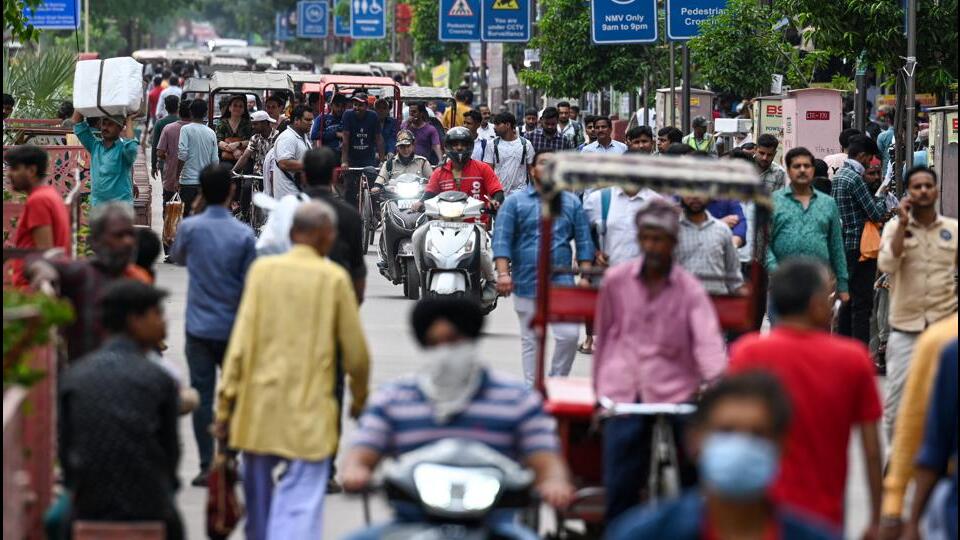
The entry of all motorised vehicles (barring essential vehicles such as ambulances, police vans, bank cash and security vans, etc) was barred on this road from 9am to 9pm, and posters at various spots announced that flouting this ban on vehicles would result in a ₹20,000 fine. In addition, more than 100 refurbished cycle-rickshaws were pressed into service for this stretch alone.
Two years on, the ban on motor vehicles remains in place, but its enforcement on the ground is so lax that the curbs are frequently defied. The stretch continues to witness congestion, with hundreds of rickshaws lining the streets and vehicles jostling for space with pedestrians.
Sanjay Bhargava, the president of the Chandni Chowk Sarv Vyapar Mandal, said, “Two-wheelers, cars bearing the insignia of political parties, and other VIP vehicles use the stretch. No one stops them and the vehicles simply zip past without any restrictions. There is no enforcement of rules.”
As part of the pedestrianisation of the stretch, three security guards have been stationed at the entrance near the Red Fort, but they said they face a tough time in stopping vehicle owners from entering the road. “Most people enter from inner lanes on two-wheelers, or from the other side of the stretch. At the front gate, we don’t allow people to enter. However, people who come from distant places often don’t listen to us and we are compelled to allow them to go in to avert any law-and-order situation,” one of the guards at the site said, declining to be named.
This reporter too saw the guards’ plight: in a roughly hour-long visit to the area, she spotted at least 10 two-wheelers zipping across the stretch.
A senior Public Works Department official associated with the project said the enforcement of law and order pertained to police, and the PWD did not have any role to play.
A senior Delhi Traffic Police officer, decliming to be named, said, “Since February this year, we have begun issuing e-challans to violators who are captured on cameras installed on the stretch. According to traffic police data, 6,348 people were fined for entering the stretch in 2022; this year till May 9, police have issued 27,662 challans to violators.
Raj Kumar, who has a shop on the stretch at Gandhi Cloth Market, said the rules are not enforced, which is why people find it easy to defy the restrictions. “Two-wheelers make their way through inner lanes and enter the main stretch. The riders are locals who are familiar with the area. Seeing them, outsiders also venture into the stretch with their vehicles and sometimes get caught by the guards. The rules should apply universally to everyone and the restrictions should be either enforced properly or relaxed for all,” said Kumar.
The guard quoted above said, “People take the rule lightly, or are not aware of the fine. However, if they are captured on one of the cameras placed across the stretch, they are issued a challan.”
Mohd Sadir, 40, a resident of Chandni Chowk who has a shop on the 1.4km stretch, said while the idea of pedestrianisation was good for decongestion, it had created new challenges for local residents who struggled to navigate the area in case of emergencies. “We have old people in our family who need to regularly go to the hospital. Local residents should have been given some concession or pass (to ply their vehicles). In case of an emergency, we cannot move out easily, and have to rely on a rickshaw from our residence till the main gate,” said Sadir.


