E-Paper



NGT notice to MCD over violations at Ghazipur abattoir
The National Green Tribunal has given the Municipal Corporation of Delhi four weeks to address violations at the Ghazipur slaughterhouse. A joint committee found that untreated effluents were being dumped into the Yamuna river and no bio-methanation plant had been installed.

 Prefer HTon Google


The National Green Tribunal (NGT) on Sunday gave the Municipal Corporation of Delhi (MCD) four weeks to fix the new violations at the Ghazipur slaughterhouse, based on a report submitted by a joint committee comprising the Central Pollution Control Board (CPCB) and the Delhi Pollution Control Committee (DPCC).
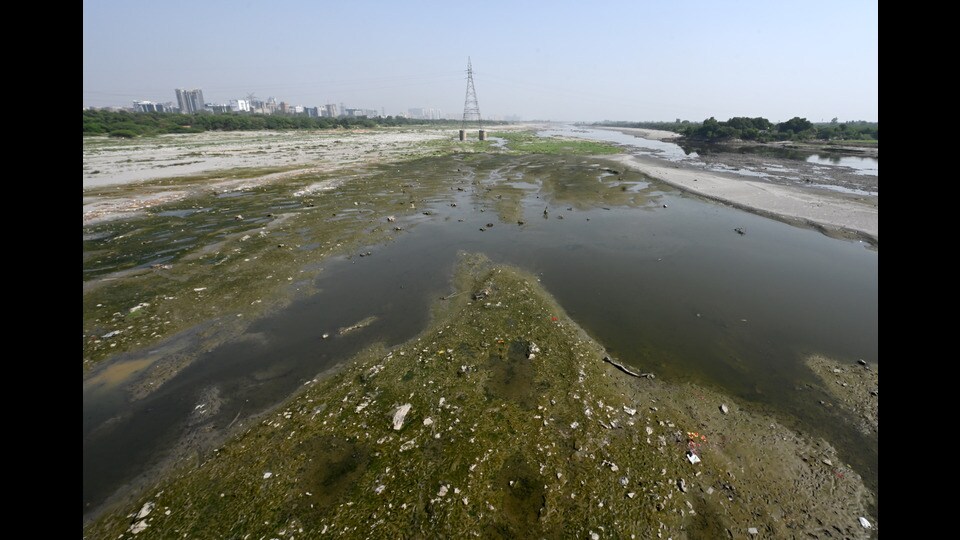
The committee inspected the slaughterhouse in August and submitted a report to the tribunal, which said untreated effluents were being dumped from the slaughtering area and were ultimately ending up in the Yamuna, adding that no bio-methanation plant had been installed yet either.
A bench headed by NGT chairperson Prakash Shrivastava said MCD had four weeks to fix the issues highlighted in the report, directing the joint committee to carry out a fresh inspection after this period.
“The conclusion (of the report) reveals that in the joint inspection, untreated effluent was found to be bypassed from the slaughtering area and ultimately being discharged into the river Yamuna,” NGT said in its order dated October 20, which was issued on Sunday.
The tribunal further observed that the water quality and microbiology analysis report submitted by the committee revealed the count of total coliform, fecal coliform, and E. coli to be beyond permissible levels.
“The joint committee will carry out the inspection after four weeks and disclose the status of compliance of environmental norms found on the spot,” the order added, asking DPCC to carry out water testing after eight weeks as well.
An MCD spokesperson said that the tender to set up a bio-methanation plant is in process and a reverse osmosis plant has already been installed in the complex. “All corrective steps will be ensured by MCD,” the spokesperson said.
Ghazipur slaughterhouse is the only legal abattoir in the city where goats, sheep, and buffaloes are slaughtered to meet the domestic demand