
 E-Paper



No conclusive proof to link deaths to air pollution, says Centre in Parliament
“We find that pollution remains responsible for approximately 9 million deaths per year, corresponding in one in six deaths,” said the commission in a paper titled ‘Pollution and health: a progress update.’


The government on Friday reiterated in Parliament that air pollution does not lead to premature deaths as there is “no conclusive data” connecting the deaths/diseases to it.
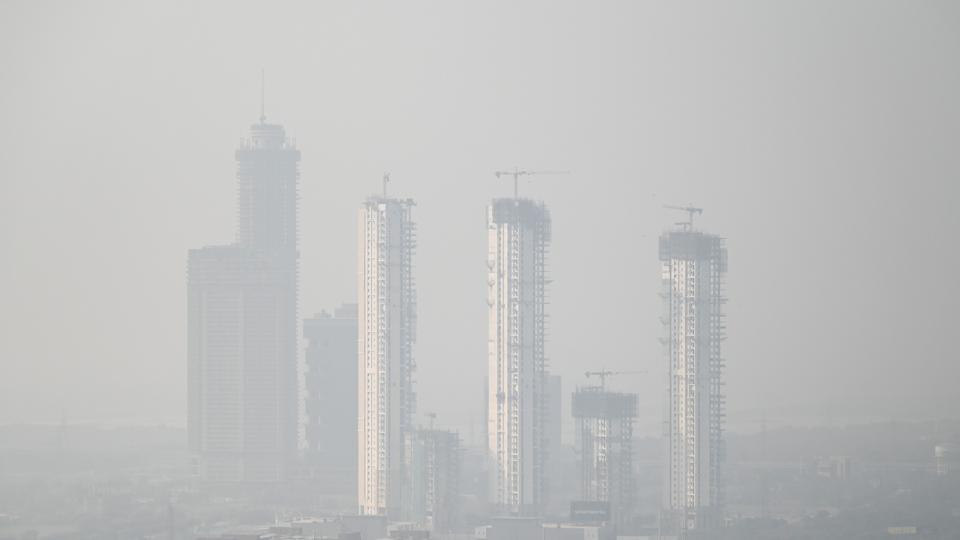
In a reply to a question in Lok Sabha on the number of premature deaths caused due to air pollution, Union minister of state for health, Bharati Pawar, said, “There is no conclusive data available to establish a direct correlation of death/disease exclusively due to air pollution. Air pollution is one of the many factors affecting respiratory ailments and associated diseases.”
Also Read | 5 harmful effects of toxic smog on your health
“Health is impacted by a number of factors including food habits, occupational habits, socio-economic status, medical history, immunity, heredity, etc., of the individuals apart from the environment,” Pawar said.
“While air pollution is known to be one of the aggravating factors for many respiratory ailments, specific information on the number of deaths exclusively due to air pollution is not available,” she added.
According to the Lancet Commission on pollution and health, air pollution was responsible for 9 million premature deaths in 2015, making it the world’s largest environmental risk factor for disease and premature death.
“We find that pollution remains responsible for approximately 9 million deaths per year, corresponding in one in six deaths,” said the commission in a paper titled ‘Pollution and health: a progress update.’
Meanwhile, Pawar while outlining a series of measures that the government has taken for the management of air pollution said that Pradhan Mantri Ujjwala Yojana was launched with an aim to safeguard the health of women and children by providing them with a clean cooking fuel– LPG. Swachh Bharat Mission is there to clean up streets, roads and infrastructure of India’s cities, smaller towns, and rural areas, and SwachhHawa is an integral component of this mission, she added.
“Under central sector scheme on ‘Promotion of Agricultural Mechanization for in-situ management of Crop Residue in the states of Punjab, Haryana, Uttar Pradesh and NCT of Delhi’, agricultural machines and equipment for in-situ crop residue management are promoted with 50% subsidy to the individual farmers and 80% subsidy for the establishment of custom hiring centres,” said Pawar.
Sustainable Alternative Towards Affordable Transportation (SATAT) has also been launched as an initiative to set up compressed bio-gas (CBG) production plants and make CBG available in the market for use in automotive fuels, she said. According to the minister, a city specific clean air action plan has been prepared and rolled out for implementation in 131 non-attainment cities by the environment ministry, with a focus on city specific short, medium, and long term actions to control air pollution from sources such as vehicular emission, road dust, burning of biomass, crop, garbage and municipal solid waste, landfills, construction activities, industrial emission, etc.
The Union health ministry also launched National Program on Climate Change and Human Health at National Centre for Disease Control (NCDC), to create awareness, capacity building, health sector preparedness and response and partnerships related activities on the climate sensitive health issues in the country since 2019.
According to Pawar, the programme now has expanded in all the states and UTs, and activities are conducted in the form of training on climate sensitive diseases, surveillance on acute respiratory illnesses and heat related illnesses, generation and dissemination of educational content on air pollution and heat, and its health impacts on human health.
Earlier, Dr Ravindra Khaiwal, professor of environment health at Post Graduate Institute of Medical Education Research (PGIMER), Chandigarh, who was one of the experts and had prepared the NCDC document said that the idea was to have a detailed health plan for pollution related illnesses, which would be pre-emptive instead of responsive.
“The work was started in 2016 and submitted to the ministry last year. This is a holistic document to ensure that we have better data collation on diseases that are triggered by pollution and deaths that could be linked to high pollution levels and this data is then used to plan our policies better,” Dr Khaiwal said. Earlier, in July, Union minister of state for environment Ashwini Kumar Choubey had told in the Lok Sabha that there is no conclusive data available to establish a direct correlation of death exclusively due to air pollution. His comments came in the backdrop of an annual report published by The Energy Policy Institute, University of Chicago.

Stay updated with all top Cities including, Bengaluru, Delhi, Mumbai and more across India. Stay informed on the latest happenings in World News along with Delhi Election 2025 and Delhi Election Result 2025 Live, New Delhi Election Result Live, Kalkaji Election Result Live at Hindustan Times.


