
 E-Paper



No cruelty, vet care: SC lists strict guidelines for Delhi dogs order
The order requires trained veterinarians to provide timely medical care and insists that vulnerable or weak animals be housed separately “as far as possible.”

 Prefer HTon Google


The Supreme Court on Wednesday evening issued a detailed written order of its August 11 verdict, expanding on earlier oral directions and setting out stringent safeguards for the welfare of captured stray dogs – stressing that at no stage should the animals be subjected to mistreatment, cruelty, overcrowding, starvation, or neglect.
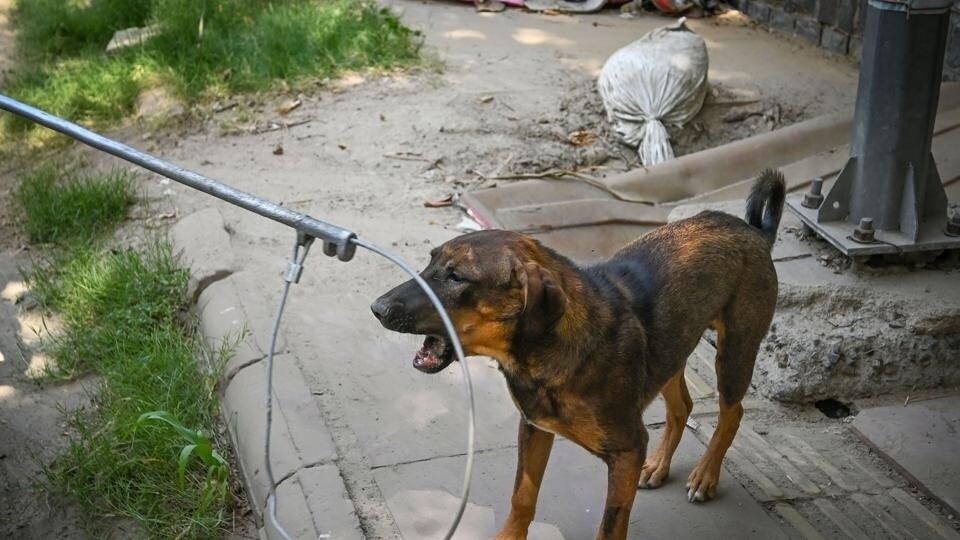
The release of the detailed order coincided with the transfer of the suo motu case on the stray dog menace from the bench of justices JB Pardiwala and R Mahadevan to a new three-judge bench led by Justice Vikram Nath.
Reiterating that all stray dogs in Delhi and the National Capital Region (NCR) must be rounded up and housed in shelters “at the earliest,” the court prohibited the release of any captured dogs back to the streets.
Also Read: Why Supreme Court’s dog order is mission impossible in Delhi
Authorities, it said, must prevent overcrowding, ensure constant care.
“At no stage should these dogs be subjected to any mistreatment, cruelty or deplorable standards of care,” the bench declared in the order, as it directed civic agencies and all personnel deployed at dog shelters and pounds to prevent overcrowding, to maintain continuous monitoring of animals and to ensure adequate, regular feeding.
The order requires trained veterinarians to provide timely medical care and insists that vulnerable or weak animals be housed separately “as far as possible.”
Minimum standards for shelters
The written direction goes further than the oral order in spelling out minimum staffing standards, record-keeping and identification procedures.
Authorities must ensure that “at least two responsible personnels are present at the shelter/pound at all times” and ought to draw up a duty roster to guarantee round-the-clock supervision. All captured animals must be earmarked and logged so they can be identified later; the court warned that any failure leading to a stray’s re-release would attract “the strictest of action” against the responsible official and any private individual involved.
The bench also recognised the public anxiety that led it to take up the matter and emphasised that the round-up exercise is the product of prolonged deliberation, not an impulsive move.
Also Read: Amid uproar, SC to again hear Delhi dogs case with larger bench today
The court said it decided to act only after it was satisfied that there had been a “systematic failure of the concerned authorities over the past two decades to address an issue that strikes at the heart of public safety.” It warned that without decisive action, “another two decades” of neglect would be passed on to future generations.
Balancing human safety with animal welfare, the court rejected what it called “virtue signalling” by some stakeholders, urging genuine supporters to volunteer in shelters.
“The directions given by us, as a court which functions for the welfare of the people, are both in the interest of humans as well as dogs. This is not personal.”
The order called on the public and animal-welfare organisations to assist the authorities in running the shelters responsibly.
Adoption rules
On the question of adoptions, raised during the August 11 hearing, the written order authorised officials to consider adoption schemes, but only after rigorous vetting and in accordance with the Standard Protocol for Adoption of Community Animals dated May 17, 2022, issued by the Animal Welfare Board of India.
Any adoption, the court emphasised, must not result in the animal being released back into public spaces; rehoming must be permanent and monitored. Those clauses were among the additions that the bench made explicit in the Wednesday release.
Authorities must keep detailed, regularly updated records of all captured dogs, including markings for identification.
The original oral order, now incorporated in full, had directed Delhi, Noida, Ghaziabad, and Gurugram authorities to create shelters for at least 5,000 dogs within six to eight weeks, begin immediate capture operations across all areas, and make “localities free of stray dogs.” The written version adds Faridabad to the list of NCR towns. It also directed that a helpline be set up so dog-bite complaints can be registered and the offending animal picked up within four hours of a report. The bench had also warned that any obstruction of the capture programme would be treated as contempt of court.
The August 11 order, which the Wednesday release expands upon, had criticised the Animal Birth Control rules that mandate the release of sterilised animals back into the same locality. The court said it failed to understand why animals that have been sterilised should be brought back to places where they continue to menace residents.
“Forget the rules and face reality,” the court had said. “These dogs are to be rounded up and captured immediately by whatever means. That’s how you can make children and senior citizens feel safe,” it added.
Protection for vulnerable groups
The detailed written order underlined the court’s sensitivity to the plight of vulnerable human groups, such as visually impaired persons, children, the elderly and the homeless, who, the bench said, are especially at risk from dog attacks and have limited access to post-exposure treatment.
“The protection, dignity, and security that the law affords are not privileges conferred at the discretion of those in authority; they are rights inherent to every individual, regardless of station, circumstance, or means…The true test of a legal order lies not in how firmly it restrains those at the top, but in how faithfully it safeguards those at the margins,” the order observed.
The litigation began suo motu after media reports of a child’s death from rabies following a dog bite. The bench has repeatedly cited alarming statistics on dog-bite incidents, particularly involving infants and the elderly. The issue has sparked intense public debate, with sharp divisions between animal-welfare advocates and residents’ associations, as well as among municipal officials tasked with implementation.
By explicitly codifying welfare standards and operational protocols, the court aims to ensure the stray dog round-up does not lead to abuse or neglect, even as it seeks to address long-standing public safety concerns.


Stay updated with all top Cities including, Bengaluru, Delhi, Mumbai and more across India. Stay informed on the latest happenings in World News along with Delhi Election 2025 and Delhi Election Result 2025 Live, New Delhi Election Result Live, Kalkaji Election Result Live at Hindustan Times.


