E-Paper



Pandemic catalyses growth of CNG crematoriums, but Delhi falls back to traditional ways
Delhi had just two CNG crematoria earlier -- at Nigambodh Ghat and Punjabi Bagh Shamshan Bhumi -- but the pandemic saw the government doubling the number of furnaces at these facilities, and setting up new units

 Prefer HTon Google


The subsequent waves of Covid-19 pandemic pushed alternative cremation methods into prominence in the city earlier this year but the demand for CNG and electric crematoriums have dwindled drastically in the subsequent months as people have returned to traditional wood-based cremations.
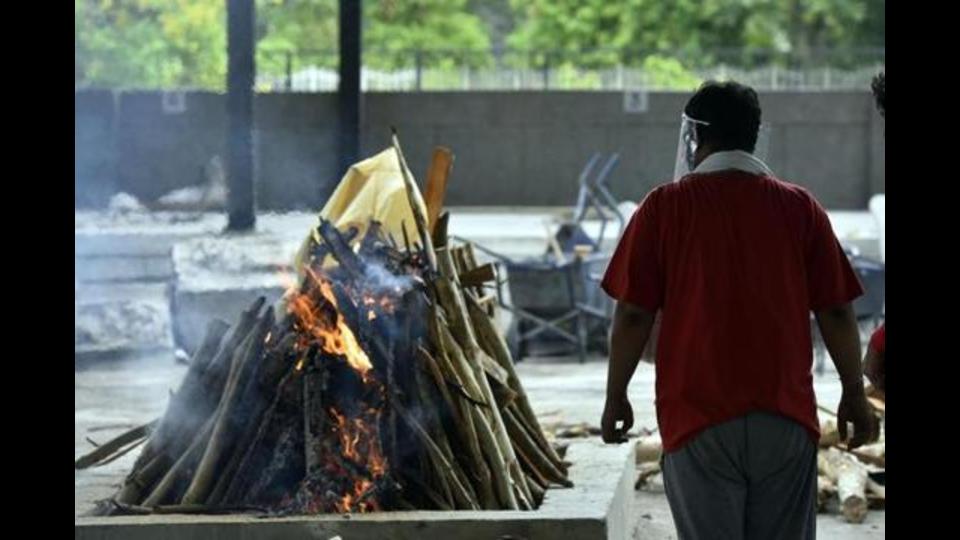
Delhi had just two CNG crematoria earlier -- at Nigambodh Ghat and Punjabi Bagh Shamshan Bhumi -- but the pandemic saw the government doubling the number of furnaces at these facilities, and setting up new units in places like Green Park, Karkardooma, Subhash Nagar and Ghazipur.
Avdhesh Kumar, funeral supervisor at the city’s biggest cremation ground at Nigambodh Ghat, said that people are returning to traditional funerals. “Almost everyone now prefers wood-based traditional cremation instead of CNG cremations, which is now less than 10%. When there was rush due to Covid, the CNG furnaces were in very high demand as people wanted a quicker medium. If there are around 50 normal wood-based cremations in a day, we get hardly 5-6 requests for CNG units now,” Kumar said.
Suman Gupta, the chief-coordinator of the NGO managing the ghat, too said that the preference for wood-based cremations is “clearly several-fold higher than CNG”.
Across the western part of the city, Punjabi Bagh Shamshan Bhumi operates second largest battery of four CNG hearths but the funeral managers claim that these are barely utilised. “...some have religious apprehensions about the alternative methods. Many of them state that relatives will object to a non-traditional method,” said a funeral manager.
A senior SDMC official overseeing the Punjabi Bagh and Subhash Nagar CNG units agreed. “Given an option, people are once again opting for wooden platforms and not for the CNG units,” the official said.
In the last one year alone, five new CNG crematorium sites -- in Dwarka Sector 24, Jwala Nagar, Seemapuri and Aya Nagar -- have been approved. The MCDs are inclined towards CNG crematoriums as electric ones are costlier due to high commercial electricity rates and filament maintenance, and they face regular tripping of power connections. Officials said that the electric unit at Green Park, which was laying unused for years, was converted to CNG in February this year, and the electric crematorium at Sarai Kale Khan is used only to cremate unclaimed bodies.
Before the onset of the pandemic, the city used to see around 90,000 cremations every year, out of which over 90% were wood-based traditional cremations. The latest statistics released by the Delhi government in the ‘Annual Report on Registration of Births & Deaths in Delhi-2020’ shows that over 140,000 deaths were registered in 2020. The data for 2021 has not been released though. As per the daily Covid bulletin released by the Delhi government, the city has seen 25,097 deaths since the pandemic began in March 2020, but several news reports claim the number may be more than twice this figure.
“Every year, Delhi witnesses deaths of people coming for treatment in its hospitals. On removing the burials in other communities and infant deaths, we estimate that at least 80,000 to 90,000 wood-based cremations are taking place every year,” said a senior public health official overseeing the operations of funeral sites in the city.
Adding to pollution
Each wood based traditional cremation utilises 400-500kg of wood and it is estimated that at least 32 million kilos of wood is consumed in the shamshan bhumis of the city.
Delhi witnessed wood shortage in April-May period as demand grew sharply due to Covid related deaths. A 2016 study conducted by IIT Kanpur, which took a conservative amount of 216kg wood per funeral and assessed only 53 cremation sites, indicated that cremation sites are adding 4% of toxic carbon monoxide emissions into Delhi’s air. It concluded that over 2,129kg carbon monoxide, 33kg of sulphur dioxide, 346kg of PM10 and 312kg of PM2.5 dust particles were being emitted every day by cremations.
While hearing a 2016 case, the National Green Tribunal had directed the Union environment ministry and the Delhi government to initiate programmes to provide alternative modes of cremation, saying the “traditional method of wooden pyres emitted hazardous pollutants into the environment”.
Anshul Garg, director of Mokshda - a company that sets up metallic funeral pyre systems that consume less wood, feels that a midway can also be found in fulfilling the religious sentiments while also reducing the pollution load due to traditional cremations. Noting it is not easy to suddenly change the feelings and religious sentiments of people, he said CNG/electric cremations will remain low under normal circumstances. “We use ashtdhatu frames, which improve air circulation and maximise the heat utilisation. It leads to only 1/4th of wood being used in each cremation while the chimney captures most of the harmful pollutants,” he explained.
Mokshda has installed 19 such units in Delhi-NCR at nine locations and 54 units across seven states, including Gujarat, Madhya Pradesh and Uttar Pradesh.
Kumar at Nigambodh argued that followers of certain religious sects, where gurus and spiritual leaders are pushing people to opt for eco-friendly cremations, are showing an inclination towards CNG/electric funerals.
“Nirankaris for instance have shown preference for CNG units as it has been a part of the discourse. In 2016, when a key head of a sect passed away in a road accident, he was cremated using CNG pyre method.at Nigambodh Ghat. Spiritual leaders will have to convince people to opt for greener ways to remove the hesitation,” he added.