
 E-Paper



Pre-emptive, not reactive: Experts laud Grap policy shift
“The existing plan was a failure as the implementation was done largely during the winter months and peak pollution events.,” said Ritwik Dutta, founder, Legal Initiative for Forest and Environment.


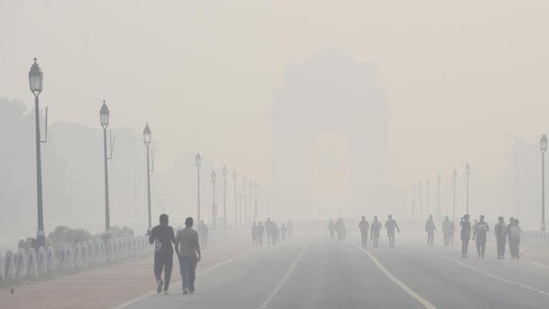
New Delhi: Environmental experts on Wednesday welcomed the revised graded response action plan (Grap) announced by the Commission for Air Quality Management (CAQM), and said by going for pre-emptive action based on the air quality index projections the measures are expected to bring down peak-level pollution in Delhi-NCR.
Also Read: In revamped Grap, ban on diesel car when air severe+
Unlike the previous regime, which mandated restrictions when pollution levels have already worsened, the new plan aims to initiate action based on air quality projections, a change that experts have been calling for.
“The existing plan had been a failure as the implementation was largely taking place during winter and peak-pollution events, but one needs to ensure this gets implemented throughout the year,” says Ritwick Dutta, an environmental lawyer and founder of the Legal Initiative for Forest and Environment (LIFE). He added that the AQI levels across NCR can hover over 200 even in summers, therefore restrictions should be ready to be implemented throughout the year.
Aarti Khosla, director at Climate Trends, said the new policy focuses on an air-shed approach and should supplement the new Grap, allowing for both long-term and emergency-level action to be carried out simultaneously.
Also Read: Delhi's arsenal for pollution fight retooled
“Taking action in advance will be helpful as the peak-pollution will be reduced, but at the same time, the policy will also work on emissions from different sectors.”
Experts also said that unlike the previous Grap, the new plan needs to be dynamic and should take into account the impact of different sectors and their contribution to the reduction in pollution.
“It will be interesting to see the implementation on ground for stages II (very poor) and III (severe), which involves banning diesel generator sets or tandoors and use of coal at restaurants and industries. Enforcement and implementation will be the key, but at the same time, with base emissions high, it will be interesting to see how often these bans need to be enforced,” said Pratima Singh, research scientist leading the Centre for Air Pollution Studies at CSTEP.
Also Read: Key infra work to be exempt from curbs till last stage
Prof SN Tripathi, steering committee member, NCAP, Union ministry of environment, said Grap alone is not the solution, as it remains an emergency plan even as he added that the revision was much needed. “This should be able to bring a reduction in the cases of severe-plus air quality index episodes, but one needs to reduce emissions from the region over time in order to ensure we don’t have to enforce the severe restrictions in the first place.”

Stay updated with all top Cities including, Bengaluru, Delhi, Mumbai and more across India. Stay informed on the latest happenings in World News along with Delhi Election 2025 and Delhi Election Result 2025 Live, New Delhi Election Result Live, Kalkaji Election Result Live at Hindustan Times.


