
 E-Paper



SC nod to raze 18th century Patna Collectorate building
The Supreme Court Friday gave its go-ahead to the Bihar government to demolish the 18th-century Patna Collectorate building that was once used by the British as a godown to store opium and saltpetre, saying “not every colonial building needs to be preserved”.

 Prefer HTon Google


The Supreme Court Friday gave its go-ahead to the Bihar government to demolish the 18th-century Patna Collectorate building that was once used by the British as a godown to store opium and saltpetre, saying “not every colonial building needs to be preserved”.
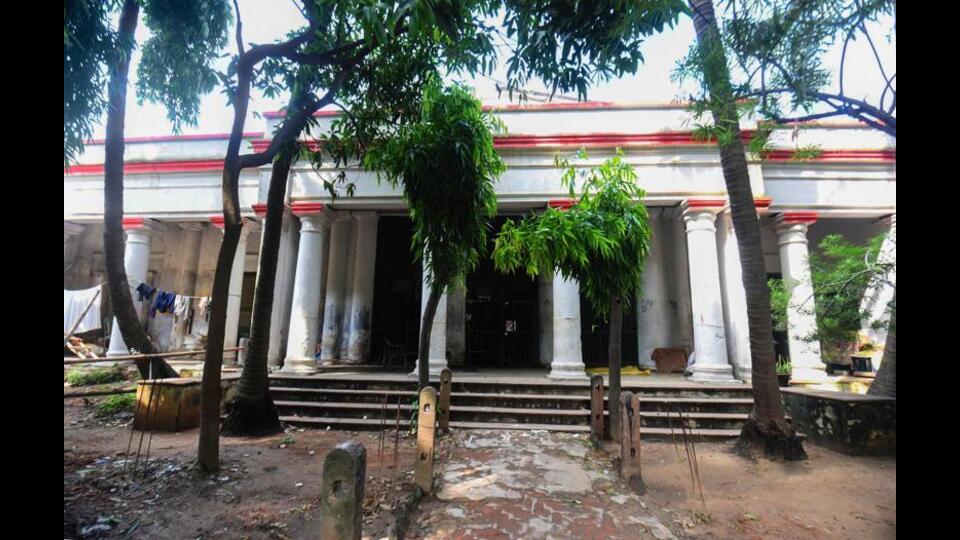
The demolition plan was challenged in the top court by the Patna chapter of Indian National Trust for Art and Cultural Heritage (INTACH), which claimed that the building is an essential part of the city’s culture and heritage that should be preserved and restored rather than demolished.
The state government had issued orders to demolish the dilapidated structure on July 31, 2019, to replace it with a new building, but the top court had ordered status quo in September 2020.
Not impressed by the petitioner’s argument to keep the building, a bench of justices Dhananjaya Y Chandrachud and Surya Kant said, “We have a large number of buildings from colonial era. There are some from the British era, the Dutch era and even the French era. There may be buildings having historical value that can be preserved but not all buildings.”
The state government, represented by senior advocate Maninder Singh, pointed out that the building was in a dilapidated state and posed a grave risk to people. The state further pointed out to the court that the Bihar Urban Arts and Heritage Commission gave approval for demolition of the Collectorate Complex on June 4, 2020. In 1972, the Archaeological Survey of India (ASI) conducted a survey in Bihar and identified 72 sites/monuments deserving of historical monument tag. However, this list did not contain the Collectorate building.
The bench said, “What heritage can be there in this building. From the photographs supplied to us, we can make out that its roof has fallen in many places. Even the ASI has said it has no heritage value. This was a godown used by the British to store saltpetre and opium.”
The court gave instances such as the prison where the freedom fighters during the independence struggle were jailed which are of historical value and need to be preserved. While about the present building, it said, “This building endangers safety of innocent citizens. How many human lives do you want to endanger by keeping this structure?”
INTACH’s lawyer Roshan Santhalia told the court that the building is not so unsafe as was projected by the state. “The building is not in such a bad shape. There must be a neutral assessment done of the building,” he argued, seeking time to file response to state’s affidavit.
The court refused to keep the matter pending and ordered the same to be dismissed.
Earlier, the Patna high court too had, on September 1, 2020, dismissed INTACH’s plea, claiming there was nothing on record to show that the building in question was a monument of any historical value.
The petition by INTACH said, “The buildings forming the Patna Collectorate Complex are the only remnants of the Dutch and British eras and they serve as a reminder of Patna’s evolution in art, architecture, culture and tradition.”
The society had relied on books and newspaper clippings to show the building’s vintage legacy claiming that the Collectorate was believed to have been constructed by the Dutch in the early 18th century. Post Independence, the building housed government offices. INTACH claimed that with the assistance of genuine and professional efforts, these buildings could be restored.


