E-Paper



Snarls ahead as PWD plans repairs on Outer Ring Road
The work is expected to be executed using cold milling and recycling processes at a total cost of ₹29.35 crore over the next four months

 Prefer HTon Google


The Public Works Department (PWD) is planning to start repair and strengthening work on a 5km stretch of the Outer Ring Road from the Chirag Delhi flyover to IIT flyover in south Delhi, officials said on Tuesday, adding that the project is likely to begin in September.
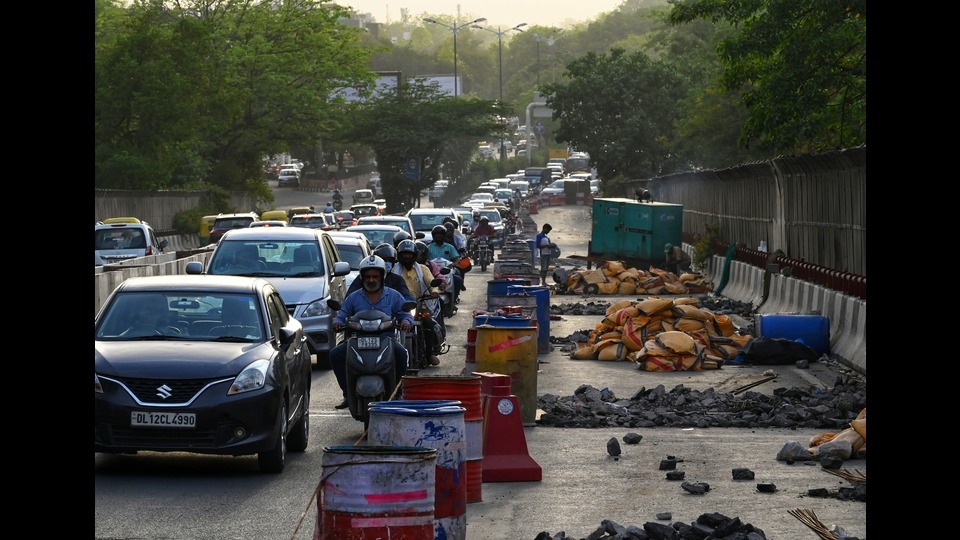
The proposal is set to lead to massive snarls on what is a crucial artery of Delhi — and is a route that many residents take to travel to the airport — with the resurfacing work expected to disrupt vehicular movement, especially during the peak morning and evening hours, the officials said.
The repair work is “essential” as cracks and potholes have developed along the entire carriageway, the officials said, adding that the work is expected to be executed using cold milling and recycling processes at a total cost of ₹29.35 crore over four months.
“We realise that this stretch records heavy traffic and will try to restrict most of the work to nights and off-peak hours. Also, like in the past few projects, we will try to do the work in phases by blocking one lane at a time for repairs,” said a PWD official on condition of anonymity.
To be sure, PWD has a terrible record of traffic management during repair work.
According to PWD officials, a tender has been floated to hire a contractor who is expected to be appointed by next month. The contractor will be given three months to complete the work, the officials added.
Experts said for better traffic management during the repairs, steps such as diversions ahead of the flyover and placing proper signage will help in reducing bottlenecks. “If PWD already has these repair works planned, they should undertake the jobs in a phased manner to avoid multiple bottlenecks across the city. The officials can create Google alerts and use FM radio channels to ensure that the traffic menace is either avoided or people plan their travel accordingly,” said S Velmurugan, chief scientist and head, Traffic Engineering and Safety Division, Central Road Research Institute (CRRI).
He added that police deployment should also be ensured during peak hours and alternative routes should be identified.
Meanwhile, Delhi Police officers said that the permission for road closures will be given depending on the ground situation. “We have not received any road closure or diversion request yet. Once we get it, we will assess the situation on ground and make necessary arrangements to ensure that commuters face minimum inconvenience and the ongoing work also happens smoothly,” said Dinesh Kumar Gupta, additional commissioner of police (traffic).
The PWD official quoted above explained that for the cold milling technique, which will be used for resurfacing work, the existing bituminous layer will be scraped off from the surface of the entire stretch, including the service lanes on either side, and will be revamped. A new layer of glowing studs will then be laid on top. Once the work is complete, the horticulture work will also be renewed.
The six-lane Outer Ring Road crosses large parts of the city, spanning 47km, with three lanes in each direction. Several stretches of the road have been notified as National Highways.
Meanwhile, residents accused the authorities of making the traffic flow chaotic in south Delhi areas in the past few years with repairs and construction work going on at several places, including Ashram flyover, Chirag Delhi, Nairoji Nagar flyover and Munirka flyover.
“The traffic is completely chaotic now across the city. There are repairs at will, and some or the other road is shut. It is a pain, almost a nightmare, to drive in south Delhi even on a normal evening. Maybe the only thing left for people to do now is use bicycles for their daily commute,” said Jasjit Singh, a resident of Panchsheel Enclave.
Another resident said that PWD should learn from its past mistakes and keep alternatives available for people.
“The Chirag Delhi flyover repair work was a mess because they had taken up repair work for the entire carriageway at once. Such repairs should be done only in phases, exempting at least one lane for movement. They should learn how Metro does work with minimum traffic hindrance,” said Chetan Sharma, chairman of Federation of GK-II complex RWAs.
Last year, the Chirag Delhi flyover was partially shut for traffic in two 25-day windows in March-April for repairs, triggering snarls on the Outer Ring Road.
Another PWD official said, “The Outer Ring Road is developing potholes at many places. It also sees heavy traffic. So, repair work is urgent as well as essential. Keeping traffic in mind, we take up small stretches and are also working in phases.”