
 E-Paper



Strong surface winds help improve Delhi’s air quality to poor zone after 12 days
A 24-hour average air quality index (AQI) of 292 (poor) was recorded at 12pm compared to 330 (very poor) a day earlier at 4pm

 Prefer HTon Google


Surface winds of 10-15 km per hour helped improve Delhi’s air quality to the “poor” category on Tuesday after 12 days of “very poor” air even as the mercury has continued to rise since Friday when the Capital recorded the lowest temperature this season of 4.9°C.
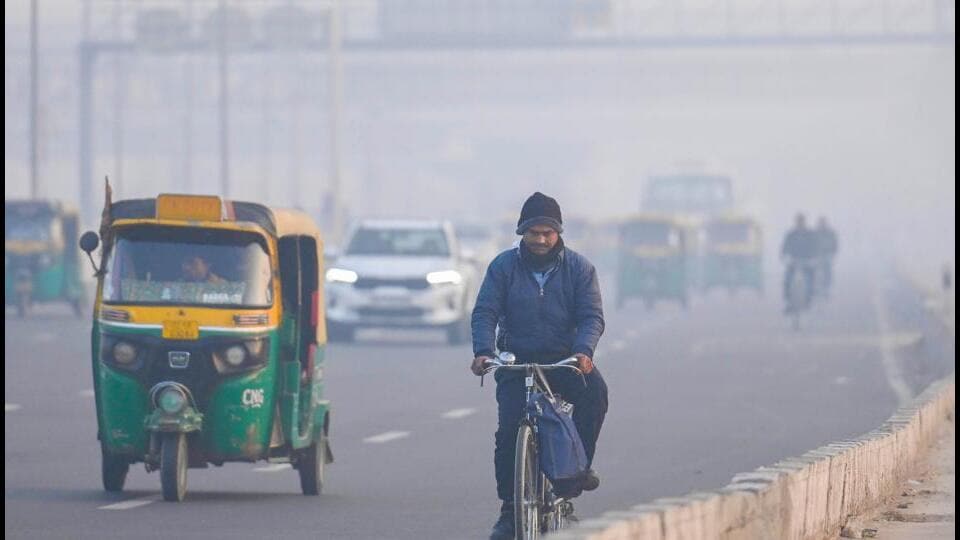
A 24-hour average air quality index (AQI) of 292 (poor) was recorded at 12pm compared to 330 (very poor) a day earlier at 4pm. On December 6, the AQI of 286 was last in the “poor” zone. Delhi has not recorded a “severe” air day since November 24 when the AQI was 415.
The air quality was expected to deteriorate to the “very poor” category by Wednesday with a dip in the wind speed.
According to the Early Warning System forecast, the air quality was then likely to deteriorate significantly and reach the upper end of the “very poor” category even as the minimum temperature is likely to hover around 7°C over the next three days.
A minimum temperature of 7.8°C recorded on Tuesday was normal for this time of the year. It was 7.1°C on Monday.
Another western disturbance was set to approach the Capital on Friday. A western disturbance usually leads to a change in wind direction to the warmer south-easterly. It also brings moisture and cloudiness, which makes nights warmer as the clouds trap the heat the surface captures during the day.
India Metrological Department scientist Kuldeep Srivastava said that there will be cloudiness across the plains due to the impact of the western disturbance from Friday onwards. “This will not allow the minimum temperature to dip.”


