
 E-Paper



The kothis of historic GT Road
Mahaldar Khan was Nazir at the Mughal court under Muhammad Shah, chief eunuch and overseer of the royal harem

 Prefer HTon Google


Mahaldar Khan was Nazir at the Mughal court under Muhammad Shah, chief eunuch and overseer of the royal harem. In 1710, he laid a garden along the road running north out of the city, entering through the Tripolia gates, the king’s private entrance. With the garden on one side and the city on the other, this was India’s first highway — Sadak-e-Azam — the local stretch of Sher Shah Suri’s road which Delhi shortens to GT Road.
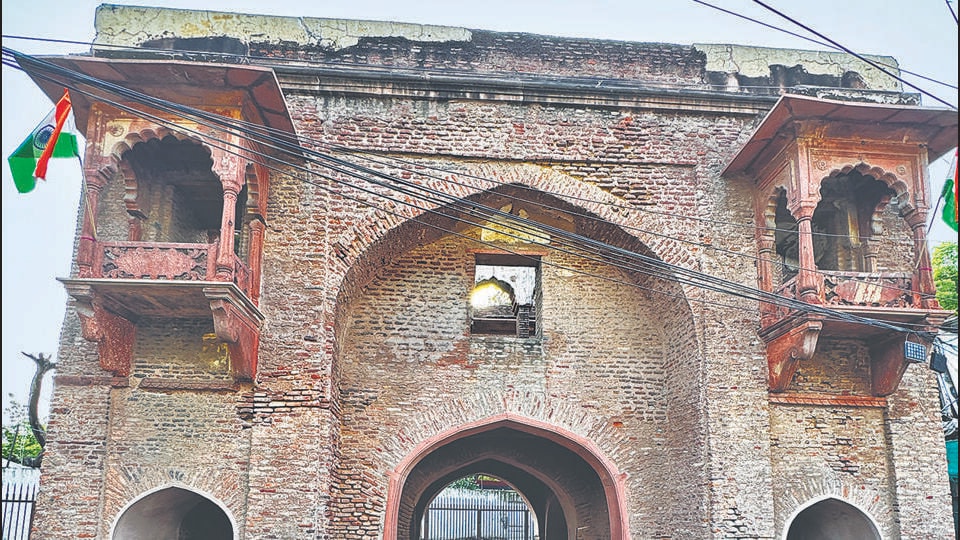
The road’s history is critical here. It first appears in Panini’s Ashtadhyayi in the 5th century BCE as Uttarapatha, the northern route. The Mauryas built a royal highway from Taxila to Patliputra, recorded by the Greek diplomat Megasthenes at roughly 2,600 kilometres across eight stages. The seventh Ashokan pillar edict, now standing at Feroz Shah Kotla, describes this road furnished with rest houses and wells at regular intervals. UNESCO’s documentation of the Uttarapath lists 93 discovered sites along its length, comparing it to the Route of Santiago de Compostela and the Chinese section of the Silk Route. The Tripolia gateway now sits in a traffic corridor, the ground beneath it dipping low enough to flood outside monsoon season — a nuisance rather than a monument.
What replaced this Mughal geography, centuries later, was a different settlement. As Delhi urbanised through the 20th century and villages along GT Road folded into planned colonies, landholding families fashioned their own architectural vocabulary in response, rooted largely in Deco, in step with global trends. Many of these houses belonged to the area’s landholding community, whose elders carried the title Chaudhary — a prefix denoting the head of a biradari whose word carried authority over land and its distribution within a clan.
After Partition, the stretch of GT Road near Mahaldar’s garden became part of the refugee colony settled in Gurmandi village, neighbouring Roop Nagar and Shakti Nagar. As planning arrived, some Chaudharies built kothis facing the same road their ancestors had once controlled as agricultural territory. These kothis carried a maximalist Delhi Deco, built around an ornate terrazzo facade — polished, patterned, patina’d mid-century — which became the houses’ material signature.
Many of these houses stand proud still; many others deteriorate rapidly. Delhi’s seasons are unforgiving, and post-monsoon, pre-Diwali maintenance has become a social habit here. When skipped for years, the house gets defaced, though the defacement is not the house’s fault. The area around Tripolia gate today sits divorced from the historic weight of the road and of the queer administrative role the gates once housed within the Mughal court — itself a remarkable precedent. The people who built these kothis built them gallant and tall, meant to catch views of the road, the ruins, the still-functioning medieval gates.
But the street was never under their control. Traffic, trash and noise have ravaged this historic road for years, prompting the same questions residents keep asking: why aren’t traffic personnel stationed at important signals, why is there no functioning waste system for every household, and why does high-density Delhi outside the capital’s centre stay excluded from that same attention?
Deeper into the city, conditions worsen. Old Deco houses here have sealed shut entirely, or been abandoned and subdivided into rental units, their cultural life left unaccounted for. This was once wealthy ground; the private patron Lala Ram Roop built a Gotham-inflected clock tower here in 1941, its grillwork and clockface still handsome, giving the same street a modernist architectural inclusion after the Mughal gates. Today metro construction lines both sides of the road leading to it, the central divider serves as a trash dumping ground, and the drains carry the smell of an open nala that was once the Sahibi river.
GT Road is just a highway now, but the amnesia isn’t the public’s fault when the city itself seems to have forgotten it. The kothis still stand, but without administrative attention to the street and what each season does to it, this Deco district of Roop Nagar, Shakti Nagar and Kamla Nagar will crumble from neglect — despite showing up for the city along the road that needed its citizens to build proudly.
Anica Mann works on archaeology and contemporary art in Delhi. The views expressed are personal

Stay updated with all top Cities including, Bengaluru, Delhi, Mumbai and more across India. Stay informed on the latest happenings in World News along with Delhi Election 2025 and Delhi Election Result 2025 Live, New Delhi Election Result Live, Kalkaji Election Result Live at Hindustan Times.


