E-Paper



Supply inches to normal in Delhi, but muddy water is a bother
Water supply has resumed in most parts of Central and north Delhi, but some areas are still affected due to the partial suspension of operations at the Wazirabad water treatment plant. Residents in Model Town complained of muddy water after supply was restored. Two of the three phases of the Wazirabad facility have been restored, and the plant should start working at full capacity soon. The other two plants, Okhla and Chandrawal, have already been restored. Some areas are still without water supply.

 Prefer HTon Google


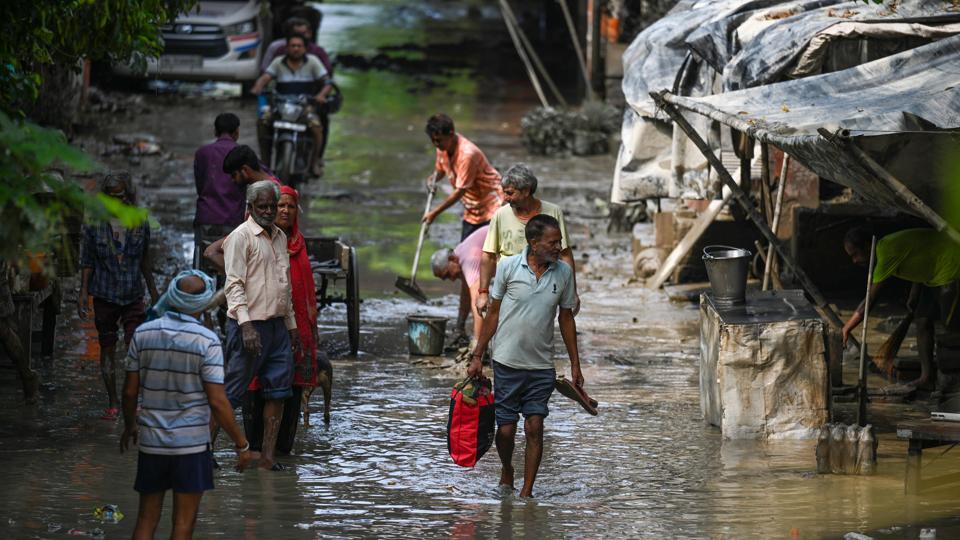
While water supply resumed in most parts of Central and north Delhi, there was no relief for residents in some colonies in the two regions on Monday as operations at the Wazirabad water treatment plant remained partially suspended due to the floods. Meanwhile, residents in north Delhi areas such as Model Town, where water supply resumed after operations began at Chandrawal plant on Sunday, complained of the water being muddy.
Till Monday evening, the government said two of the three phases of the Wazirabad facility were restored. The plant should start fully working soon, chief minister Arvind Kejriwal said. “The equipment suffered maximum damage in this plant. It should start working on full capacity soon. Our engineers are working on it 24x7,” Kejriwal said after one of the phases of the plant started producing 54 MGD water around 8am.
By 1pm, DJB restored the second phase too, its vice-chairman Somnath Bharti said. “The additional supply to the tune of 47 MGD more has been restored...We are working now to restore the remaining 33 MGD,” he added. Till Monday night, officials said the plant was running at 119 MGD capacity, short of only 15 MGD.
DJB’s three plants — Okhla, Wazirabad and Chandrawal — were closed on Thursday morning after the Yamuna breached the danger level. This crippled around a quarter of the daily water supply (998MGD). The Okhla plant was restored on Friday and Chandrawal on Sunday.
Meanwhile, reports of the water being muddy surfaced from parts of North Delhi. “The water was full of mud because the pipes have remained unoperational for 3-4 days and people are using motor pumps. For first 1-1.5 hours, the water supply was not clean. We received complaints from areas like Ghanta Ghar, Tri Nagar, Shakti Nagar,” Ashok Bhasin, who heads North Delhi Resident Welfare Federation, said.
Mukesh Aggarwal, general secretary of the Model Town Lake area RWA, said the area received water in the evening. “Mud and other contaminants have come in supply system and it will take a day to flush it out. We have complained to our local engineers who have said that the water will become much cleaner from tomorrow,” he added.
A DJB official said some of the plants are slightly affected due to very high silt and turbidity in raw water coming via Yamuna and Upper Ganga Canal.
Water supply was, however, yet to resume at Mata Sundri road DDA flats, Shastri Nagar, Beadonpura in Karol Bagh, Adarsh Nagar, Parts of Daryaganj, and Kashmere Gate among others. Operations to New Delhi Lutyen’s Delhi were also restored, its civic agency reported on Monday.