
 E-Paper



Forest officials dig trenches in 15 Nuh villages to keep Aravalli miners at bay
A fores official said that the department began digging trenches on July 22, and targeted villages from where majority of complaints about illegal mining were being received.

 Prefer HTon Google


Nuh/Tauru: Trenches have been dug up in at least 15 villages in the Nuh district to stop vehicles from carrying illegally mined stones from the Aravallis, district forest department official said on Thursday, and added that security has been stepped up in these areas in the continued crackdown on the mafia involved in illegal mining at the natural resources rich range.
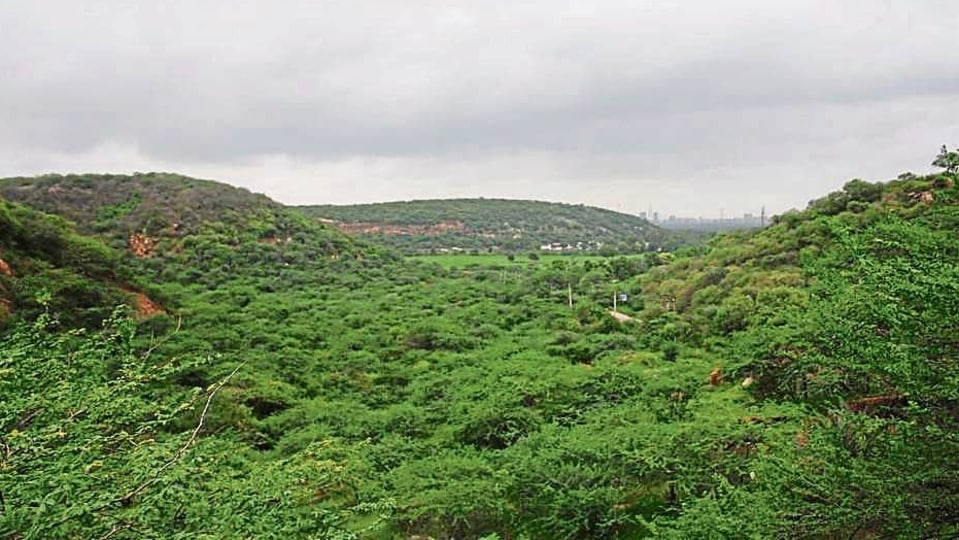
Vijender Singh, district forest officer (DFO), Nuh said the department began digging trenches on July 22, and targeted villages from where majority of complaints about illegal mining were being received.
“Each village has more than three routes connecting to the illegal mining sites. We have dug trenches on all those routes,” he said.
First in 2002, and then in 2009, the Supreme Court banned mining of major and minor minerals in the ecosensitive Aravalli hills in Faridabad, Gurugram and Mewat to restore the hills to their traditional ecological value.
The order in 2009 said all mining activities must be suspended till statutory provisions for restoration and reclamation were complied with, particularly in cases where pits or quarries had been abandoned.
However, the activity continued unabated.
The July 19 murder of deputy superintendent of police Surender Singh allegedly by illegal miners has put under national spotlight Haryana’s Nuh district -- which falls in the Mewat region spread across Haryana, Rajasthan, and parts of western Uttar Pradesh -- where, officials said, no clear demarcation of forest land, easy access to illegal mining zones, and porous state borders aid the illegal activity.
Once mined, the minerals and stones are moved through narrow roads that cut across the Aravalli forest to potential buyers in Rajasthan and southern Haryana. And as mining in the Aravalli in Rajasthan through “safeguards” is allowed, it becomes difficult for authorities to distinguish between what is permissible and what is illegal, they added.
Following the DSP’s murder, the district police have deployed additional personnel and been seizing vehicles used by organised gangs to transport the mined stone out of these areas in a fresh crack down on illegal mining activity in the region.
Explaining the action, the district forest officer said that they have been taking every possible step to curb mining in the Aravallis.
“It is difficult to keep a tab on such activities in an area that is spread over 10,000 hectares. Trenches will prevent access for vehicles that used by the miners to transport stone out of these areas. The forest guards will keep a check on the trenches and click pictures twice a day,” Singh said, and added that villages where trenches have come up include Ferozepur Jhirka, Punhana and Tauru.
Singh said his team consists of 20 forest guards act as beat in-charge and keep a check on 10,000 hectare Aravalli area. “To protect the Aravallis we have started a plantation drive and have given over 1.5 lakh saplings to panchayats, one lakh to school students, and NGOs to plant and cover these stretches so that the temporary secret roads towards the hillocks are covered,” he said.
Rajesh Sangwan, an assistant mining engineer who was given additional charge of Nuh on August 8 when the new team was constituted for the district, said that they have so far impounded 11 vehicles for illegal transport of stone and other minerals.
“Cases have been registered against them at Ferozepur Jhirka, Pinangwa and Bichhor. They will have to deposit royalty, penalty, and price of the mineral they were carrying along with the environment compensation cess as mandated by the National Green Tribunal (NGT),” he said.
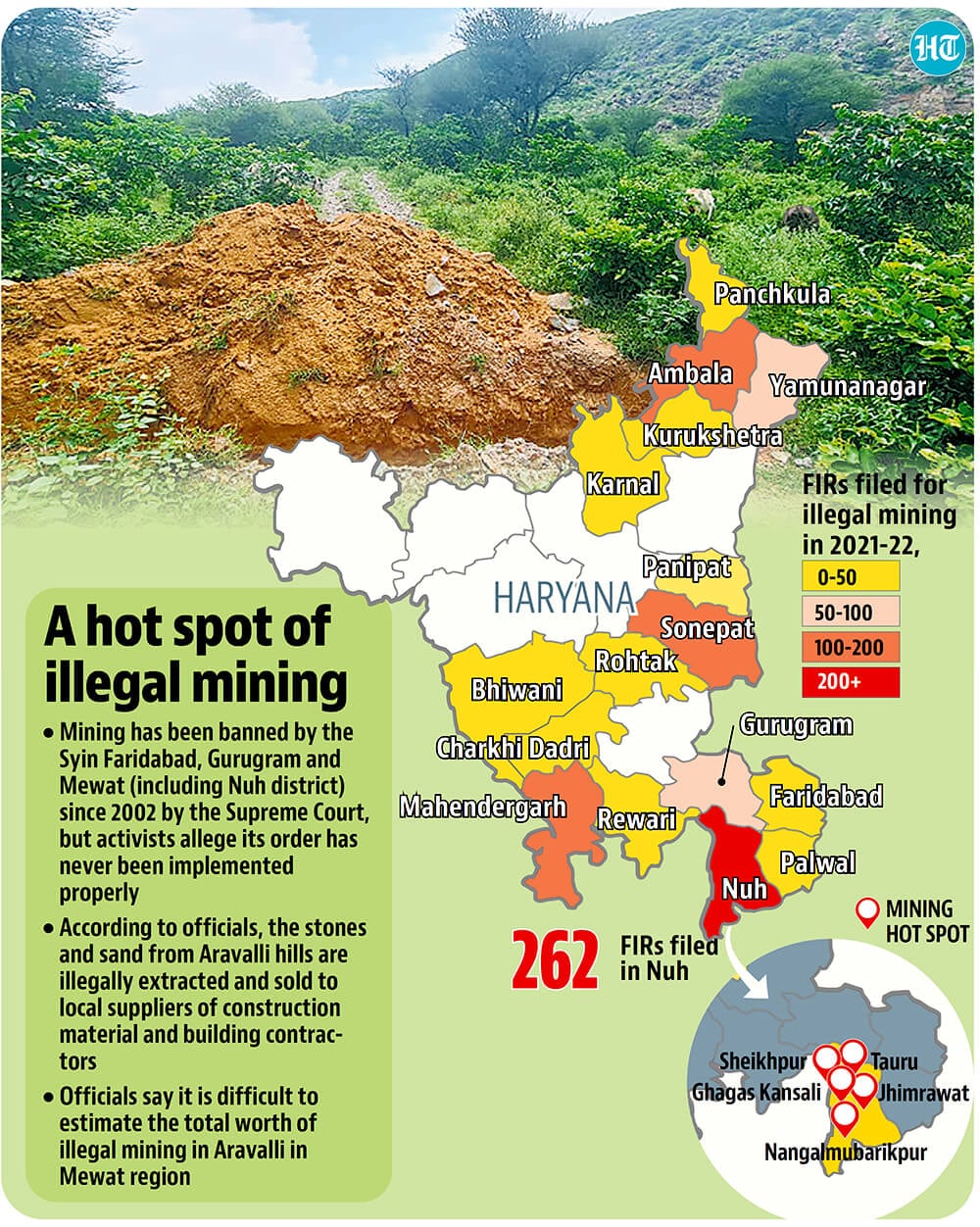
According to Haryana government data, Nuh, with 239 out of 910, recorded the highest number of FIRs registered for illegal mining among all districts in the state in 2021-22. In the 23 FIRs registered in the current financial year, 68 vehicles used to transport the illegal mines minerals were confiscated, the data showed.
Mining has been banned by the Syin Faridabad, Gurugram and Mewat (including Nuh district) since 2002 by the Supreme Court, but activists allege its order has never been implemented properly -- a charge the Haryana government denies.
According to officials, the stones and sand from Aravalli hills is illegally extracted and sold to local suppliers of construction material and building contractors.
The officials said it was difficult to estimate the total worth of illegal mining in Aravalli in Mewat region.


