
 E-Paper



Heavy rain causes severe waterlogging in Gurugram; traffic affected
Many city areas were heavily inundated, with residents of Dwarka Expressway, Sector 9, Sector 21, Sector 23, and MG Road reporting significant waterlogging

 Prefer HTon Google


Waterlogging caused by heavy rainfall in the morning hours of Friday led to severe traffic jams across Gurugram.
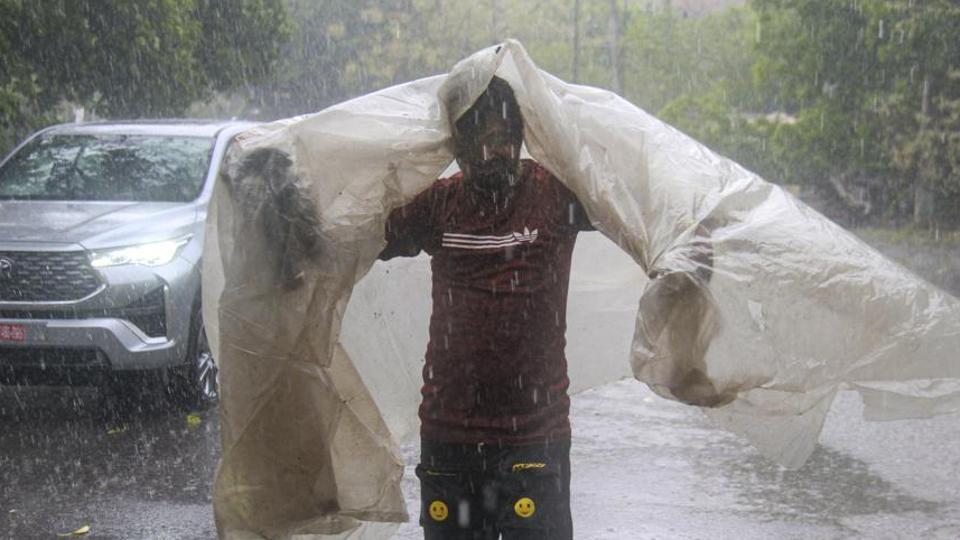
According to the weather department, the city received 30mm rainfall, leading to waterlogging in several stretches of the National Highway (NH-48).
Many city areas were heavily inundated, with residents of Dwarka Expressway, Sector 9, Sector 21, Sector 23, and MG Road reporting significant waterlogging, making it difficult to step out of their homes.
The stretch of the Delhi-Gurugram Expressway and areas near Iffco Chowk Metro station was also affected.
Also Read: Delhi Airport roof collapse: 1 killed, 5 injured; flight operations at Terminal-1 severely hit
Narsinghpur Chowk, Hero Honda Chowk, Rajiv Chowk, Vatika Chowk, Iffco Chowk, Dwarka Expressway, Golf Course Extension Road, Southern Peripheral Road, Udyog Vihar, Sohna Road, Basai, Khandsa Road, and Pataudi Road experienced waterlogging along with several internal roads, officials said.
Bhawani Shankar Tripathy, Vice President of the RWA Sector 23A, expressed his dismay over the lack of monsoon preparations by the Municipal Corporation of Gurugram (MCG).
“Post-monsoon, all civic works are disrupted as MCG assigns all staff to the SWEEP campaign. Despite repeated complaints about flooding on the 18m road in Sector 23A, the department refuses to act. Low manpower and frequent transfers of engineers have further complicated the situation,” he said.
Vikram Singh, another resident, highlighted the recurring issue of waterlogging in Sector 23A.
“Every year, even a few drops lead to waterlogging due to the poor drainage system. Sanitation issues cause drains to choke. All drains should be cleaned before the monsoon and connected to the master drain,” he said.
Shashi Dharan from Essel Towers on MG Road described his harrowing commute at 6:10am.
“From Sushant Lok to IFFCO Chowk Metro Red Light, the stretch was waterlogged. The stretch between Mileninum Metro station and Ardee City Red Light was congested and waterlogged. It was difficult to drive on the stretch,” Shashi Dharan, a commuter said.
Parvin Kaushal, a resident of Sobha City in Sector 108, reported severe waterlogging on the Dwarka Expressway stretch.
“The Sector 106/109 dividing road is waterlogged, making it difficult to commute due to potholes. Roads outside our society are broken, and water accumulates easily. Despite the inauguration of the Dwarka Expressway, the waterlogging problem persists making it difficult for residents to drive on the stretch or even walk,” he said.
Commuters faced a harrowing time as water accumulated on many internal roads.
Police reported that the three-kilometre stretch from Khandsa to Kherki Daula toll was one of the worst affected areas, forcing commuters to use the main carriageway.
Gurugram traffic police were deployed from 6am to manage the traffic situation.
Deputy commissioner of police (Traffic) Virender Vij said, “Except for a few places, the situation was manageable. Our teams were deployed at all major locations, monitoring waterlogging spots. Suction pumps used by the GMDA and MCG helped return the situation to normal within a few hours.”
Despite the timely action by civic agencies, many commuters were stuck in traffic jams on MG Road, Sohna Road, Golf Course Extension Road, Khandsa, and Sector 10.


