
 E-Paper



Hep-B cases found among Palwal deaths; officials race to find source
Six of 15 recent deaths linked to liver complications; some others due to age, accidents. Teams running camps, door surveys and tests since February 1.

 Prefer HTon Google


Authorities in Haryana’s Palwal district have declared a health emergency in Chayansa village after at least six deaths were reported due to liver-related complications over the past month amid what officials suspect is a hepatitis outbreak, which they have not yet been able to identify the source of.
Official records show of the 15 deaths reported between January 6 and February 11, six deaths were clinically attributed to acute Hepatitis B, jaundice, or acute liver failure with hepatic encephalopathy. Four among those who died from liver-related complications, including children as young as 12 years old, tested positive for Hepatitis B.
To be sure, not all 15 fatalities were linked to hepatitis with several others being reported due to old age, accidents or other conditions. Several other recent deaths are still under medical review, they said.
Preliminary screening indicates that liver-related complications are at the centre of the crisis.
Of nearly 1,500 residents screened between January 2 and February 16, including close contacts of the deceased, 37 have tested positive for Hepatitis C, 10 for Hepatitis B and one for HIV, said Dr Devender Jakhad, in-charge of PHC Chhaisa and the health official overseeing the probe.
However, officials are yet to determine how the infection, typically spread through contact with infected blood or bodily fluids, appears to have affected so many people.
Blood samples have tested negative for Hepatitis A and E, which are commonly water-borne, Dr Jakhad said. Results for scrub typhus are awaited. Three patients with similar symptoms remain hospitalised and are reported to be stable.
Given that Hepatitis B and C are blood-borne, investigators said they don’t have a clear transmission route. Officials aware of the matter said that multiple possible transmission routes are being looked into, including unsafe sexual contact, injection drug use with shared needles, reuse of syringes by unqualified practitioners, and barbers using the same blade on multiple customers.
“We are looking at medical, behavioural and environmental factors together. This is not a single-source outbreak,” said Dr Jakhad.
He said rapid viral tests conducted on 180 patients on Monday found eight positive for Hepatitis B or C. A day earlier, 12 Hepatitis C cases and one case each of Hepatitis B and HIV were detected. “So far, we have not found any instance of water-borne hepatitis A or E,” he said, adding that water contamination has not been ruled out.
In response to the deaths, Haryana health minister Arti Singh Rao said the state and district administration have taken all steps to curb the spread. She said health screenings and awareness drives are ongoing, water samples have been tested and chlorination carried out to ensure safe drinking water. “The health and safety of villagers is the government’s and district administration’s highest priority,” Rao said, adding that under deputy commissioner Dr Harish Kumar Vashishth, teams are monitoring the situation round the clock. She urged residents to avoid unsafe injections, not reuse syringes and seek treatment only from registered doctors.
Vashishth, who visited the village on Monday, said officials were camping in the area. “At present, the situation is under control and all precautionary measures are being taken. Detailed investigations are underway so that no possible cause is ignored,” he said.
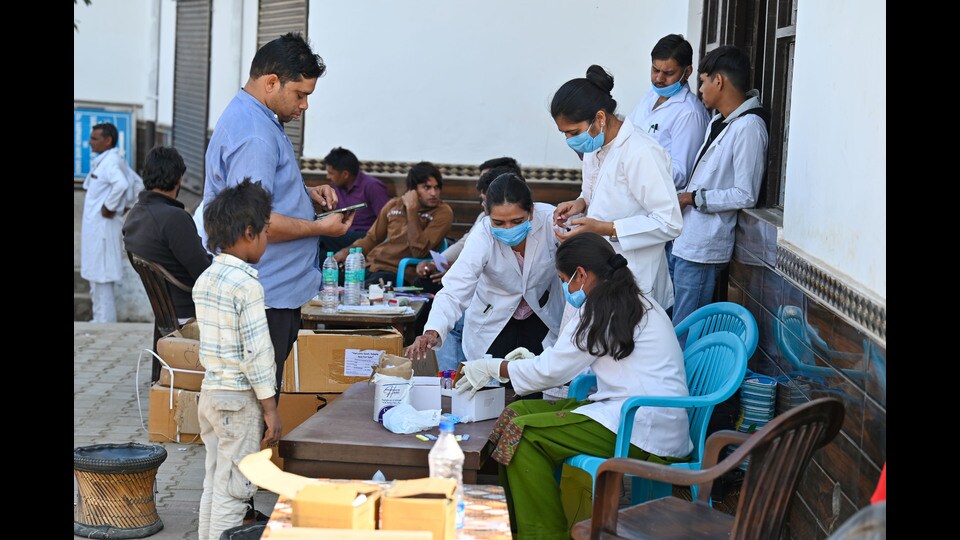
Since February 1, rapid response teams have been holding daily medical camps, conducting door-to-door surveys and offering blood tests, consultations and medicines at three locations in the village. Screening includes tests for Hepatitis B, C, HIV and liver function.
Palwal chief medical officer Dr Satinder Vashisth said surveillance would continue until the situation stabilises. Authorities have also warned against the reuse of syringes, treatment by unqualified practitioners and shared blades at barber shops. Youth have been advised to avoid injectable drugs.
Veterinary inspections have ruled out animal-linked transmission, and leptospirosis tests have returned negative. Officials said efforts are now focused on identifying transmission chains, ensuring safe medical practices and strengthening water safety measures.


Stay updated with all the Breaking News and Latest News from Mumbai. Click here for comprehensive coverage of top Cities including Bengaluru, Delhi, Hyderabad, and more across India along with Stay informed on the latest happenings in World News.


