
 E-Paper



Long power cuts force residents to turn to diesel generators
Long and unscheduled power cuts across the city are forcing residents to cough up more for electricity as RWAs have to depend on diesel-guzzling generator sets, which cost ₹22 and ₹30 per unit

 Prefer HTon Google


Long and unscheduled power cuts across the city are forcing residents to cough up more for electricity as RWAs have to depend on diesel-guzzling generator sets, which cost ₹22 and ₹30 per unit. The power cuts have also led to an increase in the maintenance charges as gensets are being used to run facilities in condominiums.
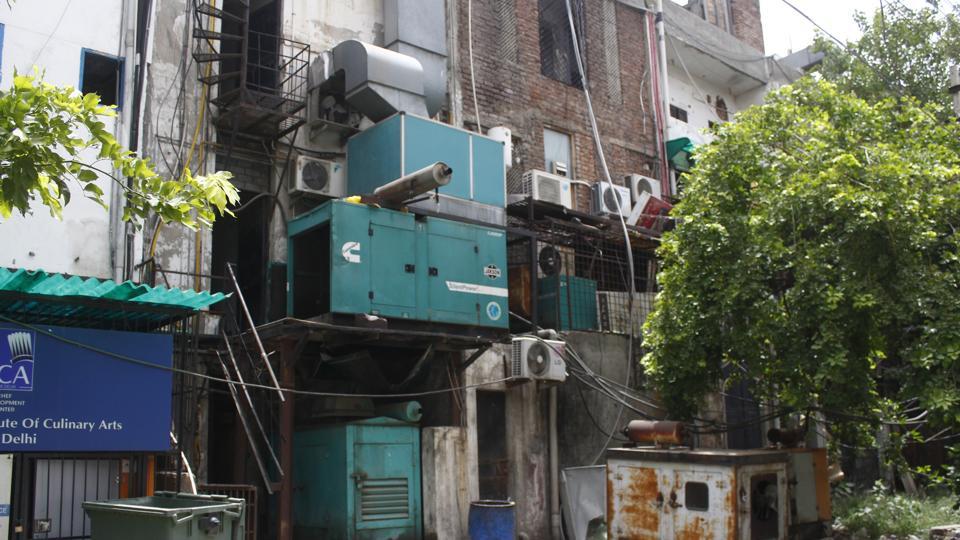
Residents said the power cuts lasts up to 10 hours, thereby increasing the dependence on generators. The purchase of diesel has also gone up in the past one month due to the reliance on generator sets.
Yashesh Yadav, president of Dwarka Expressway welfare association, said the situation has worsened over the last few days. “With power cuts lasting for eight to 10 hours everyday, we are forced to rely on generator sets, which costs us ₹22 per unit (of power consumption) and increases with the rising price of diesel,” he said.
Yadav said most of the residential complexes have diesel generator sets for power back up for the apartments and common areas of the complex, such as lobby and lift.
Rajeev Sinha, president of Essel Tower Residents Welfare Association, said this year, frequent power cuts started with the onset of summer. “As the genset is running throughout the day, it is not just increasing our power backup bill but also contributing to pollution. We are deprived of regular power supply due to faults in power lines, and tripping of feeders and transformers due to overdrawing power. The gensets provide us some relief, but they end up polluting the air. The maintenance cost of the gensets has also gone up as they break down due to frequent power cuts and fluctuations,” he said.
The power backup in residential societies costs anywhere between ₹22 and ₹30 per unit. This is in addition to the electricity bill issued by the Dakshin Haryana Bijli Vitran Nigam, which charges ₹6.50 to ₹8.50 per unit.
Nilesh Tandon, president of the Fresco Apartments RWA in Sector 50, said despite the NGT’s efforts to reduce air pollution, followed by an assurance by DHBVN to ensure uninterrupted power supply, residents have observed that the frequency of power cuts has been increasing every year. “This year, the price of diesel is at its peak and residents have to pay 4-5 times more for using gensets than what they normally pay to DHBVN,” he said.
“With soaring temperatures this summer, the overall power consumption of households has increased substantially with the use of air-conditioners, fans, and other electricals. While on regular gird, we at Vatika City pay little less than ₹6, it’s more than ₹26 for using generator sets, which is a huge cost and cumulatively increases our monthly expenditure on electricity by more than 50%. There is a need to harness green energy since there is a shortage of coal supply,” said Nitin Mehta, a resident of Vatika City.
Superintending engineer of DHBVN (Gurugram-I) Manoj Yadav said the power cuts usually last for an hour in residential areas. “We are trying to ensure uninterrupted power supply to all the residential areas by strengthening the power supply. There is a maximum power cut of 40 minutes at a stretch and we are trying to reduce it. The situation will improve within a month as we are upgrading our infrastructure,” he said.
Haryana chief minister Manohar Lal Khattar on Thursday said the government will hold a meeting with two private players and ask them to increase power supply across the state. He said the government will ask both private players to provide 1,804MW power to the state at a reasonable rate. Both companies already have a contract with the Haryana government for supplying 1,424MW and 380MW power.
According to power officials, there is a shortage of at least 300 megawatts (MW) to 1,800MW in several areas across the state due to factors such as private players not providing the requisite power supply and heavy demand for power due to increased industrial and manufacturing activities


