
 E-Paper



A camera every kilometre on Haryana stretch of Delhi-Mumbai Expressway
The new traffic system will be rolled out by mid-July to crack down on traffic rules violators on the expressway, NHAI officials said.

 Prefer HTon Google


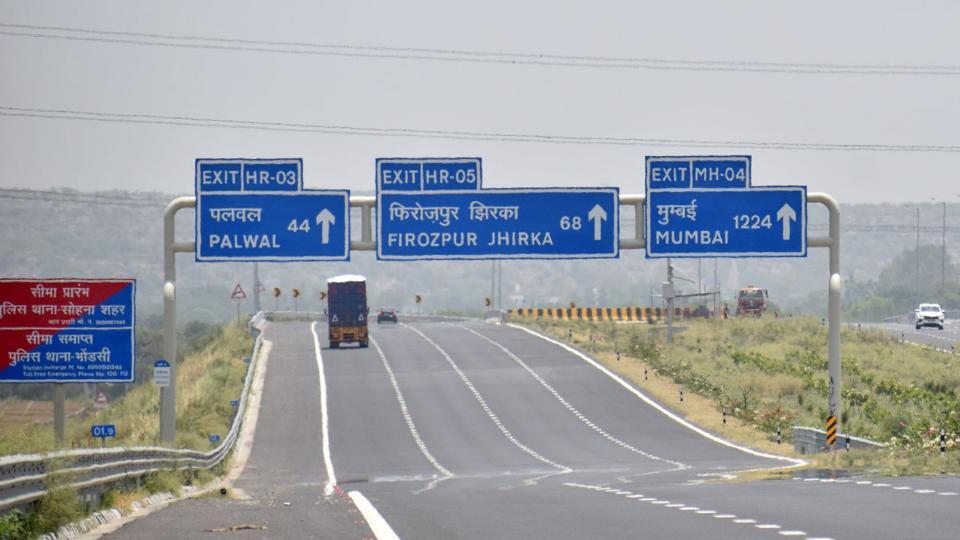
The National Highways Authority of India (NHAI) has installed 75 advanced, high resolution cameras on the 75km Gurugram-Nuh stretch of the Delhi-Mumbai Expressway -- a camera every kilometre, an arrangement that the highways authority says will help launch the advanced traffic management system (ATMS).
Also Read | E-ways, highways face of new India: UP CM Yogi Adityanath
The new traffic system will be rolled out by mid-July to crack down on traffic rules violators on the expressway, NHAI project director Mukesh Meena said on Friday.
Meena said photos and videos captured by the cameras will be shared with the traffic police, who will send a fine notice to the postal address and mobile phone number of the offender.
“On the basis of the photo and video, the traffic police will penalise motorists as per rules. Boards have already been installed on the Delhi-Mumbai Expressway displaying all information regarding speed limits and traffic rules to be followed,” he said.
Also Read | 'Thank you, Nitin Gadkari': Anand Mahindra's tweet on this 'economic highway'
Gurugram traffic police said that these cameras are capable of generating clean images even at night. They will also be able to record every movement on the highway, as well as within 500 metres to the left and right of the carriageways, they added.
“There have been many instances of people using the stretch for racing, speeding, and shooting videos, risking their own and other lives. The ATMS will help to keep a check on vehicles plying on the expressway,” a senior traffic police officer said asking not to be named.
NHAI officials said the high resolution cameras will not only capture the vehicle’s number plate, but will also alert authorities if vehicle occupants are not wearing seat belts; if the vehicle is speeding; or if the vehicle is being driven on the wrong side.
A traffic control room has been set up on the highway in Sohna’s Alipur to monitor the feed from these cameras, check the flagged violations, and respond promptly to incidents on the highway. It will be connected to a dashboard that will send live feed to the Gurugram and Nuh traffic police, said Meena.
According to NHAI officials, over 11,000 vehicles use the Delhi-Mumbai Expressway daily. Two-wheelers, tractors and other small vehicles are not allowed on the expressway, they said. Even so, people from nearby villages are often caught driving their motorbikes on the expressway, especially in Nuh, said NHAI officials. To avoid having to travel a long distance to reach a U-turn, many locals also drive on the wrong side of the road, they said. Apart from that, car drivers often speed on the expressway, sometimes going as fast as 200km/hour.
NHAI said the new camera system will be able to capture all such offences and also help reduce traffic jams and accidents. “The vehicles would not have to be stopped to issue the fines. It will be the responsibility of the local traffic police to collect the penalty amount. In the case of commercial vehicles, the system will also check for valid fitness certificate,” said Meena. A team of 10 personnel will be deployed at the control and command centre in Alipur, near Bhondsi, round the clock, said officials.
Experts, however, said that the highways authority should take into account several factors to decide on the number of cameras to be installed on the road. “I hope that the NHAI has conducted thorough research and analysis to determine the appropriate number of cameras needed for their highway project. It is important to consider factors such as land-use, intersections, and entry and exit points when placing cameras. I trust that they are taking these factors into account and not simply installing cameras at every kilometre,” said Sarika Panda Bhatt, a road safety expert.
Panda, however, added that curbing speeding on the highway will help reduce accidents. “Studies show that a reduction in speed results in a reduction in traffic fatalities. Therefore, cameras that can also detect speeding will have positive impact on road safety and traffic management,” she added.


