
 E-Paper



Rakhigarhi Mahotsav to shed light on ancient site from December 20 to 22
The festival will include heritage walks led by archaeologists who have participated in excavations at Rakhigarhi

 Prefer HTon Google


The Haryana government’s department of heritage and tourism has organised the first ever Rakhigarhi Mahotsav from December 20 to 22 to shed light on the recent discoveries at the Rakhigarhi archaeological site in Hisar district and promote appreciation and awareness of the culture of the people who lived there.
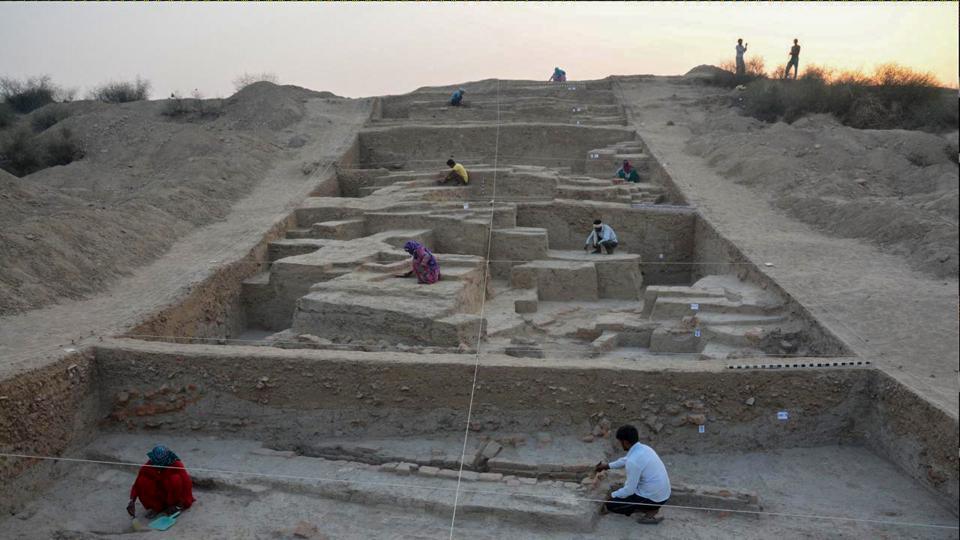
The festival will include heritage walks led by archaeologists who have participated in excavations at Rakhigarhi, “dummy excavation” events, and workshops in pottery and ceramic painting.
“Schools and colleges have expressed their interest to participate. We will upload the registration link/QR code on our Instagram handle tomorrow. A registration desk will be set up on-site, and a registration link will also be provided through townscript platform on our social media handles,” said Kala Ramachandran, principal secretary of the heritage and tourism department.
Rakhigarhi is, so far, the largest discovered metropolis of the so-called Indus Valley Civilization in South Asia, significantly larger than the more well-known sites of Harappa and Mohenjo-daro, both currently in Pakistan. Spread over 350 hectares, the Rakhigarhi site is presently under a round of excavations by the Archaeological Survey of India (ASI) since 2023.
Highlights of the festival
According to officials of the state’s department of heritage and tourism, which has organised the festival, it will feature a series of activities designed to highlight the site’s importance. A heritage walk led by archaeologists will offer visitors detailed insights into the site’s architectural marvels. Workshops in pottery, ceramic painting, and dummy excavations will provide an interactive platform for children and families. Adding to the cultural experience, traditional folk performances, local crafts exhibitions, and stalls by self-help groups will showcase Haryana’s vibrant traditions.
Recent discoveries
The Rakhigarhi site comprises seven mounds, revealing evidence of advanced urban planning, including drainage systems and residential structures.
Researchers from the Deccan College in Pune and ASI recently uncovered human remains estimated to be 8,000 years old, alongside artefacts such as clay pots, gold and silver ornaments, copper tools, and terracotta figurines. These findings provide invaluable insights into the town planning and lifestyle of the Indus Civilization.
The site has previously been under several rounds of excavations. The first couple of excavation seasons were during 1998-99 and 2000-01 by ASI. The third round of excavations was led by the Deccan College and the Department of Archaeology and Museums in Haryana from 2013 to 2016.
Of the seven mounds located at the site, mounds 1, 2, 3 and 5 are protected by ASI while mounds 4 and 6 are inhabited by the current population of the two villages in the area. Mound 7 is the burial mound which is at least 1km away from the other six mounds, and ASI has started the procedure of bringing it under their protection.
Excavations at these mounds have revealed several structures and drainage networks. Many antiquities, such as ceramics, beads of steatite, terracotta, agate, and other materials, have been found, along with steatite seals, copper implements, and terracotta figurines.
Archaeologists have also discovered traces of Kushana, Shunga, and Sultanate influences in the area. The Sultanate-era havelis still standing in the nearby villages of Rakhi Khas and Rakhi Shahpur are a testament to the area’s enduring historical significance.


