
 E-Paper



Reporter’s diary: Hry DGP’s candour turns pressers into masterclass
During a Gurugram visit, OP Singh urged cops to be polite, not punitive, stressing that civility builds public trust more than challans or slogans.

 Prefer HTon Google


Press conferences rarely surprise you. They are often polite performances with scripted questions, rehearsed answers, and reporters pretending to take notes. But when Haryana’s new director general of police, OP Singh, walked into the conference room on Saturday during his visit to Gurugram, the routine went out the window.
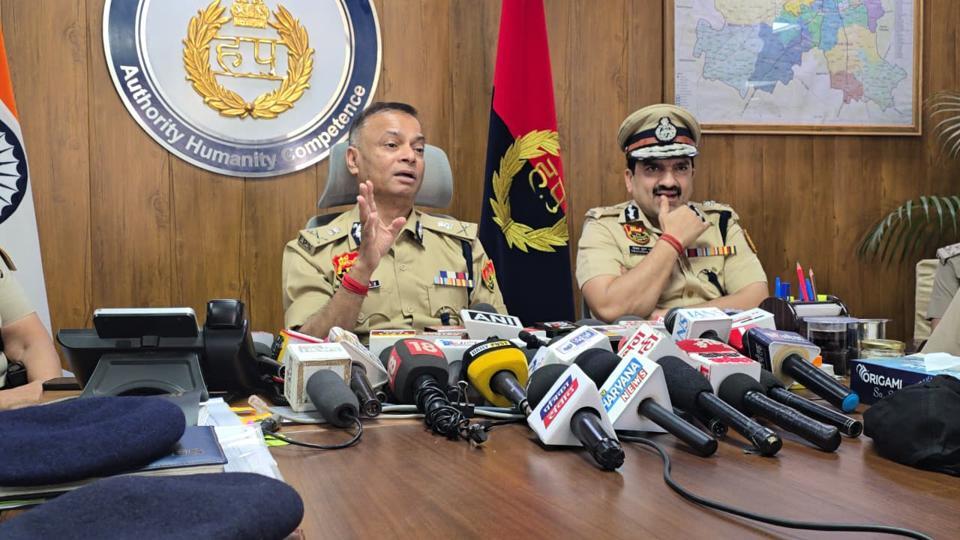
Singh, unlike most of his predecessors, came without the bureaucratic poker face. Instead, he brought humour, conviction and a dose of candour that turned a briefing on law and order into a masterclass on policing and human behaviour.
“Why,” he asked, arching an eyebrow, “are our policemen so obsessed with ruining people’s Friday nights?” The question, equal parts rhetorical and provocative, drew muffled laughter from the hall. Singh continued, “People step out of pubs and restaurants after a long week, happy, singing, maybe celebrating a promotion or an anniversary, and there’s my constable standing there like a dentist, alcometer in hand, waiting to shove it in their mouth before they can even say hello.”
His point was not just about breath tests. It was about attitude. “People buy cars to enjoy drives, not to fund our challan collection drives. If they have all their documents, say thank you and let them go. Don’t ruin someone’s night because you are looking for a target. Policing isn’t about pestering, it’s about protecting.”
Singh’s remarks drew knowing smiles from both journalists and officers. The roads in Gurugram, dotted with patrols and flashing lights, often do resemble a crime thriller. Singh seemed intent on rewriting that script. “People should feel safer seeing the police, not more stressed. The uniform should comfort, not intimidate,” he said.
The DGP’s tone then shifted from witty to weighty. “Even if you let a few wrong ones slip through, it’s okay,” he said. “Because in doing that, you have made a hundred innocent people happy. That’s a trade-off worth making.”
He wasn’t theorising; he was prescribing conduct. “Every police interaction should start and end with respect,” Singh said. “If you stop someone, say: ‘Good evening, sir. I’m sorry we had to stop you for checking, it’s part of our duty.’ Check politely. Once done, say: ‘Thank you for your cooperation, please drive safe.’ It costs nothing to be civil, but it earns a lifetime of goodwill.”
Just when reporters thought the lecture was over, a journalist raised a concern: “Sir, we often don’t get timely information from the police, which makes it hard to—”
Singh cut in smoothly. “That’s not our obligation,” he said with a grin. “If you are not getting information, that means your sources are weak. Strengthen them. Don’t complain, solve it. The police isn’t a press release service; it’s law enforcement. Build relationships, not excuses.”
The laughter that followed wasn’t defensive; it was appreciative. Singh had managed to tell hard truths with soft edges. “If the media asks, answer,” he instructed his officers. “Don’t hide behind files or officers who aren’t in the room. Face the camera, speak the truth, and please smile while you do it.”
By the end, the journalists had their headlines, the officers had their homework, and the DGP had delivered more than a message. He had delivered a mindset. “If we can make citizens smile when they see the police, we have already solved half our problem,” he said. “You don’t need slogans. You just need good manners.”


Stay updated with all the Breaking News and Latest News from Mumbai. Click here for comprehensive coverage of top Cities including Bengaluru, Delhi, Hyderabad, and more across India along with Stay informed on the latest happenings in World News.


