
 E-Paper



Sweets, sindoor and seeing ‘Ma Durga’ off at Gurugram’s DLF Club5
The celebrations draw people beyond the Bengali community. The puja has become an annual occasion that residents from different backgrounds look forward to every year

 Prefer HTon Google


For Rituparna Ganguly, saying goodbye to Durga involves the small attentions of seeing a daughter off: sweets to offer, a diya to light and paan to give her before she leaves. The goddess is returning to her sasural, and there are things to be done before the farewell.
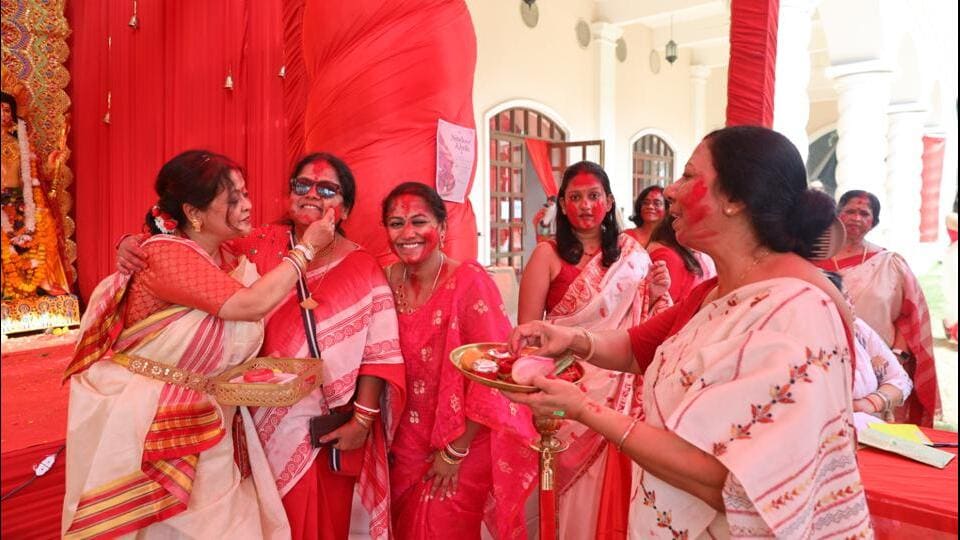
Then the women turn to one another and exchange sindoor.
At DLF Club5 in Gurugram, residents from different neighbourhoods gathered for Sindoor Khela, bringing the community’s Durga Puja celebrations to a close. Women dressed in traditional attire offered prayers to the goddess before taking part in the exchange that gives the ritual its name.
Observed on Vijayadashami, Sindoor Khela carries prayers for happiness, health and prosperity. Married women apply sindoor to Durga before sharing it with one another, bidding her farewell with the hope of welcoming her back the following year.
In the women’s accounts, the goddess occupied several places in the family. She was a daughter being sent back to her marital home, a mother whose visit was ending, someone whose arrival made their own surroundings feel more like home.
“When Maa comes, it feels like we are coming home too. It is a surreal feeling for Bengalis everywhere,” said Ganguly, a Trinity Tower resident who has attended the community’s Durga Puja for 13 years.
“Sindoor Khela is when we send Maa to her sasural. To us, she is like a daughter, so we offer her sweets, light the diya and give her paan. Then all the married women exchange sindoor.”
Over those 13 years, Ganguly has seen the celebrations draw people beyond the Bengali community. The puja has become an annual occasion that residents from different backgrounds look forward to, she said, with participation extending across the surrounding neighbourhoods.
Ivy Datta, who lives in Wellington Estate, spoke of Durga as a mother coming home. Her description of the farewell held an affectionate exchange of blessings: the women wished the goddess well in her family life and sought her blessings for their own.
“For us, Maa Durga is like our mother, and during Durga Puja she comes home. When she leaves for her sasural, we celebrate her home-going with Sindoor Khela,” Datta said.
“It is our way of blessing her married life with Lord Shiva and her family, and in turn she blesses us with health and prosperity.”
For Nabmita, another Wellington Estate resident, attending the celebrations has gradually become a more personal involvement. She has been coming to the puja for five years and said the experience had become particularly meaningful over the past three.
“Being involved in the Devi’s work has been a divine experience that words cannot fully capture,” she said. “During Sindoor Khela, we bid farewell to Maa with joy, prayers and happiness for all, while hoping to welcome her again next year.”
The years of participation also connect the puja to people who have moved away. Shobha Sharma now lives in Sector 67, but leaving DLF 5 did not end her association with its celebrations. Like Ganguly, she has been attending for 13 years and continues to return.
Her account of what draws her back was rooted in the way people take part — helping with the celebrations, joining the aarti and sharing the rituals. She described Sindoor Khela as an occasion that left her feeling positive, and the puja itself as familiar and homely.
“It feels like a traditional, homely puja. Everyone is helpful and participates, from the aarti to the rituals, so you feel like you belong to one family,” Sharma said.
Her address has changed. The puja remains part of her year.


Stay updated with all the Breaking News and Latest News from Mumbai. Click here for comprehensive coverage of top Cities including Bengaluru, Delhi, Hyderabad, and more across India along with Stay informed on the latest happenings in World News.


