
 E-Paper



How the Aliganj fake call centre in Lucknow trapped US victims
Lucknow police uncovered a 16-member international fraud call center deceiving US citizens by posing as Microsoft tech support, extorting money through fear tactics.

 Prefer HTon Google


The first voice on the other end of the phone was allegedly that of a technical support agent. The caller claimed to represent Microsoft or a “global technical support” service and offered to fix a supposed virus or security problem on the victim’s computer.
But according to Lucknow police, the real trap began once the victim allowed remote access to the computer.
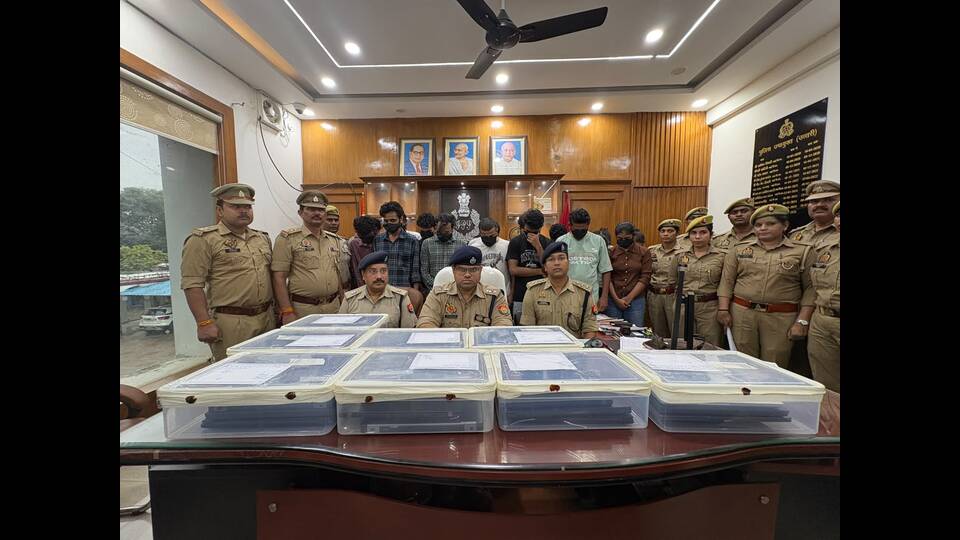
Police shared details of the entire modus operandi on Saturday and said how a 16-member international cyber fraud call centre was busted at Ridhya Plaza in Aliganj on Friday. Police also revealed how the miscreants allegedly operated a carefully divided three-stage system to target mainly US citizens.
The operation had separate agent, verifier and closure teams, each handling a different part of the deception.
Create a problem that does not exist
According to investigators, victims would first see fake pop-ups or warnings on their computers claiming that the device had been infected, compromised or faced a security threat. Clicking the pop-up connected the victim to the call centre.
The agent would then allegedly pose as a Microsoft representative or global technical-support executive and offer to resolve the supposed problem. After gaining the victim’s confidence, the agent would use remote-access software such as UltraViewer to take control of the computer.
Police said the fraudsters would then conduct a fake security scan and present the victim with an alarming “finding”.
Pornography, child porn and drugs used to trigger panic
The alleged scam relied not merely on a fake technical problem but on fear and shame.
DCP North Amit K Anand said victims were told that their computers had been used to access pornography websites or that “evidence” of child pornography, drug smuggling or other illegal activities had been found on their devices.
“The claims were allegedly used to frighten victims into revealing personal information and other details. Once the agent had extracted that information, the case was passed to the next level,” the DCP added.
Threat intensified
The verifier team would allegedly call the victim again, confirm the information obtained by the agent and then transfer the case to the closure team.
This was where the alleged technical-support scam turned into an impersonation and extortion operation.
According to SHO Dhruv Kumar, members of the closure team posed as officials from different government departments and told victims they faced arrest or legal action over the supposed illegal activity detected on their computers.
The victims were allegedly kept under pressure and threatened with legal consequences before being persuaded to transfer money.
Multiple payment routes
Police said the alleged operators accepted money through gift cards, bank transfers and cryptocurrency, allowing the operation to use multiple channels to receive payments.
Investigators said the call centre had 36 laptops, 22 headphones, 32 laptop chargers, five routers and 20 personal mobile phones. The devices have been seized for forensic and technical analysis to identify victims, calling patterns and financial transactions.
The SHO said the alleged operation was being run by absconding accused Shivam alias Priyanshu, while Nehal and Ashish allegedly handled key management functions, including hiring, training and attendance. Employees were allegedly paid ₹18,000- ₹30,000 a month and provided free accommodation and food.
Police are now tracing the absconding alleged kingpin and other people linked to the network.


