E-Paper



Poll-bound UP mulls sweet Diwali gift for sugarcane growers
Government considering an upward revision in State Advised Price (SAP) of sugarcane; farmers push for ₹500/quintal SAP citing rising costs, sugar millers press for status quo

 Prefer HTon Google


LUCKNOW With the 2027 Assembly elections on the horizon, the Yogi Adityanath-led Uttar Pradesh government is considering an upward revision in the State Advised Price (SAP) of sugarcane for the ongoing crushing season, exploring the possibility of rolling out the hike as a Diwali gift to the state’s politically crucial farming community.
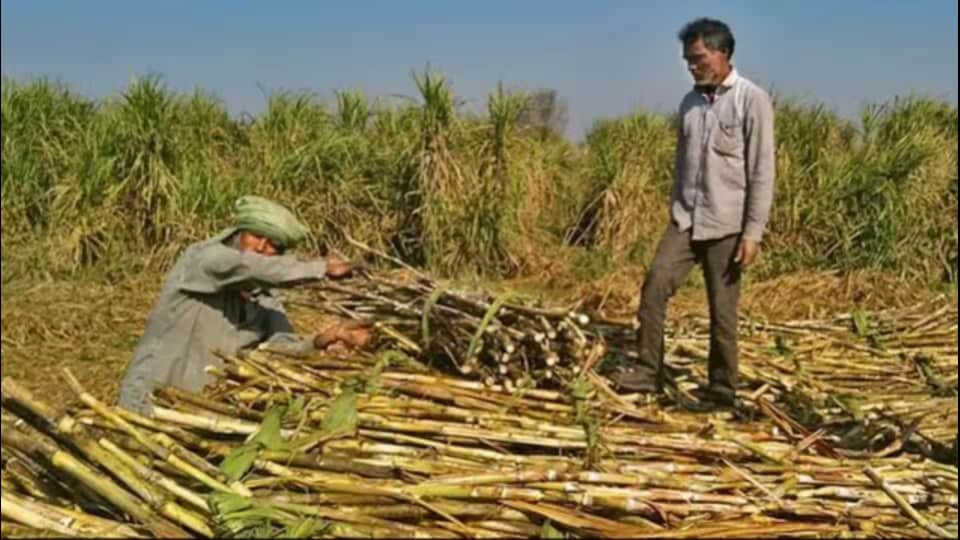
The proposed price revision has already gone through two of the three mandatory rounds of stakeholder consultations, exposing a divide between cane growers and sugar mill owners. While farmers’ representatives are pressing for the SAP to be raised to ₹500 per quintal — a ₹100 jump from existing rates — sugar millers have opposed any hike, arguing that input and production costs have increased on both sides.
At a State Advised Price Recommendation Committee meeting chaired by chief secretary SP Goyal here on Thursday, millers made a case for maintaining the existing rates while farmers’ representatives demanded that the rates be increased from the current ₹400 per quintal to ₹500 per quintal.
“We urged at the meeting that this is the time for consolidation instead of further increasing SAP,” an office-bearer of the UP Sugar Mills Association said, adding the final call will be taken by the state government.
Explaining their position, millers argued that the industry needs time to absorb the impact of successive increases in cane procurement prices and rising operational expenses. They maintained that sugar realisations had not consistently kept pace with the increase in production costs, lowering their margins.
Bharatiya Kisan Union (BKU) national president Naresh Tikait said growing cane these days was a loss-making venture in UP. “The production cost of cane growing is more than ₹400 per quintal that exceeds the current SAP level,” he said, demanding the government to raise the SAP at least by ₹100 per quintal keeping farmers’ woes in mind.”
The process of deciding SAP involves three rounds of consultations: the first at the level of the additional chief secretary, sugar industry and cane development, and cane commissioner; the second under the chief secretary’s chairmanship and the final at the level of the departmental minister.
Minister for sugar industry and cane development Chaudhary Laxmi Narayan said the final meeting to be chaired by him, would be held soon, possibly before Diwali, to seek the stakeholders’ views.
“After that, we will send a proposal to the Cabinet, if any hike is to be effected,” the minister told HT over phone from Mathura. He indicated that an upward revision of SAP was possible to accommodate the farmers’ demand.
Any decision on SAP is believed to be significant given the scale of sugarcane cultivation in UP. The state has more than 47 lakh sugarcane-supplying farmers. The area under sugarcane cultivation stands at 28.14 lakh hectares in the ongoing season, according to the cane department’s data.
UP is the country’s largest sugarcane producer, though Maharashtra leads in sugar production.
The previous SAP revision, announced for the 2025-26 crushing season, raised the price for early-maturing varieties by ₹30 to ₹400 per quintal and for general varieties by ₹30 to ₹390 per quintal. The rate for rejected varieties remained unchanged at ₹355 per quintal.
“With farmers seeking a substantial increase and millers pressing for a status quo to consolidate their finances, the government faces the task of balancing farmers’ expectations with financial viability of sugar mills,” an official in the chief secretary’s office said.