
 E-Paper



UP government studying Supreme Court observations on recovery in CAA cases
The Supreme Court has given a week’s time to the UP government to withdraw the orders and fixed the next date of hearing on February 18.


The Uttar Pradesh (UP) government on Saturday said it is studying the Supreme Court’s observations that its (the state’s) orders to recover damages to public properties from people protesting against the Citizenship (Amendment) Act (CAA) in 2019 deserved to be quashed in view of procedural irregularities.
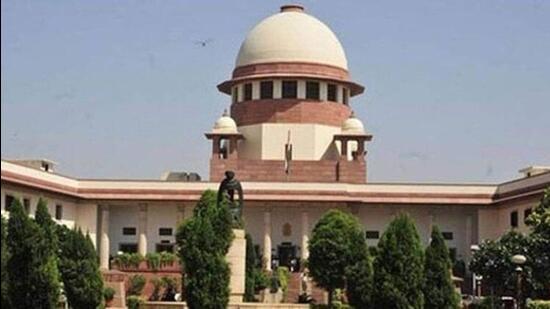
The Supreme Court has given a week’s time to the UP government to withdraw the orders and fixed the next date of hearing on February 18.
“We are studying the SC’s observations. It apparently questions the ADMs as the competent authority to pass the order,” said a senior officer of the state government.
Those aware of the developments with regard to the CAA cases said additional district magistrates (ADMs), who headed the recovery claims tribunals in different districts, had given 274 notices for recovery of damages. Out of them, about 38 cases were closed while further action was taken in the remaining 236 cases.
As the action for the recovery of damages was taken by the ADMs, the Supreme Court on Friday observed that the state government was becoming a complainant, witness and prosecutor and attaching properties, too.
“You have become complainant; you have become witness; you have become prosecutor...and then you attach properties of people. Is it permissible under any law?” a bench of Justice Dhananjaya Y Chandrachud and Justice Surya Kant asked the state government’s law officer.
It may be mentioned that the Supreme Court in the Destruction of Public and Private Properties versus State of AP (2009) and Kodungallur Film City versus Union of India (2018) cases had observed that the power to compute damages and investigate liability for destruction of public property is to be exercised either by serving or retired high court judge or a retired district judge as a claims commissioner.
“Action in this was unconstitutional. As executive, you have the right to file complaints and prosecute. The SC had made this clear that the executive has no right to decide such cases. So, the SC’s observations are justified and in the public interest,” said CB Pandey, a legal expert and former legal advisor to the governor.
“We are sure all the notices issued in the CAA cases will be withdrawn now. We will then go for compensation and file defamation, too, for putting our pictures at public places,” said SR Darapuri, a public activist and a retired Indian Police Service officer.
It may be mentioned that the anti-CAA protests had turned violent in December 2019. Some protestors had allegedly vandalised and torched public property in many cities, including Lucknow. The state government issued notices to recover the cost of property damaged. The state government had apparently relied on the Allahabad High Court’s 2011 judgement in Mohammad Shujaddin versus State of UP and others to go ahead with recovery from the accused. It, however, ignored the SC guidelines issued in 2009 and in 2018.


